Wholesale Gas Rates Surge as Iran Conflict Disrupts Global Energy Markets
The FTSE 100 Index drops sharply while government officials move policy costs to general taxation to mitigate rising household bills.
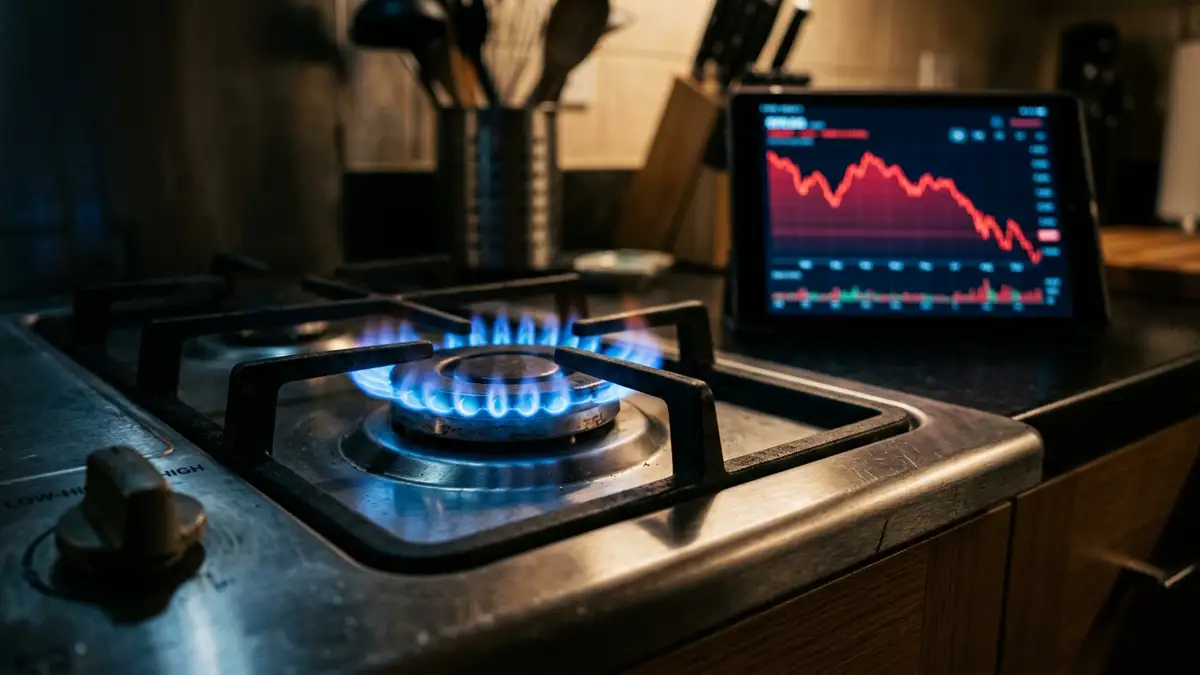
Image: Matt Weston / AI

Callum Smith
Wholesale gas rates are spiking globally following the escalation of conflict involving Iran, threatening to dismantle domestic price protections for millions of consumers.
Qatar's state-run energy apparatus has shuttered production entirely. This cessation of operations chokes the global Liquefied Natural Gas trade and evaporates available supply.
An Iranian official issued a direct ultimatum to tankers on the Strait of Hormuz, declaring a total blockade on maritime traffic. This corridor facilitates the movement of approximately one-fifth of the world's total oil consumption.
The Strait of Hormuz functions as the primary chokepoint for global energy security. Any sustained closure forces tankers into the expensive, 6,000-mile detour around the Cape of Good Hope.
The British government is aggressively overhauling energy bill mechanics by migrating specific policy costs to general taxation. This maneuver decouples social and environmental levies from direct household invoices to mask the rising cost of raw commodities.
EDF projections indicate the energy price cap will climb by £65 to reach £1,706 between April and July. This forecast tracks the relentless upward pressure on wholesale gas prices.
Industry analysts project a secondary surge in annual bills to £2,500. Such an escalation would incinerate the financial relief provided by the recently implemented price cap reduction.
The window to secure fixed-rate deals is vanishing as market rates accelerate.
Martin Lewis advised consumers to exit the Energy Price Cap immediately to avoid the coming spike. He warned that the window to secure fixed-rate deals is vanishing as market rates accelerate.
The 1986 Gas Act and subsequent deregulation frameworks established the current market-based pricing model. This volatility mirrors the 1970s energy crises where geopolitical shocks dictated the cost of domestic heating.
Energy regulators and Treasury officials face intense pressure to intervene as wholesale costs fluctuate wildly. Public spending advocates argue that shifting costs to general taxation shields low-income households from immediate price shocks.
This strategic pivot toward general taxation represents a fundamental shift in fiscal policy. It transfers the burden of infrastructure and green subsidies from the energy consumer to the broader taxpayer base.
Manufacturing sectors report surging operational costs due to the gas spike. High-energy industries including British Steel and glass production facilities face immediate margin compression.
Consumer advocacy groups are tracking the impact of the £2,500 projected cost on national poverty levels. This figure consumes a substantial portion of median household disposable income.
The government's decision to reallocate policy costs follows months of internal friction regarding the sustainability of the levy system. This structural change seeks to establish a more stable baseline for future price caps.
Lewis reiterated the urgency of securing non-variable contracts before the market hardens further. He noted that the opportunity to bypass the Energy Price Cap is closing as volatility increases.
The Treasury is currently calculating the long-term impact of absorbing these levies into the national budget. This fiscal shift abandons the 'user pays' principle that has governed the sector for decades.
Global shipping firms are already rerouting vessels to bypass Middle East flashpoints. These logistical pivots add massive fuel costs and significant time delays to the delivery of essential heating fuel.
Steel manufacturers in the UK warned that sustained gas prices threaten the survival of heavy furnace operations. The increased cost of energy is now inflating the price of raw materials and finished goods.
The Department for Energy Security and Net Zero is coordinating with international partners to secure alternative supply chains. Officials are prioritizing the diversification of LNG imports to offset the total loss of Qatari production.