Global Oil Prices Surge to $82 as Middle East Conflict Threatens Supply Chains
Disruptions in the Strait of Hormuz and military escalations drive domestic fuel costs higher while supermarkets attempt to buffer pump prices.
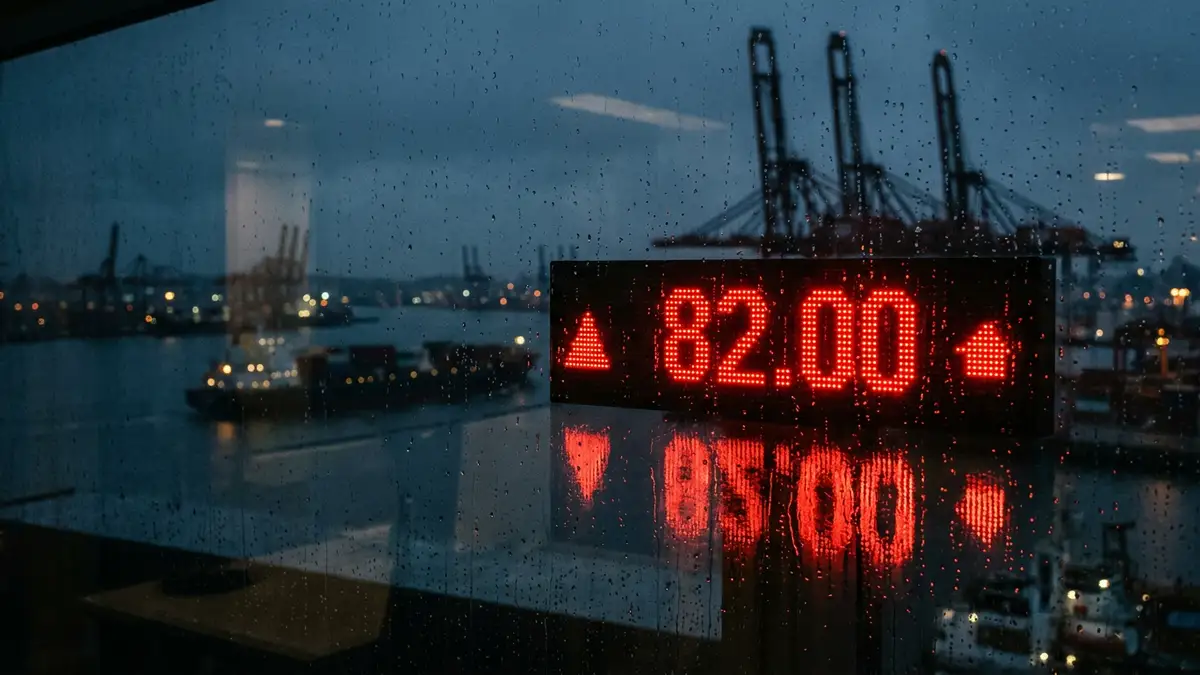
Image: Matt Weston / AI

Callum Smith
Oil prices climbed to $82 a barrel as military operations involving the United States, Israel, and Iran intensified across the Middle East, triggering immediate supply fears.
Ali Vaez, director of the Iran Project, stated that a total closure of the Strait would disrupt approximately one-fifth of globally traded oil overnight. This blockage would excise millions of barrels from the daily market instantly.
Iranian officials declared the country will set fire to any vessel attempting to traverse that specific stretch of water. This rhetoric aligns with a visible military build-up currently unfolding across the region.
A total closure of the Strait would disrupt approximately one-fifth of globally traded oil overnight.
Sardar Jabbari, a senior commander of the Iranian military, announced plans to launch missiles at Cyprus with enough intensity to force American aircraft to vacate the island. The threat targets a key strategic hub for Western forces in the Eastern Mediterranean.
Jabbari noted that the United States has relocated the majority of its aircraft to the Mediterranean island. This movement of assets places American hardware within the declared striking distance of Iranian batteries.
In the United Kingdom, the geopolitical friction translated into immediate physical queues at the pumps. Long lines formed at fuel forecourts across the country while some stations reported running dry of petrol and diesel.
Edmund King, president of the AA, stated that pump prices will inevitably increase in the coming weeks. He noted that costs are returning to levels seen at the start of the year.
Luke Bosdet, an AA spokesperson, observed that supermarkets including Asda, Morrisons, Sainsbury's, and Tesco typically hold prices down longer than independent retailers. These major chains act as a temporary buffer for consumers facing rising costs.
Beyond the retail giants, SNP economy spokesperson Dave Doogan confirmed that families and businesses are bracing for higher fuel costs following the military strikes. The economic pressure reaches from the Persian Gulf to the Scottish Highlands.
Pump prices will inevitably increase in the coming weeks.
The conflict threatens to impact millions of UK households through a combination of fuel prices, inflation, and fluctuating interest rates. Economic stability remains tethered to the security of international shipping lanes.
Martin Lewis identified the spike in gas prices as a primary driver of UK electricity costs. He noted the increase is substantial relative to the last six months of market activity.
Lewis clarified that while the current surge is significant, it has not yet reached the levels recorded during the onset of the Ukraine war. The market remains volatile but below the historic peaks of 2022.
The immediate domestic impact will likely manifest as higher prices for new fixed-rate energy tariffs. Providers are adjusting their offerings to account for the increased cost of wholesale acquisition.
Future adjustments to the July energy price cap depend on the duration of the current price spike. A prolonged conflict could lock in higher costs for the remainder of the fiscal year.
Domestic heating oil costs have risen sharply today, moving closer to the peak levels seen during previous international conflicts. Rural households reliant on off-grid fuel face the most direct financial hit.
Lewis reported that heating oil prices are currently at approximately half the level of the largest historical spike. Despite the rapid climb, the current market retains some distance from total record highs.
The Mediterranean and the Middle East remain the focal points of this escalating energy crisis. Military movements continue to dictate the daily fluctuations of the global barrel price.