Oil Prices Surge as US-Israeli Strikes on Iran Trigger Hormuz Blockade
Global markets react to the death of Ayatollah Ali Khamenei and retaliatory missile strikes on shipping lanes
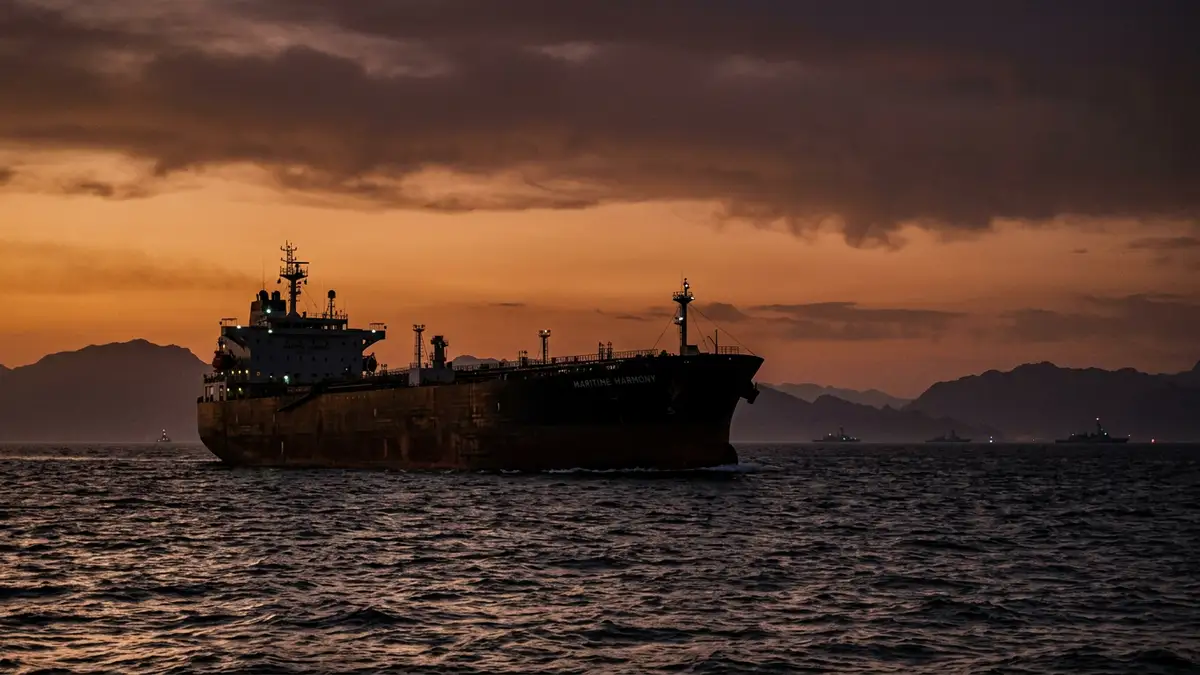
Image: Matt Weston / AI

Sarah Connor
Brent crude prices jumped 13% to $82 per barrel following joint US-Israeli military strikes against Iran and the confirmed death of Ayatollah Ali Khamenei.
Two ships faced direct kinetic strikes in the Strait of Hormuz. At least three tankers sustained structural damage from the coordinated drone salvos.
IRGC officials broadcast radio transmissions to all regional vessels. They declared a total prohibition on passage through the waterway.
Shipping giant Maersk suspended all transit through the Strait of Hormuz and the Suez Canal. The UK Maritime Trade Operations Centre confirmed multiple attacks as insurers withdrew coverage for the corridor.
In Tokyo, the Nikkei 225 index plummeted 2.4% as capital fled to safe-haven assets. Gold prices climbed 2.8% to reach $5,397.10 per ounce.
The killing of a sovereign leader for regime change is unacceptable.
European wholesale gas prices surged 52% on Monday following the disruption of these primary energy arteries. Qatar halted Liquefied Natural Gas (LNG) production after an Iranian drone struck a company facility.
Donald Trump stated the conflict could last four weeks and vowed attacks would continue until US objectives are met. He urged the Iranian people to overthrow the religious fundamentalist regime.
Chinese Foreign Affairs Minister Wang Yi condemned the strikes. He labeled the killing of a sovereign leader for regime change unacceptable.
This geopolitical shift threatens Beijing's energy security directly. Natixis data shows 13% of China's oil imports originate from Iran.
The current blockade echoes the 'Tanker War' of the 1980s. Modern drone technology has accelerated the pace of this maritime disruption.
Saudi authorities intercepted Iranian drones targeting the Ras Tanura oil refinery. The facility serves as a lynchpin for the global oil supply.
OPEC+ members agreed to a modest output increase of 206,000 barrels per day for April. This move attempts to address the sudden supply volatility.
Military action will spike the market.
Financial analyst Paul Auslander stated that military action will spike the market. He projected higher oil prices across Europe and England.
Wood Mackenzie warned that oil prices could exceed $100 per barrel. This occurs if tanker flows through the strait remain frozen.
Such a price floor alters the economic recovery projections for the G7 nations. The Bank of England may delay planned interest rate cuts as inflation pressures mount.
Rising fuel costs place significant pressure on the UK government. The administration must now manage domestic energy price spikes.
FairFuelUK called on Chancellor Rachel Reeves to freeze fuel duty in the upcoming Spring Statement. The group cited the 13% crude spike's impact on haulage costs.
The IRGC maintains its blockade, severing an artery that carries one-fifth of global oil consumption. Military analysts monitor the Gulf for further drone deployments.
The death of Ayatollah Ali Khamenei created a power vacuum. This vacancy complicates any immediate diplomatic resolution to the naval standoff.
Without a clear successor, the IRGC's naval units operate under autonomous military protocols. Global energy markets remain in a state of high volatility.
The four-week window suggested by Trump has begun. The intersection of regime collapse and maritime warfare has pushed the Strait of Hormuz into its most precarious state in decades.