FTSE 100 Slides as Middle East Conflict Drives Brent Crude Above $80
Energy prices surge following the closure of the Strait of Hormuz while domestic retail profits falter.
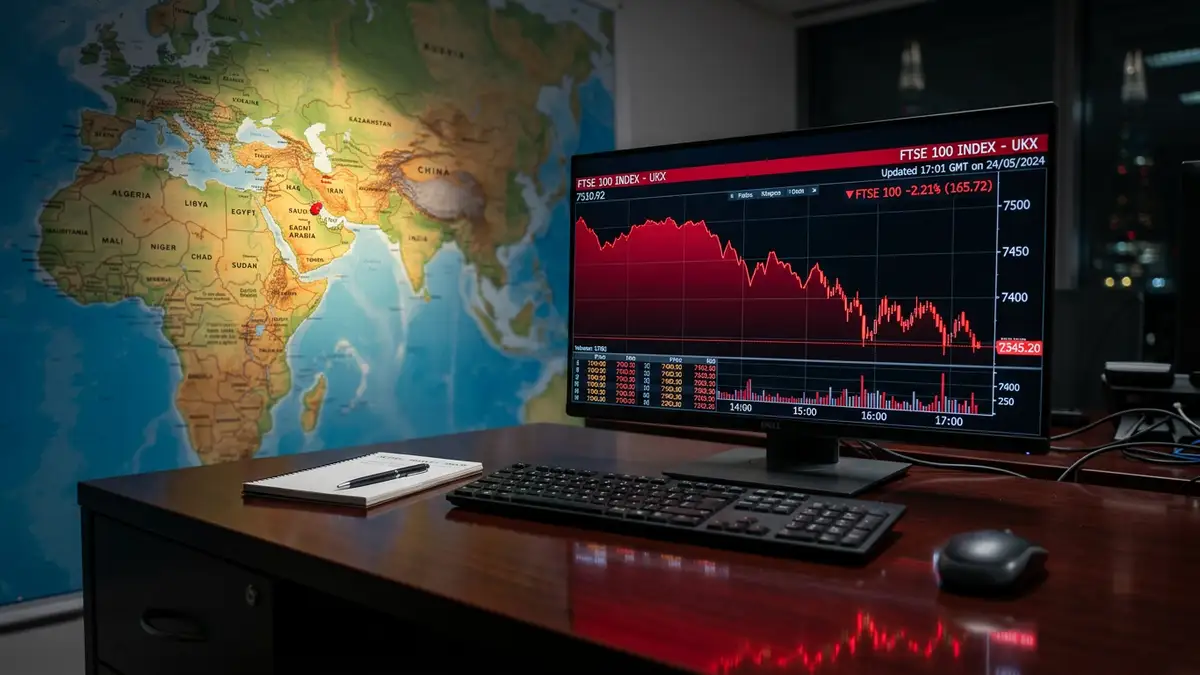
Image: Matt Weston / AI

Carla Rooney
The FTSE 100 index fell deeper into the red today as escalating conflict in the Middle East triggered a sharp reversal in market stability.
This narrow passage serves as the primary exit for the Middle East’s largest producers. It facilitates approximately 20% of the world’s liquid petroleum consumption.
The blockade forced a total standstill in a corridor that the global economy relies upon for daily survival. Oil and gas prices surged as the supply threat transformed into a physical reality.
Market participants reacted by purging capital from equities. They sought refuge in safe-haven assets as energy costs spiked across the board.
The FTSE 100 now bears the scars of this downward pressure. Multiple sectors are buckling under the weight of the geopolitical escalation.
Investors abandoned positions in rapid succession. This flight drove the index lower as the situation in the Middle East intensified.
Stronger and more secure
Domestic retailers are already feeling the heat. Greggs reported a significant slump in profits over the past year.
This poor performance from the bakery giant adds downward momentum to the London Stock Exchange. The market remains volatile throughout the current session.
The Treasury faces mounting economic pressure as the Spring Statement looms. Chancellor Rachel Reeves is currently navigating a wave of demands to scrap a proposed fuel duty hike.
Reeves maintained that Labour 'has the right plan for Britain' during a recent address. She insisted that the national economy has strengthened under her leadership, even as market indicators flash red.
The Chancellor further asserted that the British economy is now 'stronger and more secure' than in previous cycles. These claims now collide with the reality of soaring crude prices and a retreating stock market.
Military projections for the region underwent a violent recalibration following the blockade. Donald Trump warned that any military operations against Iran could take significantly longer than the initial four-to-five-week estimate.
This extended combat timeline suggests a period of prolonged instability for the world’s most sensitive shipping lanes. Such a shift impacts long-term energy futures and has already sent insurance premiums for cargo vessels into a vertical climb.
The Strait of Hormuz remains the undisputed focal point of the current price rally. Any sustained closure of this narrow passage threatens to lock Brent crude above the $80 threshold.
Traders are currently glued to their monitors, searching for any sign of naval intervention or a diplomatic breakthrough. The FTSE 100 continues to fluctuate wildly, remaining hypersensitive to every movement in the Persian Gulf.
Historically, this waterway has functioned as a global choke point where geopolitical friction translates directly into domestic consumer inflation. The current blockade mirrors the mechanics of past energy crises that forced a total reshaping of Western fiscal policy.
High-street staples like Greggs illustrate how domestic businesses remain vulnerable to these distant global shocks. Rising logistics costs and cooling consumer confidence are creating a pincer movement that crushes retail margins.
The Treasury must now navigate a razor-thin corridor between maintaining fiscal discipline and satisfying the public’s hunger for energy relief. Rachel Reeves is tasked with balancing the Labour party’s growth narrative against a sudden, sharp inflationary spike.
Military analysts suggest that a persistent blockade will force a permanent reconfiguration of global supply chains. If the 21-mile passage remains obstructed, the cost of rerouting massive tankers around the Cape of Good Hope will escalate dramatically.
Any military operations against Iran could take significantly longer than the initial four-to-five-week estimate.
Insurance markets have already begun pricing in the heightened risk of kinetic conflict within the Persian Gulf. These surging premiums for maritime transit are moving in lockstep with the rising price of Brent crude.
While the London market’s heavy concentration of multinational energy giants provides a partial cushion, the broader index remains tethered to global stability. Further escalations in the Middle East threaten to erase every year-to-date gain achieved by the FTSE 100.
Diplomatic channels have fallen silent as the Iranian blockade holds its position with absolute firmness. The international community now waits for a formal response from the various naval task forces stationed within striking distance of the region.