Middle East Conflict Triggers Global Oil Surge as UK Fuel Duty Hikes Loom
Brent crude prices jump 13 per cent following US and Israeli strikes on Iran and retaliatory attacks across five nations.
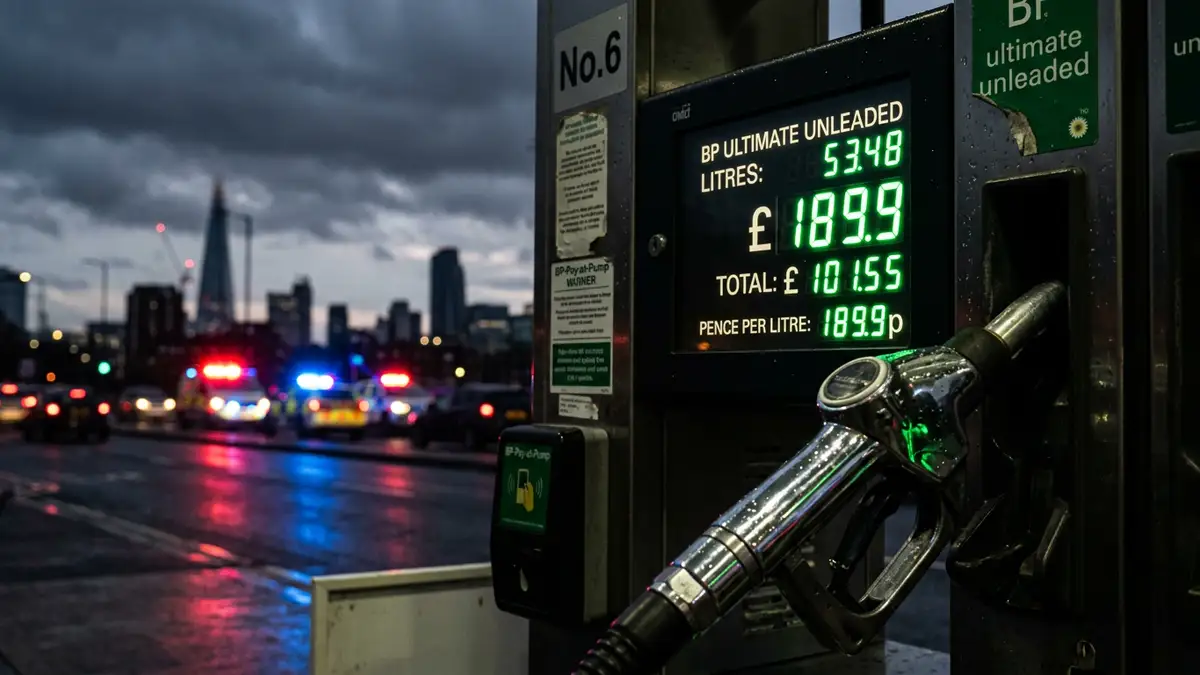
Image: Matt Weston / AI

Sarah Connor
The United States and Israel launched coordinated military strikes on Iran, triggering a wave of retaliatory Iranian strikes against targets in the UAE, Qatar, Bahrain, Jordan, and Iraq.
FairFuelUK warned that the price per barrel could climb to 100 US dollars within weeks. This signals a looming global oil crisis as hostilities disrupt the world's primary energy artery.
UK drivers face an immediate 1p per litre rise in fuel duty on September 1. The government also locked in further increases for December 2026 and March 2027.
The Treasury is currently reversing a previous 5p-a-litre fuel-duty cut. This move aligns with broader fiscal adjustments despite shifting market conditions.
Average petrol prices in the UK currently stand at 132.83p per litre. Forecourt costs began a slight upward trend in recent days.
Drivers could see record prices at the pumps within the next 10 to 12 days.
Edmund King, president of the AA, stated that drivers could see record prices at the pumps within the next 10 to 12 days. The AA projected that petrol prices will return to the 135.7p per litre levels recorded at the start of 2026.
Andrew Watson of PetrolPrices confirmed that global events over the weekend pushed wholesale fuel costs sharply higher. These wholesale increases will feed through to UK pump prices in the coming days.
The RAC indicated that oil prices must remain high to push petrol toward 150p per litre. Howard Cox, founder of FairFuelUK, stated that BP, Shell, and Esso will be the first to hike pump prices.
Cox predicted that queues at filling stations are inevitable as a result of the price volatility. He called for the government to freeze fuel duty for the remainder of the current Parliament.
Trevor Phillips stated Chancellor Rachel Reeves could intervene if the oil price hike pushes pump fees significantly higher. This intervention remains a possibility as market pressure mounts.
Labour Party foreign secretary Yvette Cooper disputed claims regarding the inevitability of the price trajectory. "That’s simply not true," Cooper stated in response to the projections.
That’s simply not true.
The Prime Minister’s official spokesman confirmed that there are currently no reported impacts to the UK fuel supply. Paul Barker of Auto Express stated the conflict will have a negative impact on oil prices in the short term.
Historically, disruptions in the Strait of Hormuz have forced immediate shifts in global logistics. This waterway remains a primary artery for the world's energy supply.
Closure of this route typically precedes significant inflationary pressure across international markets. Stakeholders across the transport sector are now bracing for the economic fallout.
Haulage firms and delivery networks face rising operational costs. These expenses often translate into higher consumer prices for essential goods.
Political pressure on Downing Street intensifies as the scheduled fuel duty hikes coincide with this international instability. Opposition figures and motoring advocacy groups are monitoring the Treasury for any signs of a policy reversal.
Market analysts are watching the 100-dollar-a-barrel threshold as a critical psychological and economic marker. If prices sustain at that level, the impact on global manufacturing and travel will be prolonged.
The current landscape suggests a shift toward higher volatility in the energy sector for the foreseeable future. Societal reliance on stable fuel prices remains a central pillar of the UK's economic recovery efforts.
In the coming weeks, the focus will remain on military developments in the Middle East and their correlation to wholesale market fluctuations. Any further escalation in the UAE or Qatar could trigger additional shipping suspensions.
The Treasury has not yet indicated a change to the December 2026 fiscal timeline despite the current market shocks. Drivers are advised to monitor local forecourt prices as the wholesale increases begin to manifest at the pump.