Pope Leo XIV Denounces Joint Military Strikes on Iran Following Fatal Escalation
Casualties mount as Tehran retaliates with surgical missile strikes and Washington vows unprecedented force.
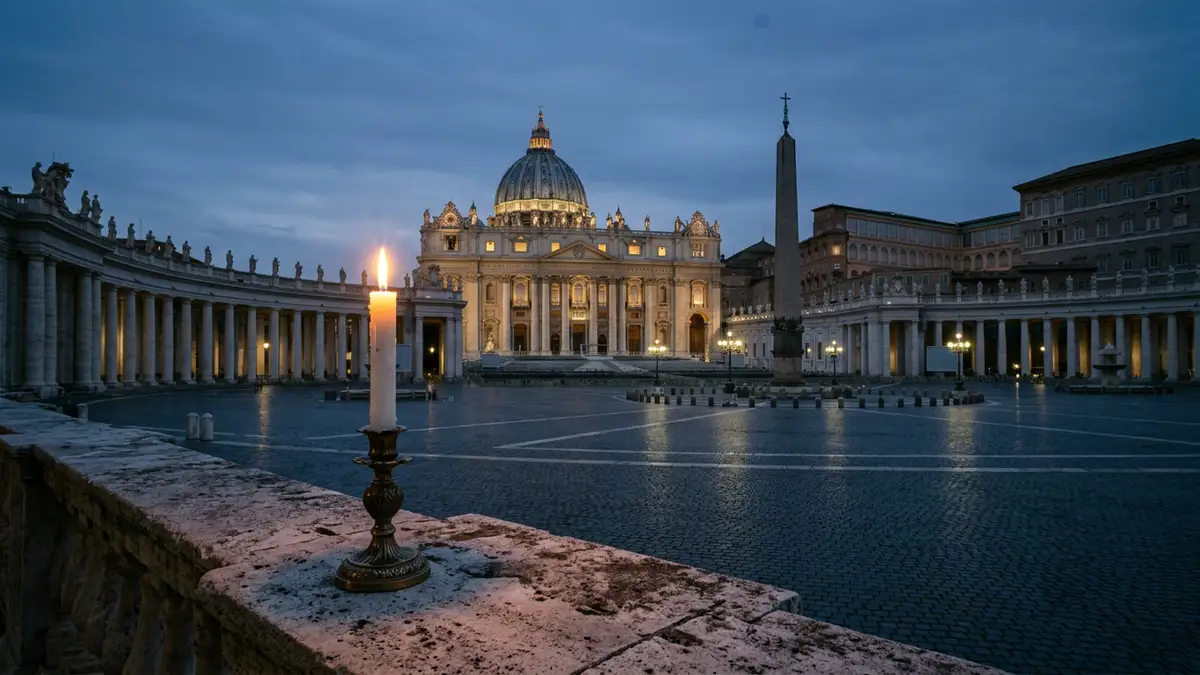
Image: Matt Weston / AI

Sarah Connor
Pope Leo XIV condemned the joint United States and Israeli military strikes on Iran during an address at the Vatican on Sunday, March 1, as the conflict transitioned into direct kinetic engagement.
Iran countered the joint assault with a surgical missile strike against specific regional assets. Tehran officials now place the death toll from the combined strikes at over 200 people.
Donald Trump defined the mission objective as the elimination of imminent threats from the Iranian regime. He asserted that the leadership in Tehran actively seeks to kill.
The leadership in Tehran actively seeks to kill.
The administration signaled a pivot toward total engagement, abandoning the containment strategies of previous executives. Trump vowed to strike Iran with a force the world has never witnessed.
This escalation follows decades of hostility rooted in the 1979 Islamic Revolution. The 2015 Joint Comprehensive Plan of Action (JCPOA) collapse stripped away the diplomatic guardrails that once prevented open war.
Regional stability centers on the Strait of Hormuz, a narrow chokeway carrying 20% of the world's daily oil supply. Any disruption to this maritime artery paralyzes the global energy grid.
Global markets reacted instantly as Brent crude futures jumped 4.5% within hours of the first explosions. Traders in London and New York moved to hedge against a prolonged conflict in the Persian Gulf.
Defense contractors recorded immediate stock gains as the Pentagon mobilized heavy assets. Shares in Lockheed Martin and Raytheon climbed as the scale of the military commitment became visible.
Military planners now track the deployment of the USS Gerald R. Ford carrier strike group. The nuclear-powered vessel steams toward the North Arabian Sea to provide expanded strike capabilities.
Legislators in Washington remain split as the War Powers Act of 1973 faces renewed scrutiny. Critics in Congress challenge the extent of executive overreach regarding these new military commitments.
Diplomatic channels in Switzerland, the traditional mediators for Washington and Tehran, report no successful contact since the strikes began. This silence indicates a total breakdown in backchannel communications.
Tehran has not confirmed if further missile volleys sit ready for launch against regional bases. Satellite imagery reveals mobilization at several Islamic Revolutionary Guard Corps launch sites.
The Vatican address marked a rare direct entry by the papacy into a tactical military dispute. Pope Leo XIV used his Sunday platform to challenge the necessity of the tripartite escalation.
Energy analysts warn that sustained conflict will drive oil prices toward record highs. The 4.5% jump in Brent crude represents only the opening volatility of a larger market shift.
Ground forces in the region occupy high-alert status while the U.S. and Israel coordinate subsequent moves. The loss of three American service members altered the political calculus for the White House.
The Iranian government broadcasts images of the strike damage to domestic audiences. These broadcasts highlight the 200 casualties to galvanize local support against the coalition.
Strategic planners weigh the risks of a full-scale regional war against the goal of threat elimination. The movement of the USS Gerald R. Ford confirms the U.S. is preparing for all contingencies.
Future diplomatic efforts remain stalled while the kinetic phase of the operation expands. The international community monitors the Strait of Hormuz for signs of an Iranian naval blockade.