Iran Inflation Soars to 42%, Sparking Widespread Protests Amidst International Tensions
US President Trump issues warnings as Tehran threatens retaliation against potential intervention.

Sarah Connor
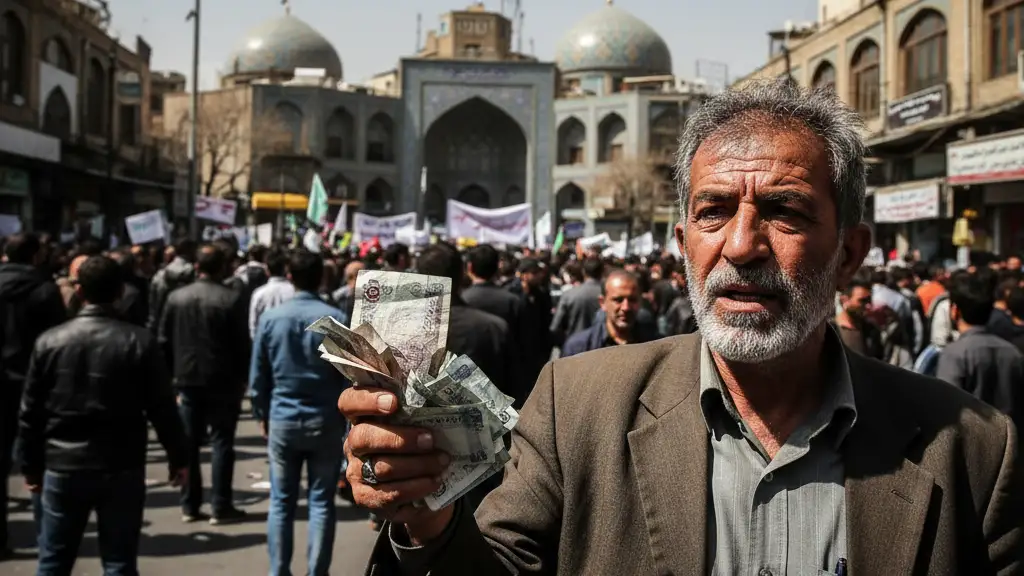
Annual inflation in Iran has reached 42%, fueling widespread discontent that has erupted into protests.
Iranian security forces have reportedly opened fire on unarmed protesters using Kalashnikov-style assault rifles, with the government yet to release overall casualty figures.
The Human Rights Activists News Agency (HRANA) reports at least 10,600 people have been detained over the past two weeks. The protests have escalated into the most significant anti-government unrest since the 'Woman, Life, Freedom' movement of 2022.
Annual inflation currently hovers at 42%. Traders in Tehran sparked the initial demonstrations, protesting a sharp depreciation in the national currency.
Iran's police force issued a warning to respond 'decisively, swiftly and forcefully' to what it terms 'violent rioters.'
Prosecutor General Mohammad Movahedi Azad stated that individuals committing sabotage, burning public property, or clashing with security forces will face the death penalty.
International attention is fixed on the crisis. US President Donald Trump warned that Iran is close to crossing a 'red line.'
White House Press Secretary Karoline Leavitt claimed President Trump is 'unafraid to use lethal force or the might of the United States military' and is considering strikes in Iran.
Leavitt also noted that Iran's private and public messaging to the US have been 'quite different.'
Parliamentary speaker Mohammad Bagher Qalibaf warned that Tehran would target Israel and US bases and ships if Washington intervenes.
Iran claims it is ready for war, asserting that US involvement would trigger violent reactions against American military bases and Israel.
Foreign Minister Abbas Araqchi claimed security forces have brought anti-government protests under total control.
The government announced three days of mourning for those it calls 'martyrs' killed in a 'national battle against the US and Israel.'
Iranian authorities accused the US and Israel of fomenting trouble, blaming 'terrorist agents' from both countries for the unrest.
Supreme Leader Imam Sayyid Ali Hosseini Khamenei also stated that foreign actors were behind the protests.
President Trump claimed that Iran has reached out to propose negotiations, stating that Tehran 'wants to negotiate.'
Iran confirmed it has reached out and 'wants to negotiate' to prevent potential attacks.
Senator Lindsey Graham suggested the US President should 'kill the leadership that are killing the people.'
Reports suggest the US has not ruled out deploying secretive cyber weapons against Iranian military and civilian sites.
However, sources indicate military strikes would be fraught with difficulty and could reinforce the Iranian government's narrative that the protests are being manipulated by the West.
The death toll could be significantly higher than officially reported.
UN Secretary-General Antonio Guterres urged maximum restraint and respect for human rights.
Newly elected President Masoud Pezeshkian adopted a softer stance, acknowledging government failures and pledging dialogue regarding the cost-of-living crisis.
Despite this, he still accused 'rioters' and foreign powers of orchestrating the uprising.
The US bombed Iranian nuclear sites last year, and Donald Trump remains described as 'unafraid to use military force on Iran.'
Former head of MI6 Sir Richard Moore stated that the Ayatollah regime will 'do anything to try and crush' rebellion.
Related Keywords
Reza PahlaviAyatollah Ali KhameneiInternational RelationsProtestsUnited StatesIsraelPoliticsIranMiddle EastGovernmentHuman RightsDonald TrumpEconomyTehranWhite HouseIran ProtestsProtestUs-Iran RelationsMiddle East ConflictWorld News