UK Naval Deployment Stalls as Drone Strike Hits Cyprus Base
HMS Dragon delay and carrier readiness shifts trigger defense spending row following Mediterranean escalation
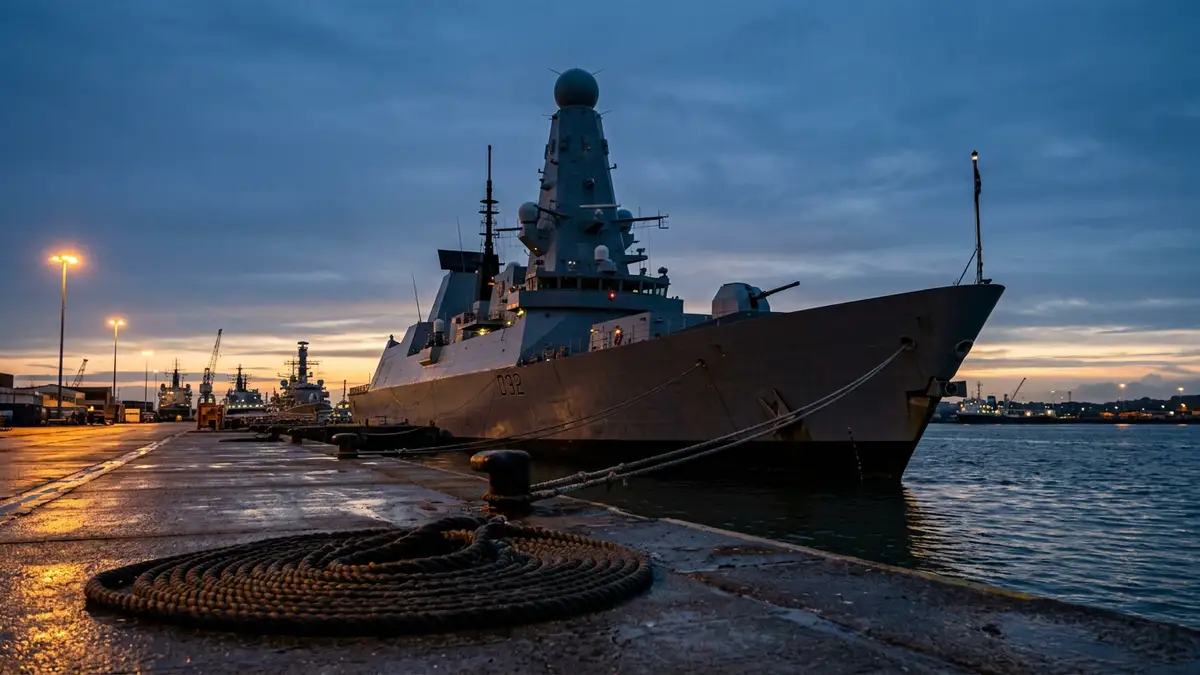
Image: Matt Weston / AI

Carla Rooney
The Royal Navy has delayed the deployment of HMS Dragon to the eastern Mediterranean following a drone strike on a British military base in Cyprus.
Defence Secretary John Healey confirmed the kinetic assault and traced the device to launch sites in Lebanon or Iraq.
Cypriot officials identified the drone as a product of territory controlled by Hezbollah.
Healey detailed the industrial scale of this threat, noting the Iranian regime has supplied 60,000 drones for the conflict in Ukraine.
The Iranian regime has supplied 60,000 drones for the conflict in Ukraine.
The Ministry of Defence moved the aircraft carrier HMS Prince of Wales to an advanced state of preparedness to address the vulnerability.
Its sister ship, HMS Queen Elizabeth, remains immobile in dry dock for scheduled maintenance.
British forces currently fly defensive air sorties to support the United Arab Emirates.
These missions follow a period where the UK military remained grounded during US and Israeli strikes launched over a week ago.
Shadow Defence Secretary James Cartlidge stated the failure to deploy a Royal Navy ship has undermined Britain's international standing.
The Ministry of Defence faces £2.6bn in budget cuts this year.
Historical fiscal decisions now collide with modern maritime requirements.
Cartlidge questioned why naval assets were not positioned weeks ago in anticipation of major US operations.
The Shadow Secretary characterised the sudden increase in carrier readiness as a distraction from a lack of prior planning.
Tory leader Kemi Badenoch stated that Prime Minister Sir Keir Starmer was too slow to respond to the Iran crisis.
Badenoch described the government as being on the back foot during the escalation.
Former defence minister Tobias Ellwood stated the UK was fundamentally unprepared for the crisis.
Former diplomat Ameer Kotecha called the lack of preparation for the attacks unforgivable.
Internal military data shows the British military is currently overstretched and under-resourced.
Current logistics indicate a British aircraft carrier may require a French escort if it is eventually deployed to the Middle East.
Sir Keir Starmer stated that British lives had been put at risk during the recent hostilities.
The carrier serves as the primary shield for the Akrotiri base in Cyprus against further missile and drone threats.
Official directives maintain the decision to bolster the ship's readiness was not connected to specific events in Iran.
The administration faces mounting accusations of failing to secure Cyprus quickly enough despite these official denials.
HMS Prince of Wales remains unlikely to head directly to the Middle East despite its elevated status.
The vessel remains the primary option for a Mediterranean presence while the rest of the fleet undergoes maintenance.
James Cartlidge argued that the government has prioritised welfare over defence spending.
This fiscal priority left the military unable to meet the immediate demands of the Mediterranean crisis.
The international dimension of the crisis was sharpened by comments from Donald Trump.
Trump stated the United States no longer needs UK support, saying we don’t need people that join wars after we’ve already won.
We don’t need people that join wars after we’ve already won.
This rhetoric from across the Atlantic adds pressure to a Downing Street grappling with a depleted fleet.