Drone Strike Hits RAF Akrotiri as UK Deploys HMS Dragon to Mediterranean
Defence Minister John Healey visits Cyprus following base attack and delays to regional rescue operations
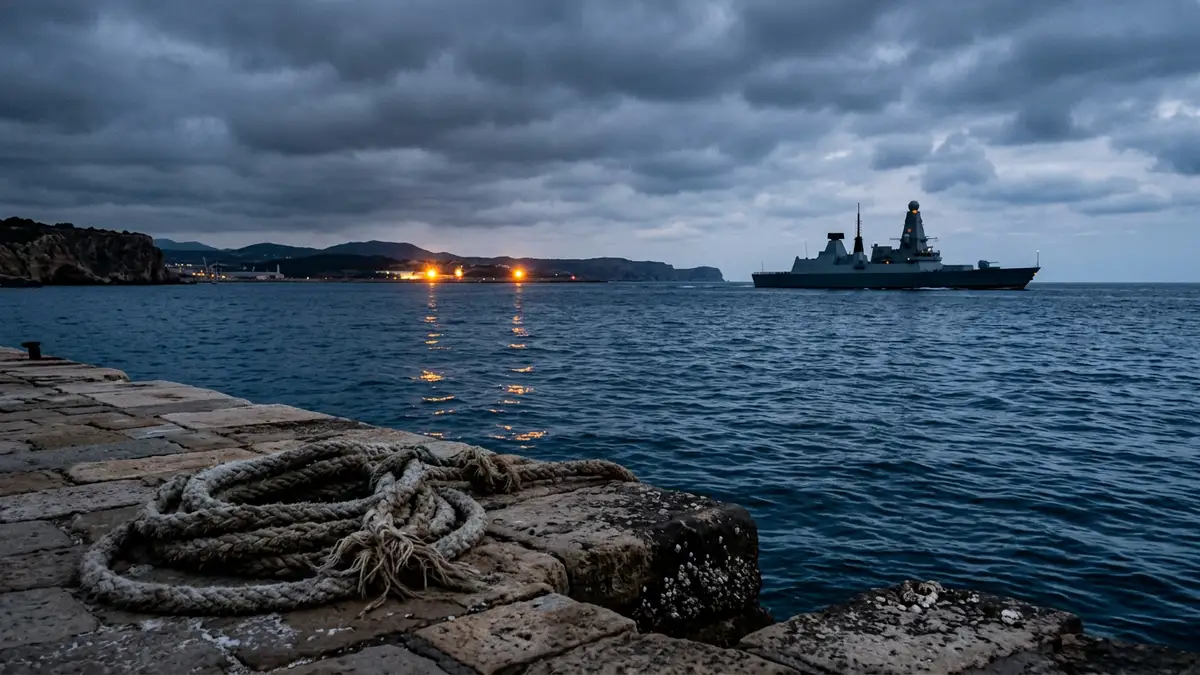
Image: Matt Weston / AI

Sarah Connor
A pro-Iranian militia drone strike on the RAF Akrotiri base in Cyprus has triggered an immediate surge in British maritime and aerial deployments across the Mediterranean.
Sirens pierced the air across the base as the threat materialized on the perimeter. Personnel scrambled for shelter while the projectile impacted a hangar, rocking the facility.
Witnesses observed a British aircraft scramble from the runway moments after the explosion. This installation has served as a critical staging post for British power projection since 1960.
Cypriot officials identified the weapon as a Shahed drone launched from Beirut. The strike bypassed multiple defensive layers designed to protect the sovereign base area.
The threat persisted into Monday morning. Air defenses intercepted two additional unidentified objects approaching the island's coastline.
Defence Minister John Healey arrived in Cyprus this week to assess the vulnerability of the installation. His arrival follows updated FCDO guidance warning of a high global threat against British nationals.
The Ministry of Defence is now deploying the Type 45 air defense destroyer HMS Dragon to the region. The warship sets sail next week to establish a permanent maritime presence in the eastern Mediterranean.
Specialized Wildcat helicopters equipped with anti-drone technology arrive on the island within days. These assets will integrate with F-35 Lightning jets already stationed at the base.
Prime Minister Sir Keir Starmer expanded the UK's footprint by dispatching four additional Typhoon jets to Qatar. Starmer prepares to provide a comprehensive update to Parliament regarding the escalating conflict.
Kyriacos Kouros, the Cypriot High Commissioner to the UK, expressed disappointment over the lack of information sharing. He demanded increased cooperation to ensure the safety of local residents living near the British installations.
The French are coming.
Kouros noted that HMS Dragon would take over a week to reach its station. He stated that a robust military presence remains the minimum expectation under current treaty obligations.
France, Spain, Italy, and the Netherlands are moving naval assets to fill the security vacuum. Kouros confirmed the arrival of European partners, stating, 'The French are coming.'
Cypriot President Nikos Christodoulides clarified that his nation has no intention of participating in active military operations. Government spokesman Constantinos Letymbiotis highlighted the lack of guarantees that bases would be restricted to humanitarian use.
The security crisis disrupted civilian logistics, forcing a UK government-chartered rescue flight from Oman into significant delays. Home Office Minister Alex Norris confirmed the flight is rescheduled to depart Muscat on Thursday.
British Airways, easyJet, Ryanair, and TUI cancelled flights to specific Cypriot regions following the strike. The FCDO maintains that further terrorist attacks on the island remain a distinct possibility.
Conservative Leader Kemi Badenoch suggested that regional allies feel abandoned by the current administration. She argued the UK must consider joining bombing raids on Iran following attacks in Bahrain and Cyprus.
Shadow Defence Secretary James Cartlidge called for stronger leadership, citing the strike as evidence of a deteriorating security posture. A government spokesman acknowledged criticisms regarding the volume of military assets currently stationed in the Middle East.
The Sovereign Base Areas Administration continues a forensic investigation into the March 2 strike. Authorities had previously tracked intelligence indicating a suspected object was on a direct flight path toward the military installations.