France Deploys Air Defenses to Cyprus Following Drone Strike on RAF Akrotiri
Paris moves anti-missile systems to the Mediterranean as Hezbollah targets British military infrastructure with Iranian-made Shahed drones
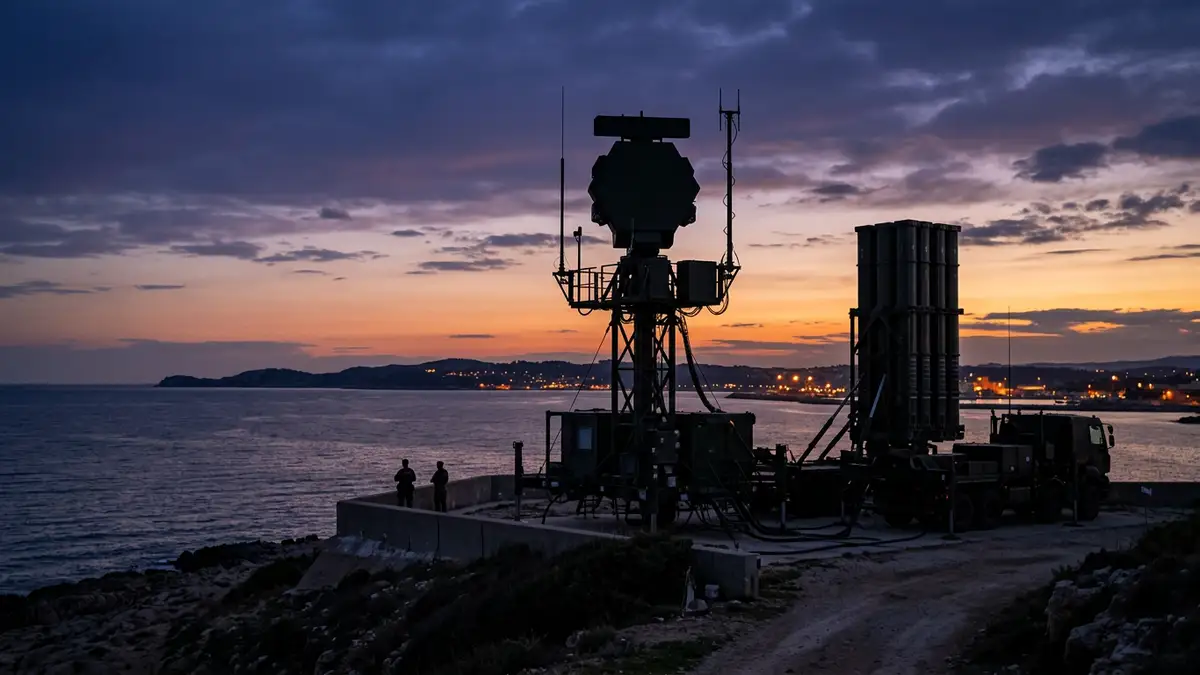
Image: Matt Weston / AI

Sarah Connor
France is repositioning advanced anti-missile and anti-drone systems to Cyprus to fortify regional security after a direct aerial strike hit the British military base at RAF Akrotiri.
This strike followed a strategic decision by the United Kingdom to allow the United States to utilize British facilities for missions targeting Iranian interests. A barrage of projectiles accompanied the drone during the operation to saturate local defensive sensors.
Major General Ebrahim Jabari, a senior commander in the Islamic Revolutionary Guard, stated that RAF Akrotiri is now 'in the frame' for future actions. This shift follows the base's active role in supporting regional aerial operations across the Middle East.
RAF Akrotiri is now 'in the frame' for future actions.
Defense Secretary John Healey stated the strike demonstrated the 'dangerous and indiscriminate attacks' carried out by Iran and its allies. The incident forced an immediate and aggressive recalibration of the Mediterranean security landscape.
Beyond the immediate fallout, the arrival of French hardware marks a significant change in the defensive posture of the Republic of Cyprus. These systems track and neutralize low-flying drones and high-velocity missile threats that evade standard high-altitude cover.
Cypriot government spokesman Konstantinos Letymbiotis stated that French assistance involves 'support similar to that of Greece.' This movement of military hardware leverages existing historical defense agreements between France and Cyprus.
The two nations share a documented history of collaboration on maritime security and regional stability initiatives. This rapid deployment utilizes those frameworks to address the sudden expansion of the conflict's geographic reach.
Despite the hardware influx, Cypriot officials attributed the success of the drone attack to poor communication from the British government. They cited a lack of coordination as a primary factor in the breach of the base's perimeter.
The Royal Navy currently faces severe operational constraints, with only three of its six Type 45 destroyers functional. This 50 percent availability rate limits the UK's ability to maintain a constant high-readiness maritime presence in the region.
Shadow Defence Secretary James Cartlidge stated that HMS Duncan should 'go now' to the region to provide necessary cover. He argued the vessel is essential to provide the air defense required to protect RAF Akrotiri from further incursions.
HMS Duncan should 'go now' to the region to provide necessary cover.
British officials are currently evaluating the deployment of a Type 45 destroyer to the Middle East to reinforce existing assets. These ships serve as the primary platform for complex anti-air warfare and missile interception.
Nato chiefs stated the United Kingdom faces falling toward the bottom of the alliance's league table without increased military investment. Current spending levels have drawn scrutiny regarding the defense of overseas territories like Cyprus.
John Foreman, the former UK defense attaché in Moscow, stated the current situation in the Gulf and Mediterranean is not solely a result of underfunding. He pointed to broader strategic challenges currently facing the region beyond simple budgetary gaps.
Economic pressures on the UK defense budget created an operational gap that coincides with increased missile activity across the Levant. This vulnerability has become a focal point for regional stakeholders monitoring the power vacuum.
Hezbollah's use of the Shahed drone mirrors tactics observed in other modern conflict zones where cheap technology bypasses expensive radar. The strike represents a physical expansion of the current conflict into European-adjacent territory.
The deployment of French assets serves to plug the gap left by the diminished Royal Navy presence. It signals a shift toward multilateral defense of the island's sovereign and military airspace.
Future security in the Eastern Mediterranean now depends on the integration of these French systems with existing British and Cypriot infrastructure. The move aims to prevent further incursions from Lebanese launch sites.
As the United Kingdom weighs its maritime response, the physical presence of French anti-drone batteries provides an immediate deterrent. The hardware is expected to be operational within days to secure the perimeter of the base.
The arrival of these batteries follows months of escalating tensions between the UK and regional proxies. Technicians are currently calibrating the French sensors to synchronize with the existing radar arrays at Akrotiri.
The geopolitical friction has turned the Eastern Mediterranean into a testing ground for asymmetric warfare. This breach proves that even fortified sovereign bases remain vulnerable to low-cost, high-precision technology.