UK Deploys HMS Dragon to Mediterranean Following Drone Strike on RAF Akrotiri
Type 45 destroyer and Wildcat helicopters move to secure Cyprus base after Shahed-type drone hits strategic runway
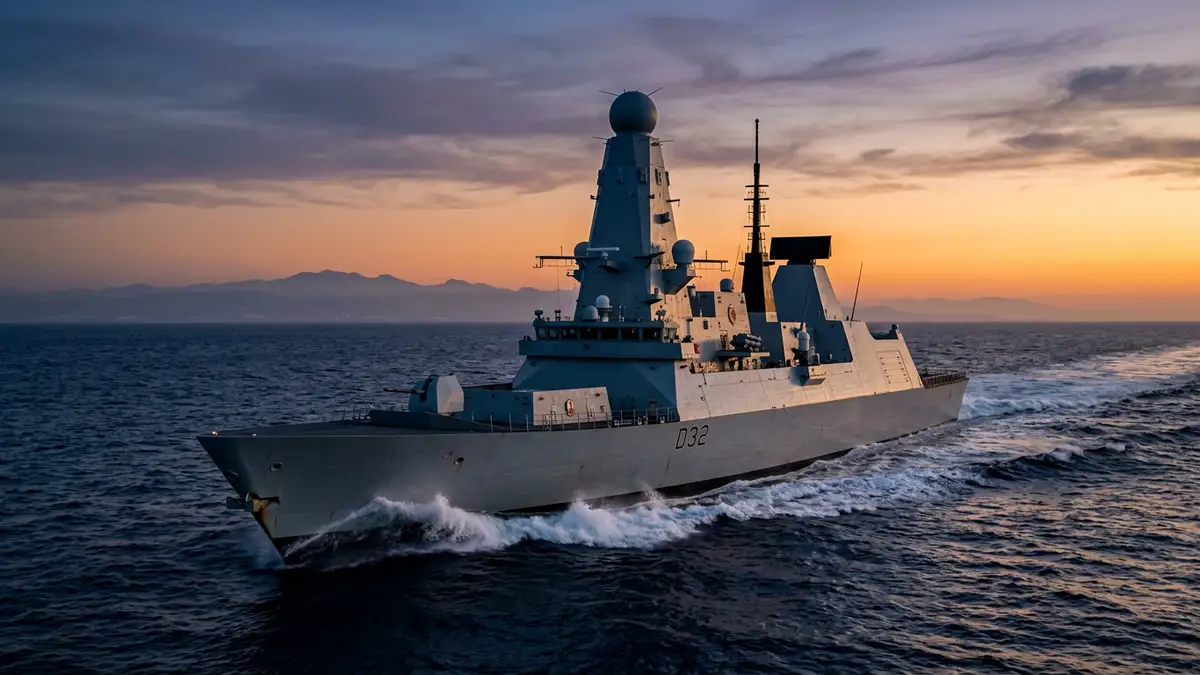
Image: Matt Weston / AI

Callum Smith
The Royal Navy has ordered the Type 45 destroyer HMS Dragon to the Mediterranean following a drone strike on the runway at RAF Akrotiri in Cyprus.
Military investigators completed forensic assessments of the debris, confirming the technology matches systems utilized by regional proxy groups. Forensic data indicates the aircraft did not launch from Iranian territory, though the hardware remains a signature of Tehran's tactical exports.
Prime Minister Sir Keir Starmer dispatched British naval assets to the region to harden local security. The Royal Navy is now deploying Wildcat helicopters armed with Martlet missiles to neutralize small, fast-moving aerial and maritime threats.
HMS Dragon utilizes the Sea Viper missile system to project a sophisticated radar umbrella over the eastern Mediterranean. This specific array intercepts the exact class of aerial threats manifested in the recent Akrotiri strike.
Engineers returned the RAF Akrotiri runway to operational status hours after the impact. Flight operations resumed at the facility, which functions as the primary strategic hub for British missions across the Middle East.
The British government maintains its presence at the base under a long-standing treaty with Cyprus. Sir Keir Starmer asserted that the UK remains fully committed to the security of the island and the 3,000 military personnel stationed there.
The government will not pursue regime change from the skies.
The Prime Minister clarified the strict limits of British intervention during this escalation. He declared that the government will not pursue regime change from the skies despite the increased naval presence.
Internal political pressure mounted as Tobias Ellwood characterized the British response to the conflict as dangerously slow. This criticism coincides with demands for the Ministry of Defence to accelerate readiness across all combat branches.
Diplomatic intelligence suggests the British Embassy in Tel Aviv possessed prior knowledge of regional volatility. Ameer Kotecha confirmed the embassy tracked an impending American and Israeli strike for weeks and warned London officials.
The United States Air Force has not utilized British bases for bombing missions during this specific period of tension. Current operations remain restricted to defensive posturing and regional stability rather than offensive sorties.
The deployment arrives as the Ministry of Defence faces a tightening fiscal environment. Max Warner stated that borrowing for a permanent increase in defense funding is currently unsustainable for the government.
Borrowing for a permanent increase in defense funding is currently unsustainable.
Economic tension persists as the Cabinet weighs military requirements against the national budget. Warner noted that faster defense spending would force the government to either increase taxes or slash budgets in other departments.
Historically, RAF Akrotiri has functioned as the primary launchpad for British power projection in the Levant. Its status as a Sovereign Base Area makes any kinetic strike a direct challenge to British territorial integrity.
The use of Shahed-type drones represents a fundamental shift in the tactical landscape of the Mediterranean. These low-cost, one-way attack munitions force expensive defensive responses from high-end assets like the Type 45 destroyers.
Diplomatic channels between London and Nicosia remain open to coordinate the arrival of the naval task group. The move signals a transition to an active maritime denial strategy in the eastern basin.
The Martlet missiles on the Wildcat helicopters specifically target the technical vulnerabilities of drone swarms. These systems provide a layered defense alongside the long-range capabilities of the Sea Viper missiles.
The Royal Navy has not specified the duration of HMS Dragon's station in the Mediterranean. The destroyer's presence serves to deter further incursions into the airspace of British overseas installations.