US Strategic Bombers Mobilise as Drone Strike Hits Cyprus Base
Heavy ordnance moves toward Fairford and Diego Garcia while Iranian-linked drones breach Mediterranean air defences
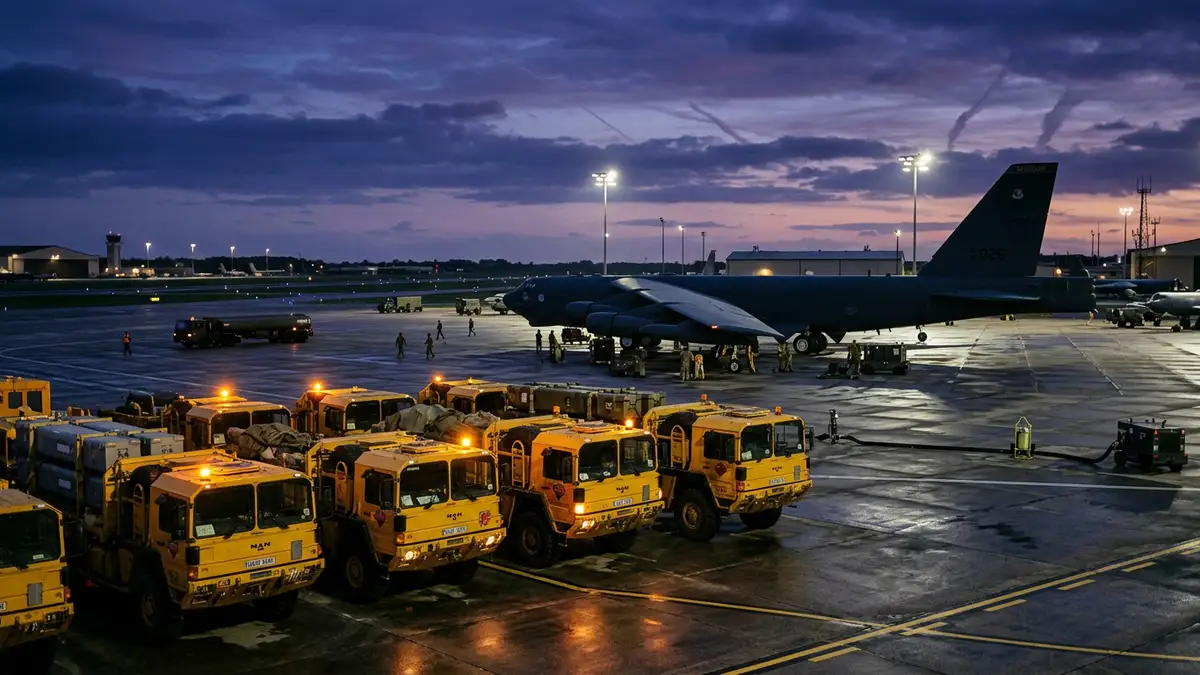
Image: Matt Weston / AI

Carla Rooney
The United States and its allies have entered a direct military conflict with Iran as heavy bombers mobilise toward strategic launch points in the United Kingdom and the Indian Ocean.
This strike bypasses traditional front lines and places European Union territory within the direct line of fire. Meanwhile, the United Arab Emirates successfully intercepted and shot down a series of Iranian missiles and drones.
These projectiles targeted UAE territory as part of a broader aerial offensive launched from Tehran. Iran responded to these interceptions by displaying an underground network of hardened tunnels.
These facilities house vast stockpiles of drones and rockets designed to survive initial allied sorties. The Iranian government now holds complete control of the Strait of Hormuz.
This waterway serves as a critical chokepoint for global oil transit and remains a primary lever of economic pressure. While tensions rise at sea, the Royal Navy destroyer HMS Dragon remains docked in Portsmouth.
Naval authorities do not expect the vessel to set sail until next week despite the escalating maritime threat. Britain has not ruled out the possibility of conducting future strikes against Iranian missile sites.
The current war could last for a month or longer.
This stance aligns with historical precedents of pre-emptive action to secure international shipping lanes. Current munitions expenditure suggests that allied air defence supplies will be exhausted within four days.
The high rate of fire required to intercept Shahed drones is rapidly depleting regional inventories. The Pentagon is currently denying Middle Eastern allies' requests for the replenishment of their military supplies.
This friction occurs as frontline states face dwindling interceptor stocks. One nation issued a formal denial regarding the depletion of its air defence stocks.
This public pushback highlights the sensitivity of military readiness during active hostilities. Israel has vowed to kill any successor to Ali Khamenei regardless of their identity or location.
This policy targets the leadership structure of the Islamic Republic directly. Middle Eastern allies are now petitioning Donald Trump for a swift conclusion to the ongoing hostilities.
These stakeholders seek a diplomatic or military exit strategy to prevent further economic destabilisation. Donald Trump suggested the current war could last for a month or longer.
This timeline contrasts with the immediate resolution sought by regional partners. The US military faces potential shortages in its own ammunition stockpiles.
The intensity of the engagement is testing the industrial capacity of the United States to sustain a high-tempo conflict. Historically, the deployment of heavy bombers to Fairford has preceded major Western air campaigns.
The arrival of these assets signals a shift from defensive posturing to active combat preparations. The breach of Cyprus air defences introduces a new variable for NATO planners.
It demonstrates that Hezbollah assets can reach beyond the immediate borders of Israel and Lebanon. Economic pressure mounts as the Strait of Hormuz remains under threat.
Global markets monitor the transit of crude oil through the corridor as Tehran asserts its naval dominance. The United States continues to coordinate with regional partners to maintain a unified front.
However, the delays in replenishment are creating visible cracks in the coalition's logistics chain. The industrial base struggles to match the consumption rate of high-end interceptors.
The silence in the diplomatic corridors of Nicosia follows the physical destruction on the tarmac. Military planners now weigh the cost of every missile fired against the reality of empty silos.