UK Government Convenes Emergency Cobra Meeting as Fuel Prices Surge Following Middle East Airstrikes
Prime Minister and Bank of England Governor to address 20p diesel spike and potential energy profit caps
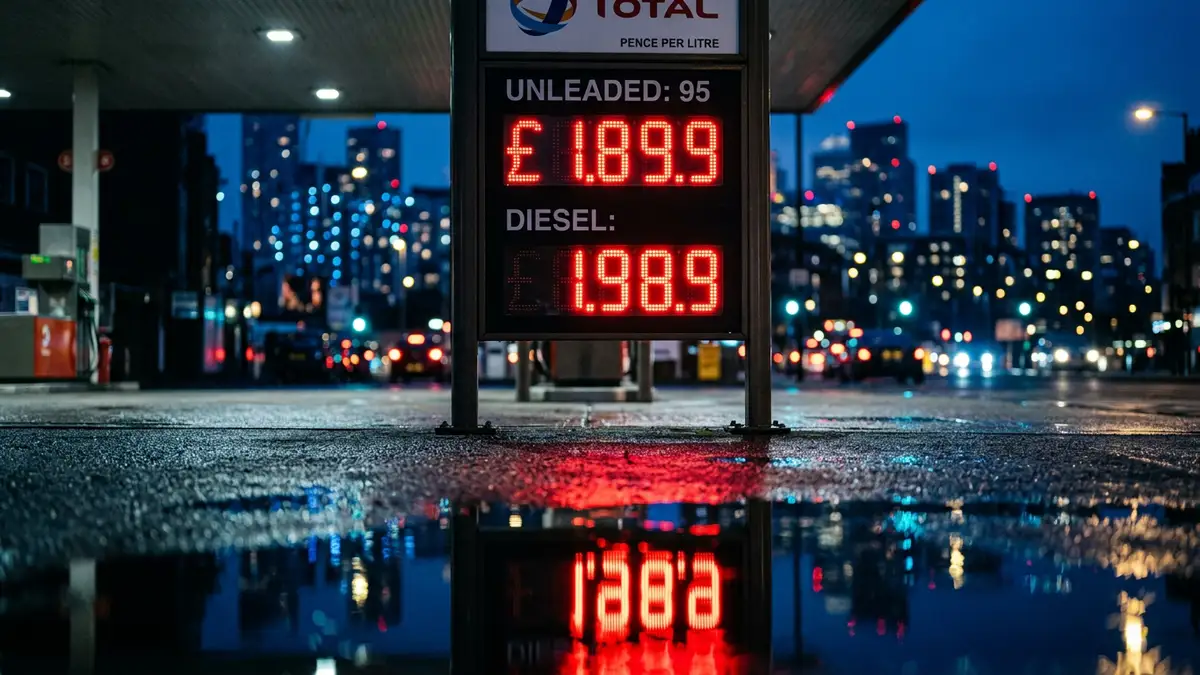
Image: Matt Weston / AI

Sarah Connor
The Prime Minister will chair an emergency Cobra meeting next week to confront a rapid escalation in household energy costs triggered by military strikes in the Middle East.
Average petrol prices climbed nearly 10p to 144.5p a litre since the onset of the conflict. Diesel costs surged more aggressively, jumping approximately 20p to reach 166.2p a litre.
Housing Secretary Steve Reed confirmed the government monitors market volatility hour by hour. Reed stated the administration will take necessary action to keep household bills down.
The UK government tracks potential food and fuel shortages resulting from regional instability and the disruption of global supply chains. Steve Reed insisted there is no immediate need for petrol rationing.
People should go around and buy their fuel just like they always would.
"People should go around and buy their fuel just like they always would," Reed said. He noted the government funnels a £53m package to households struggling specifically with heating oil costs.
This current crisis mirrors historical energy shocks where geopolitical friction in the Strait of Hormuz immediately constricted global supply. Iran’s blockade of the vital waterway forced Downing Street into a defensive economic posture.
Richard Walker, a Labour peer and the Prime Minister's cost-of-living champion, urged ministers to explore a temporary cap on the profits of energy and petrol companies. Walker argued for these limits to prevent businesses from benefiting from the spike in global oil prices.
The peer characterized the measure as a vital tool to prevent profiteering during the crisis. He stated the government should examine limiting how much businesses are able to benefit from higher energy prices.
In contrast, Centrica CEO Chris O’Shea stated that further increases in household bills are inescapable if oil prices remain high. O'Shea noted that petrol prices would face a more significant impact than domestic energy bills.
Targeted support with energy bills would be far better than blanket help.
"Targeted support with energy bills would be far better than blanket help," O'Shea said. He indicated the impact on gas and electricity should remain lower than the impact on oil.
Dale Vince joined the call for a price cap on wholesale energy to prevent runaway profits. Vince stated action is required to stop companies from benefiting from the sudden spike in global oil prices.
Steve Reed rejected the immediate necessity of a profit cap during recent briefings. He maintained that current interventions are sufficient for the present market conditions.
Forecasts from Cornwall Insight suggest energy bills in England, Scotland, and Wales could rise by an average of £332 starting in July. This projection follows the sustained disruption of global supply chains and increased shipping risks.
The Governor of the Bank of England will provide specific data during the Cobra meeting regarding the inflationary impact of the 20p diesel hike. This data informs whether the Treasury must pivot toward more aggressive market interventions.
A Government spokesman stated that supporting families struggling with the cost of living remains the administration's top priority. Officials continue to evaluate the necessity of further market interventions as the conflict persists.
The upcoming Cobra meeting formalizes the strategy for economic stability. It serves as the primary mechanism for coordinating the response between the Bank of England and the executive branch.
Industry stakeholders remain divided on the long-term implications of the Strait of Hormuz blockade. Some call for radical profit caps while others warn such measures could stifle the investment needed for energy security.
The 20p surge in diesel represents a significant pressure point for the logistics and haulage sectors. These costs typically pass through to consumer goods, compounding the risk of a broader inflationary spiral.
The Prime Minister’s decision to involve the Bank of England directly in the Cobra process signals the severity of the projected July price hikes. The meeting will determine if the £53m support package requires immediate expansion.