Global Oil Volatility Drives UK Fuel Prices Toward Record Highs
Brent crude surges to $120 a barrel as G7 ministers weigh emergency reserve releases to stabilize the energy market.
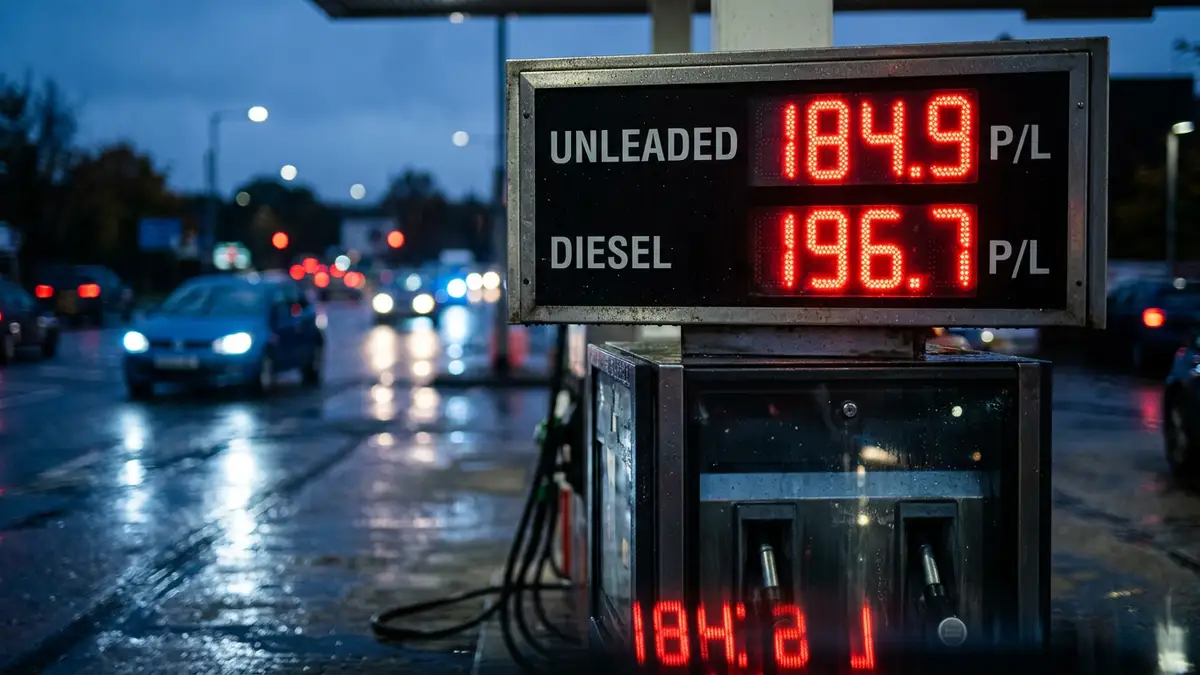
Image: Matt Weston / AI

Carla Rooney
Fuel prices across the United Kingdom are climbing as the conflict in the Middle East disrupts global energy markets and pushes Brent crude toward a critical $120 threshold.
The nationwide average for diesel reached 150.97p a litre on Sunday. RAC Fuel Watch confirms all fuel prices will increase in the near future as wholesale costs rise.
Current projections indicate petrol prices will approach or surpass the previous UK record established in 2022. That record remains the benchmark for the highest cost ever paid by drivers in the country.
History shows that sustained oil costs above $100 a barrel trigger immediate retail adjustments. In 2022, the market saw similar spikes following the invasion of Ukraine, leading to unprecedented government intervention.
G7 nations will hold an emergency meeting to discuss these rising oil prices. Finance ministers from these nations are preparing to discuss the release of emergency oil reserves to stabilize the global supply.
Stakeholders in the logistics and transport industries face immediate economic pressure from the 150.97p diesel average. These sectors operate on thin margins where fuel accounts for approximately 35 percent of overhead costs.
Public pressure has mounted on the Government to mitigate the impact on households. In response, the Department for Energy Security and Net Zero launched a new “fuel finder” tool to increase price transparency.
Asda currently offers the cheapest petrol prices across parts of Birmingham and the Black Country. This localized pricing provides a narrow margin of relief compared to the rising national average.
The landscape of the UK fuel market is shifting toward digital monitoring. The “fuel finder” initiative marks a transition toward real-time data sharing between retailers and the state.
Economic analysts monitor the $120 Brent crude threshold as a critical indicator for inflation. High energy costs historically reduce discretionary spending across the broader UK economy.
This strategic shift follows previous actions where G7 ministers utilized strategic reserve releases in 2022 to counter supply shocks. A similar move now would require coordination between the United States, Japan, and European allies.
The Black Country and Birmingham regions serve as a microcosm of the national price disparity. While Asda maintains lower rates, neighbouring independent stations have already adjusted figures upward.
Future price stability depends entirely on the duration of the Middle East conflict. If oil costs remain elevated, the 2022 record of 191.5p per litre for petrol remains a viable target for current market trends.
The 2022 record of 191.5p per litre for petrol remains a viable target for current market trends.
The emergency G7 meeting will determine if a synchronized release of millions of barrels can suppress the current price surge. Ministers have not yet finalized the volume of oil to be released from the strategic stockpiles.
The RAC tracks wholesale costs and retail margins to project consumer pricing accurately. Their data suggests the current trajectory will force further adjustments at the pump within days.
Logistics firms warn that sustained high diesel prices will inevitably lead to increased costs for consumer goods. The 35 percent overhead threshold remains a breaking point for many small-scale haulage operators.
Sustained high diesel prices will inevitably lead to increased costs for consumer goods. The 35 percent overhead threshold remains a breaking point for many small-scale haulage operators.
The United States and other G7 partners are evaluating the timing of a potential reserve release. Such a move is designed to inject immediate liquidity into a tightening global crude market.
Retailers are now required to share pricing data more frequently under the new transparency guidelines. This shift aims to prevent price gouging during periods of extreme market volatility.
The 191.5p per litre benchmark from 2022 stands as a reminder of the market's capacity for rapid escalation. Analysts suggest the current geopolitical climate mirrors the supply shocks seen during that period.
Ministers continue to monitor the situation as the emergency meeting approaches. The outcome will dictate whether the UK faces a prolonged period of record-breaking fuel costs.