Heating Oil Prices Double in Seven Days as UK Government Weighs Intervention
Chancellor Rachel Reeves summons MPs as 1.7 million households face a 100 percent price surge following strikes on Iran
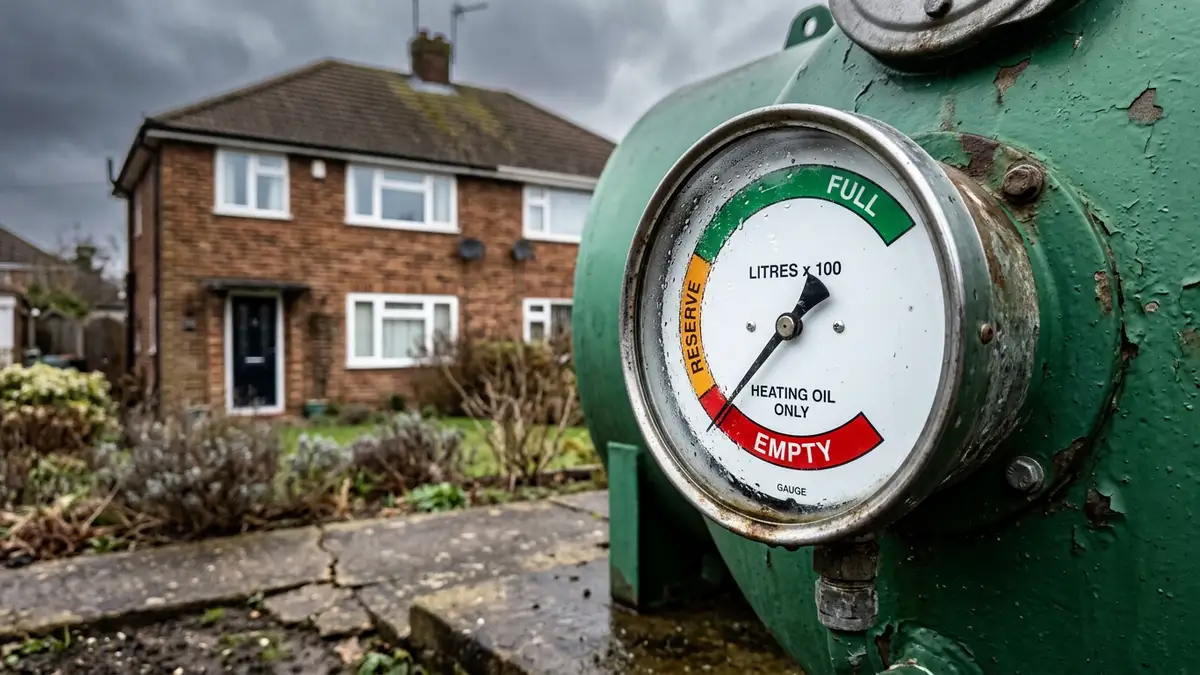
Image: Matt Weston / AI

Callum Smith
Heating oil prices doubled over the last seven days, plunging 1.7 million UK households into immediate financial distress as geopolitical volatility disrupts the energy market.
Chancellor Rachel Reeves confirmed that the recent price hike does not reflect market conditions. She will meet with rural and Northern Ireland MPs on Wednesday to determine the government's next move.
The UK and Israel launched strikes on Iran, an action that immediately shifted the geopolitical landscape for energy imports. This military maneuver triggered a chain reaction across global crude benchmarks and destabilized distillate costs.
Historically, heating oil remains an unregulated frontier compared to the price-capped sectors serving the majority of the country. This structural gap leaves a significant portion of the UK's energy infrastructure vulnerable to sudden shocks.
The UK International Fuel Distributors Association (UKIFDA) identified the high price of jet fuel in Europe as the primary engine behind rising heating oil costs. This correlation creates a physical supply bottleneck for distributors across the country.
European refineries now prioritize jet fuel production, a shift that slashes the available stock for heating oil distillates. Domestic consumers now compete directly with the resurgent aviation industry for a dwindling supply.
Suppliers must treat customers fairly during this period of volatility.
Emma Cochrane of the Competition and Markets Authority (CMA) stated that suppliers must treat customers fairly during this period of volatility. The CMA currently monitors retail margins to detect any exploitation of the price spike.
Suppliers face intense scrutiny over the speed at which they transferred wholesale increases to the consumer. This sudden doubling of costs follows a period of relative stability, marking a sharp departure from recent market trends.
MPs from the worst-affected regions demanded a formal investigation into current pricing mechanisms. The scheduled Wednesday meeting serves as the primary forum for discussing potential subsidies or emergency price controls.
Local distributors in Northern Ireland report a surge in emergency orders. Residents are securing stocks now to avoid further fluctuations that erode their purchasing power.
The UK government has not specified the exact nature of the 'further action' Reeves mentioned for the upcoming briefing. However, the involvement of the CMA points toward a focus on transparency and retail conduct.
Market analysts track the impact of the strikes on Iran as the military situation evolves. Any further escalation in the region threatens to tighten the global supply of crude, sustaining high prices at the pump and the tank.
For the 1.7 million households off the grid, the current crisis mirrors previous energy shocks where price-cap protections were absent. The economic weight falls heavily on those in older, rural housing stock with limited insulation.
The refining shift is a structural challenge rather than a temporary glitch.
The UKIFDA remains a central stakeholder in the upcoming negotiations, representing the firms navigating the jet fuel bottleneck. Their data indicates that the refining shift is a structural challenge rather than a temporary glitch.
As the Wednesday deadline approaches, the focus remains on whether the Treasury will provide direct financial relief. The CMA's oversight will determine if the 100 percent increase resulted from mathematical necessity or opportunistic pricing.
The intersection of military action in the Middle East and industrial refining choices in Europe has created a storm for the UK's rural energy security. Every cent added to the global barrel translates directly to the heating bills of the most vulnerable.