UK Deploys Typhoon Jets and Air Experts to Gulf Amid Regional Escalation
Embassy dependents exit UAE as Wildcat and Merlin helicopters bolster defensive posture in Cyprus.
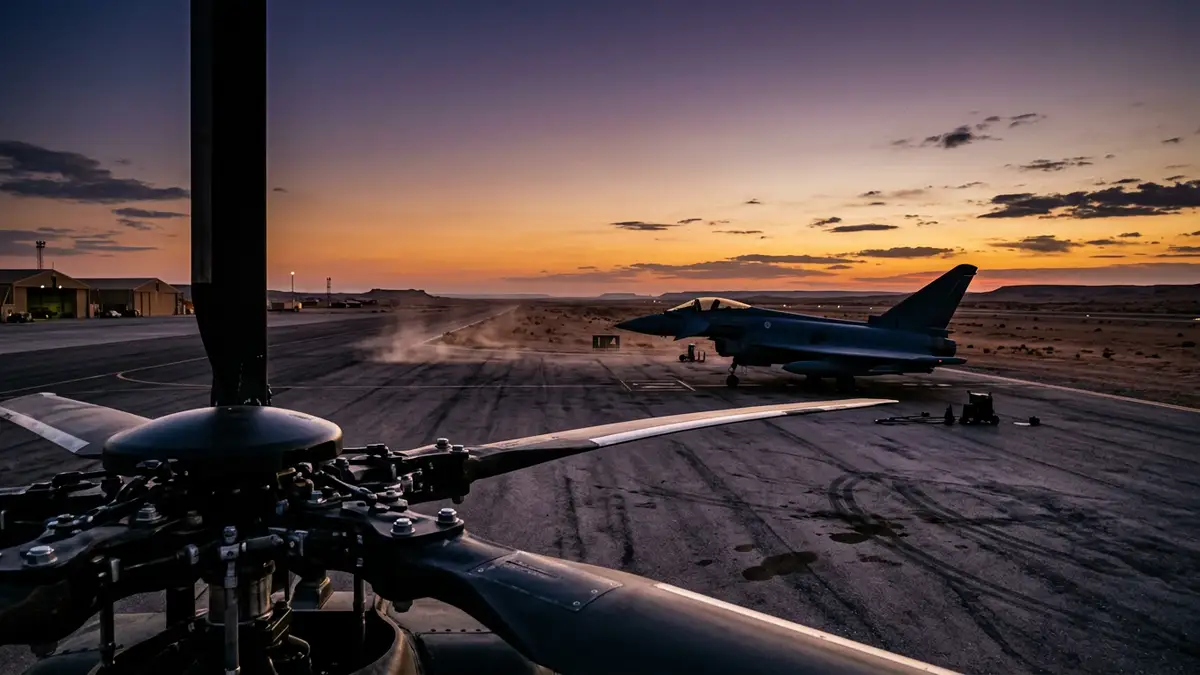
Image: Matt Weston / AI

Sarah Connor
Royal Air Force Typhoon jets have deployed to defend two Middle Eastern nations as regional volatility triggers a surge in British military activity.
This removal of families marks a concrete shift in the diplomatic security posture within the region. It replaces standard protocols with a direct response to the evolving threat landscape facing British personnel.
Additional air operations experts arrived in the Gulf to coordinate the expanding defensive perimeter. These specialists integrate UK assets with regional partners during high-tempo engagements.
The current deployment utilizes high-readiness assets capable of intercepting aerial threats across multiple sovereign airspaces. Military planners positioned Typhoon jets to provide a continuous combat air patrol capability.
Wildcat and Merlin helicopters deployed to British bases in Cyprus to bolster defensive operations. These rotary-wing assets identify aerial threats and conduct maritime surveillance.
The Sovereign Base Areas of Akrotiri and Dhekelia in Cyprus serve as the primary launch point for these reinforced aerial maneuvers. These bases project UK power across the Eastern Mediterranean.
The dispatch of Wildcat helicopters increases the precision of threat identification in congested littoral environments. These aircraft operate alongside Merlin helicopters to provide a sophisticated electronic surveillance layer.
Political pressure in London mounted as the Foreign, Commonwealth & Development Office adjusted its risk assessment for personnel stationed in the UAE. The evacuation of dependents follows the latest security intelligence.
Economic stakeholders monitoring the Strait of Hormuz note that 20 percent of the world's liquefied natural gas passes through these waters. Any disruption to this maritime artery impacts global energy markets immediately.
The UK utilizes its network of permanent bases, including HMS Jukair in Bahrain, to sustain these long-term operations. This infrastructure supports Operation Kipion, the UK's standing maritime presence in the Gulf and Indian Ocean.
These movements follow a pattern of strategic shifts dating back to the 1971 withdrawal from East of Suez. The UK maintains a persistent and evolving military footprint in the region despite that historical pivot.
The landscape of Middle Eastern defense shifts toward integrated air defense systems to counter drone and missile technology. This technological evolution requires the high-level coordination provided by the newly arrived air operations experts.
Future operations depend on the coordination between these air experts and established regional command centers. The integration of RAF assets into local defense networks remains a primary objective of the current deployment.
The Typhoon jets provide a versatile platform for both air-to-air combat and precision strikes. Their presence functions as a visible deterrent against further regional escalation.
The Merlin helicopters' electronic surveillance capabilities track sophisticated threats that traditional radar misses. This layer of protection covers both military and commercial shipping.
The Wildcat's role in the littoral environment ensures that small, fast-moving threats are identified before they reach high-value targets. This capability is essential in the narrow, crowded waters of the Gulf.
The Foreign, Commonwealth & Development Office monitors the safety of all remaining personnel in the UAE. The security of diplomatic staff remains the central priority for the UK administration.
The deployment of these advanced aerial assets establishes a long-term commitment to regional stability. The UK's military posture remains flexible to meet the demands of a rapidly changing security environment.