UK Prepares Gulf Evacuations as Iranian Drones Strike Dubai
Prime Minister Keir Starmer drafts emergency extraction plans for 300,000 Britons as regional airspace collapses under missile fire.
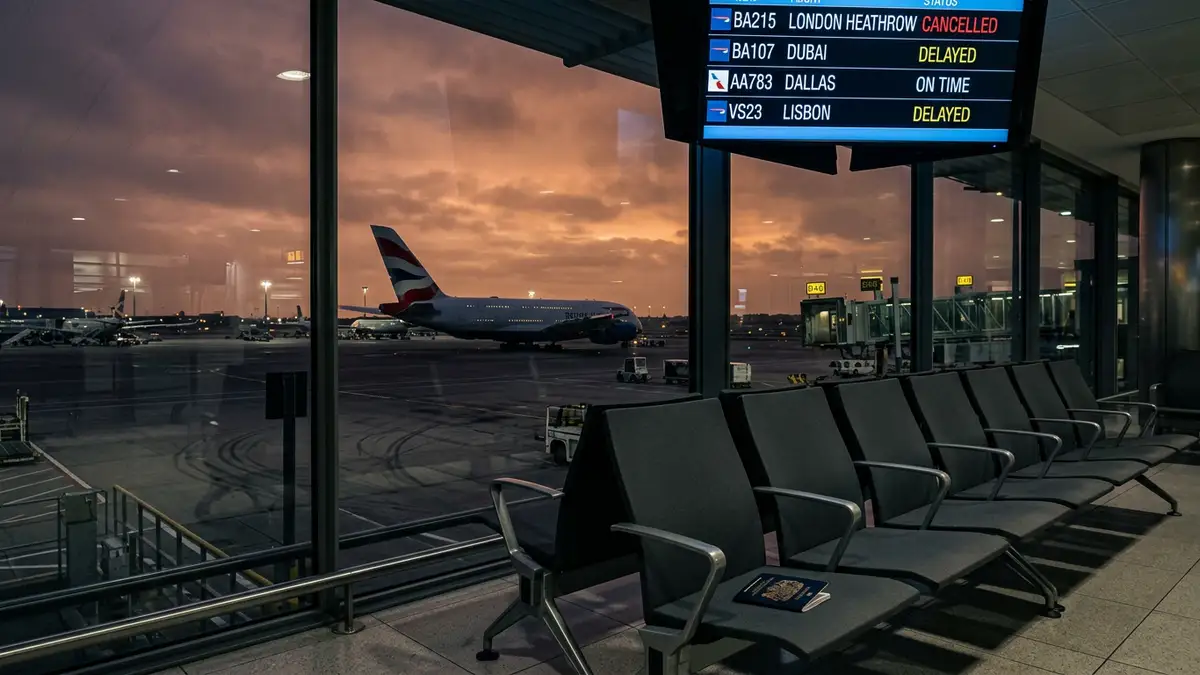
Image: Matt Weston / AI

Carla Rooney
The United Kingdom has initiated emergency evacuation protocols for hundreds of thousands of British citizens across the Gulf following a wave of Iranian suicide drone strikes and retaliatory US air raids on Tehran.
The human cost surges rapidly within Iran. Iranian state media reported 165 deaths following a strike on a girls' primary school in Minab.
Officials in Tehran now report a total death toll exceeding 200 people across the country as the conflict intensifies. Authorities in the UAE reported that Iran launched 137 missiles and 209 drones at the Emirates.
Explosions rocked Dubai, Doha, Manama, and Jerusalem as ballistic missiles and kamikaze drones targeted US allies. This strategic escalation places between 200,000 and 300,000 Britons currently located within the targeted Gulf countries at immediate physical peril.
More than 94,000 British nationals already registered their contact details with the Foreign Office to receive emergency updates. Foreign Secretary Yvette Cooper stated the government evaluates every possible option to protect these citizens.
Evacuation plans involve land routes through Saudi Arabia if regional airspace remains closed for a prolonged period. Currently, the UK government advises against all but essential travel to Kuwait, Qatar, Bahrain, and the UAE.
British tourists in Dubai, including Alison and Gul Woodward, remain stranded as all flights remain suspended. Some tourists in the city moved into underground car parks to seek shelter from the strikes.
A sequence of continuous explosions.
Kirsty Greyling described the environment on the ground as a sequence of continuous explosions. Dubai hotels received government directives not to evict stranded tourists due to the total disruption of air travel.
The UAE government committed to covering the costs of extended stays and related expenses for these passengers. Simultaneously, Qatar Airways suspended all operations pending a safety announcement from the Qatar Civil Aviation Authority.
The airline warned of fraudulent accounts attempting to steal personal information from stranded travellers during the crisis. Jonathan Swain reported a suspected drone strike hit RAF Akrotiri, a British military base in Cyprus.
The UK granted the United States permission to use British military bases for defensive purposes during the escalation. This military coordination occurs as shipping through the Strait of Hormuz slowed to a near standstill.
UK Maritime Trade Operations officials warned that oil supplies are at risk after Iran reportedly notified tankers that no ships would be allowed to pass. Physical evidence of the air war emerged as photographs showed a US pilot being rescued after ejecting over Kuwait.
Claims suggest his F-15 aircraft fell to friendly fire during the engagement. Despite the chaos, President Donald Trump vowed to press on with strikes in Iran.
Trump also claimed that Iran's new leadership had previously agreed to hold talks with him. On the ground, the machinery of civil society has ground to a halt.
Ivon Sampson, a traveller in the region, confirmed that legal proceedings and trials scheduled for next week have been put on hold. The Foreign Office continues to monitor the 200,000 Britons currently on holiday or travelling in the Gulf as the situation evolves.
History mirrors the 1980s Tanker War as the Strait of Hormuz, which carries 20% of the world's oil, faces a total blockade. Economic stakeholders in London and New York watched Brent Crude prices spike as the first missiles impacted UAE soil.
The geopolitical landscape shifts as the UAE and Qatar, traditional hubs of global transit, transform into active combat zones. This shift forces a total reassessment of Western security architecture in the Middle East.
Military analysts point to the 209 drones as a record-breaking deployment of loitering munitions in a single theater. The sheer volume of fire challenges the existing Iron Dome and Patriot missile defense batteries stationed across the peninsula.
British citizens now wait for the Foreign Office to activate the 'Operation Rescuing' protocols used during previous regional collapses. The silence in the departure lounges of Dubai International Airport underscores the total cessation of civilian movement.