Slovenia Implements First EU Fuel Rationing as Middle East Conflict Drives Global Energy Emergency
Global oil prices surge past $100 per barrel as Iran mines the Strait of Hormuz and the UK prepares emergency contingency plans for the NHS and police.
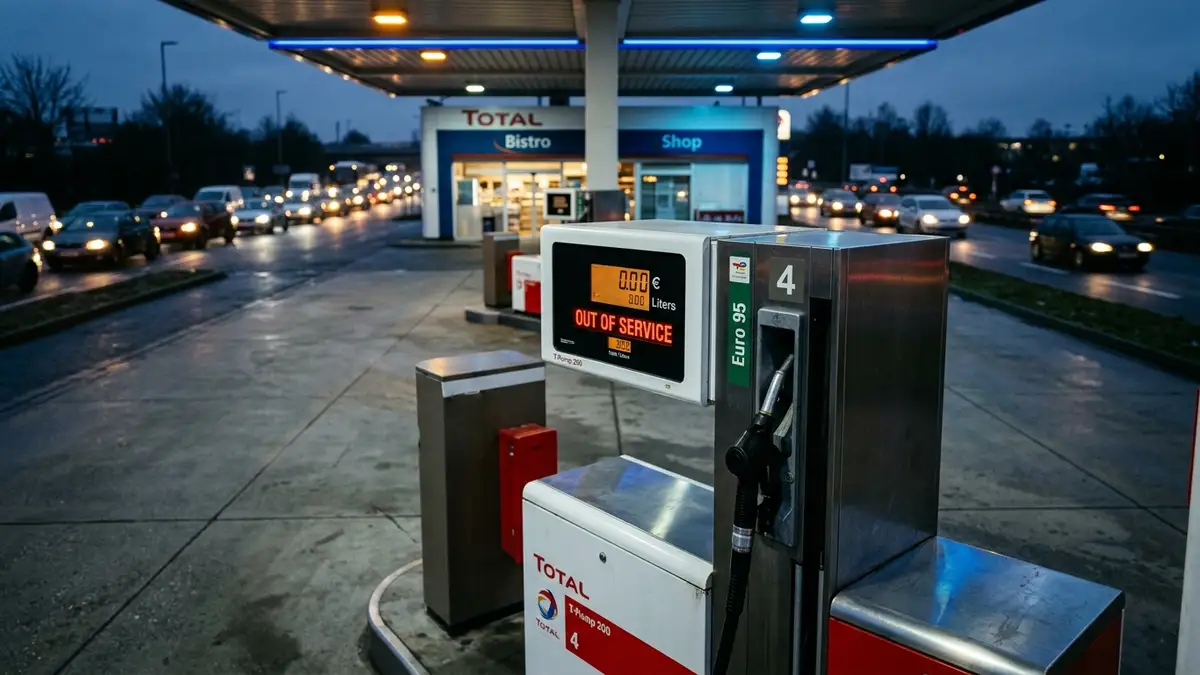
Image: Matt Weston / AI

Callum Smith
Slovenia has triggered the European Union's first mandatory fuel rationing protocols as the military confrontation between the United States and Iran chokes global oil supplies.
Donald Trump established a hard deadline of March 23 for Iran to reopen the Strait. He vowed to obliterate the nation’s power plants if they fail to comply with the demand.
Iranian state media countered these threats by denying that any negotiations have occurred. Officials claimed the US administration retreated from its initial stance out of fear.
In Ljubljana, Prime Minister Robert Golob insisted that national warehouses remain full. He stated that current reserves are sufficient to prevent total shortages across Slovenia.
Despite these assurances, a lorry driver at the Sentilj border crossing described scenes of confusion at the pumps. He reported that several stations have already run dry as drivers scramble for fuel.
This scarcity grips the continent and the United Kingdom, where motorists have already spent an additional £307 million on petrol and diesel. This volatility drove diesel prices in Britain to 160.3p per litre.
Refusing to let a crisis go to waste.
Unleaded petrol currently sits at a baseline of 141.5p. The UK Government is currently reviewing emergency rationing plans that include a £30 purchase limit.
These contingency measures include priority forecourt access for the NHS and police. Energy Minister Michael Shanks maintained that the system is working as normal and instructed citizens to continue their daily business.
Shanks further asserted that there is no physical shortage of fuel in the country. He urged drivers to maintain their standard refuelling habits to avoid artificial scarcity.
Housing Secretary Steve Reed echoed this sentiment, confirming there is no immediate need for petrol rationing. He noted that Whitehall continues to update its ongoing contingency planning.
Meanwhile, Labour MP Andrew Cooper claimed that motorists face exploitation by unscrupulous retailers. He accused these businesses of refusing to let a crisis go to waste.
Chancellor Rachel Reeves stated she would not tolerate price gouging by forecourt operators. She emphasized that the cost of living continues to climb for British families.
Projecting further pain, RAC head of policy Simon Williams warned that petrol will exceed 150p per litre by next week. He expects diesel to hit 180p per litre in the same timeframe.
Conservative Party Leader Kemi Badenoch criticised the government’s response. She alleged that ministers continue to raise taxes on the public to fund benefits during the crisis.
Looking toward domestic solutions, Jürgen Maier, head of GB Energy, suggested that further development of North Sea oil and gas could protect jobs. This strategic push for production mirrors the 1973 oil crisis.
During that era, nations sought to decouple their economies from Middle Eastern instability. Across the globe, the Philippines declared a state of national energy emergency today.
Grounding commercial planes due to a shortage of jet fuel is now a distinct possibility.
President Ferdinand Marcos Jr. stated that grounding commercial planes due to a shortage of jet fuel is now a distinct possibility. He cited the imminent danger of a critically low energy supply for the archipelago.
In contrast, New Zealand responded to the price surge by providing direct cash handouts to families. These subsidies aim to help citizens afford rising petrol costs at the pump.
These divergent strategies—rationing in Europe, subsidies in Oceania, and emergency declarations in Asia—reflect a fragmented global response. Economic pressure on the UK transport sector mounts as the £307 million expenditure spike drains consumer spending power.
Logistics firms now face rising overheads that threaten to pass further costs directly down to supermarket shelves. The Strait of Hormuz remains the primary chokepoint for global trade.
Military analysts monitor the March 23 deadline as the next potential flashpoint for a total market closure. If the Strait remains blocked, the IEA warns that the current $100 per barrel price point may serve only as a floor.
Global markets now await the outcome of the standoff between Washington and Tehran. This confrontation will determine if rationing will spread across the remaining EU bloc.