Starmer Convenes Cobra as Trump Issues 48-Hour Ultimatum to Iran
Global oil supplies plummet by 20% as the White House threatens to obliterate Iranian power plants over the Strait of Hormuz closure.
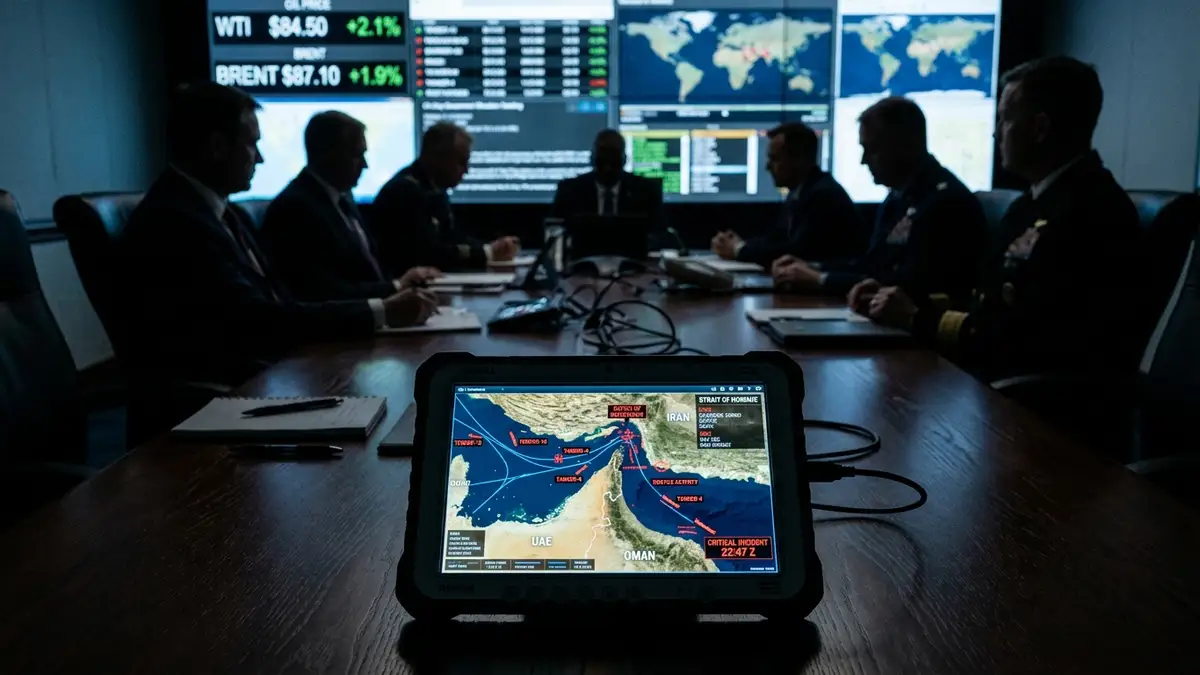
Image: Matt Weston / AI

Carla Rooney
Prime Minister Keir Starmer will chair an emergency Cobra meeting on Monday to address a spiralling Middle East maritime crisis that has already erased one-fifth of the world's oil supply.
Donald Trump issued a 48-hour deadline for Iran to fully open the waterway without threat. He stated that failure to comply would result in the United States moving to obliterate Iranian power plants.
Historically, the Strait of Hormuz functions as the primary artery for global energy, carrying roughly 21 million barrels of oil every single day. This volume represents approximately one-fifth of total global oil consumption.
The current 20% drop in global oil availability has already triggered immediate volatility across international crude benchmarks. Traders and military analysts now monitor the 48-hour countdown for signs of naval mobilisation or diplomatic retreat.
Within the United Kingdom, the economic fallout has moved from theoretical risk to immediate reality. Energy provider Centrica confirmed that price increases for domestic consumers are now inescapable.
This assessment aligns with broader industry projections as the massive supply deficit begins to filter through wholesale markets. The government now confronts the necessity of evaluating national energy reserves against these potential price shocks.
Despite the market turbulence, Communities Secretary Steve Reed stated there is no need for the public to begin rationing fuel. He instructed citizens to continue filling their vehicles as they normally would.
There is no need for the public to begin rationing fuel.
Steve Reed maintained that current fuel stocks remain sufficient to prevent immediate rationing for British motorists. However, the transition of the shipping crisis into a top-tier national security priority suggests a deepening concern within Whitehall.
Internal government assessments indicate a fractured international response to the blockade. Other nations have so far resisted demands to intervene militarily in the waterway, complicating the formation of a multi-national escort task force.
The UK remains unlikely to deploy its own vessels to the strait at this stage. Officials cite a high level of operational risk and a desire to avoid entanglement in a wider regional war.
Israeli Prime Minister Benjamin Netanyahu addressed the geopolitical stakes, claiming that Iran has everyone in their sights as the blockade continues. His comments underscore the regional perception of the maritime standoff as an existential threat.
Iran has everyone in their sights as the blockade continues.
Monday's Cobra session will gather security officials and ministers to coordinate a formal British response. They must balance domestic fuel stability against the diplomatic risks of the United States ultimatum.
The 48-hour window provided by the White House places immediate and intense pressure on Iranian naval assets stationed in the region. Any prolonged blockage threatens the long-term stability of international markets and domestic utility costs.
Historically, the Strait of Hormuz has served as a recurring flashpoint for global conflict. The current disruption represents one of the most significant threats to energy security in recent decades.
The Prime Minister's personal involvement signifies that the crisis has moved beyond a commercial shipping dispute. It is now a matter of fundamental national and economic security.
The upcoming meeting will determine if the UK shifts its naval posture in response to the American demand for a total reopening of the strait. For now, the government remains focused on monitoring the 20% supply gap and its impact on the British public.
Military analysts note that the threat to Iranian infrastructure marks a significant escalation in rhetoric from the United States. The world now waits to see if Tehran will blink before the 48-hour deadline expires.