Global Oil Prices Surpass $100 as Mojtaba Khamenei Takes Power in Iran
Strait of Hormuz Blockade and Middle East Escalation Threaten Record UK Fuel Costs and Global Recession
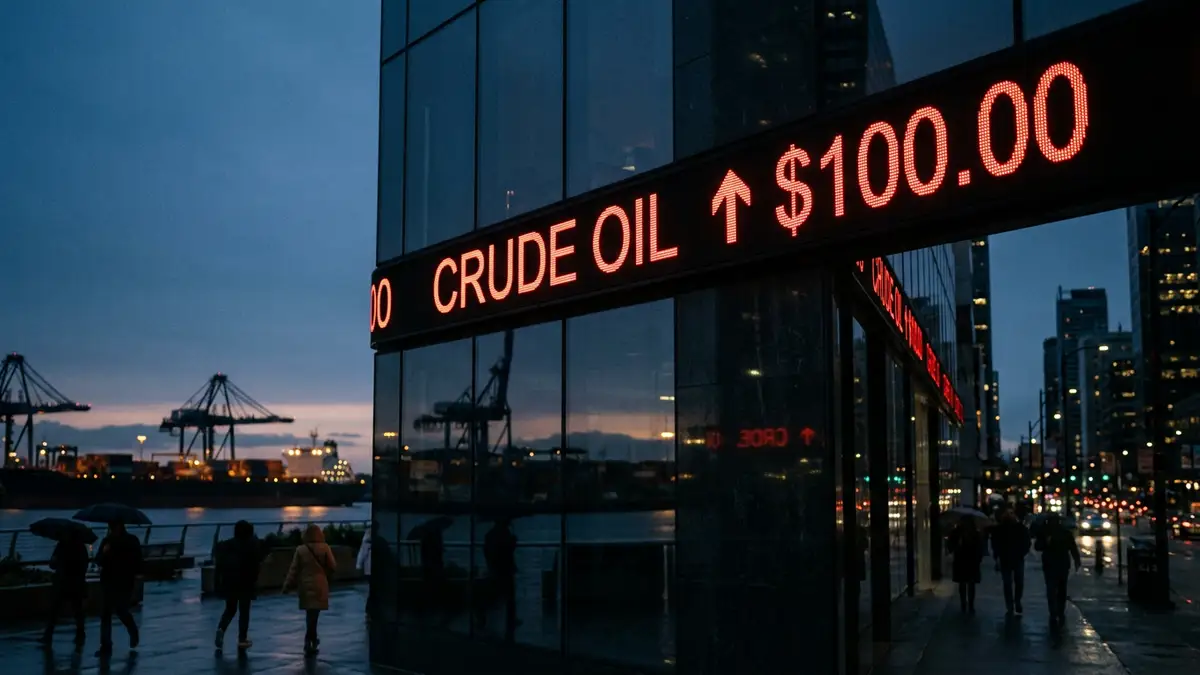
Image: Matt Weston / AI

Sarah Connor
Global crude prices surged past $100 a barrel following the ascension of Mojtaba Khamenei as Iran’s new supreme leader amidst an intensifying multi-front war involving Israel and the United States.
The conflict expanded into a large-scale assault on Gulf states after Tehran rejected all standing ceasefire proposals. Iran seized control of the Strait of Hormuz, blocking commercial vessels from the world’s most vital energy artery.
Iranian officials issued a direct ultimatum, threatening to set fire to any ship attempting to navigate the waterway. Qatar’s Energy Minister, Saad al-Kaabi, warned that a total halt in production from Gulf exporters could occur within days.
The current trajectory of the war possesses the potential to bring down world economies entirely.
This blockade mirrors the energy disruptions of the 20th century and threatens the stability of modern industrial economies. Al-Kaabi stated the current trajectory of the war possesses the potential to bring down world economies entirely.
In London, Chancellor Rachel Reeves prepared for an emergency summit with G7 finance ministers to mitigate the resulting market volatility. The G7 nations seek a unified strategy to prevent the Middle East conflict from triggering a systemic financial collapse.
British motorists face immediate consequences as petrol prices approach the historic record of 191.5p per litre. Howard Cox of FairFuelUK noted that oil sustained at $100 will add up to 20p per litre to fuel costs within weeks.
Economic forecasts have darkened, with Goldman Sachs analysts projecting oil could hit $150 per barrel by the end of March. Cox warned that if prices reach the $120 threshold, a full-scale recession becomes inevitable.
The British Chambers of Commerce revised its inflation outlook upward, predicting a rise to 2.7% by late 2026. This shift reflects the mounting pressure on supply chains and the rising cost of domestic production.
Colin Walker of the Energy and Climate Intelligence Unit calculated that $120 oil would add over £500 to the average driver's annual bill. Simultaneously, Cornwall Insight predicted a 10% spike in household energy costs starting this July.
The Foreign Office issued urgent directives advising against all but essential travel to the UAE, Bahrain, Kuwait, and Qatar. Domestically, the volatility pushed fixed-rate mortgage costs higher as lenders react to the instability.
Donald Trump characterized the price surge as a necessary cost for global safety and the eventual taming of Tehran. He asserted the spike would be a temporary phenomenon required to secure long-term world peace.
The spike would be a temporary phenomenon required to secure long-term world peace.
US Senate Democratic Leader Chuck Schumer countered by demanding an immediate release of oil from the Strategic Petroleum Reserve. Schumer argued this intervention is the only way to shield families from the immediate price shock.
US Defense Secretary Pete Hegseth maintained a hardline stance, guaranteeing that the Iranian regime will eventually surrender. Conversely, Iranian spokesperson Esmaeil Baqaei blamed European diplomacy for creating the conditions that led to the current hostilities.
AA president Edmund King expects record-breaking pump prices to manifest within the next 10 to 12 days. While he advised against panic-buying, he acknowledged that gradual price increases are now a mathematical certainty.
RAC head of policy Simon Williams described the outlook for UK drivers as increasingly difficult. He projected that unleaded will hit 140p and diesel will reach 160p within the coming week.
Communities Secretary Steve Reed insisted there is currently no physical shortage of fuel or gas in the United Kingdom. He argued that a more aggressive transition to clean energy would have insulated the nation from Tehran’s influence.
Prime Minister Keir Starmer stated the UK economy remains resilient enough to absorb the initial impact. However, he conceded that a prolonged conflict would inevitably deepen the economic burden on British households.
In Italy, Giancarlo Giorgetti called for rapid intervention to stop energy costs from inflating the price of all consumer goods. South Korean leader Lee Jae Myung confirmed his government is already scouting for energy routes that bypass the Strait of Hormuz.