Global Energy Markets Shudder as US Forces Neutralise Iranian Military Assets
Crude prices hit $119 per barrel following strikes on Gulf infrastructure and the closure of the Strait of Hormuz.
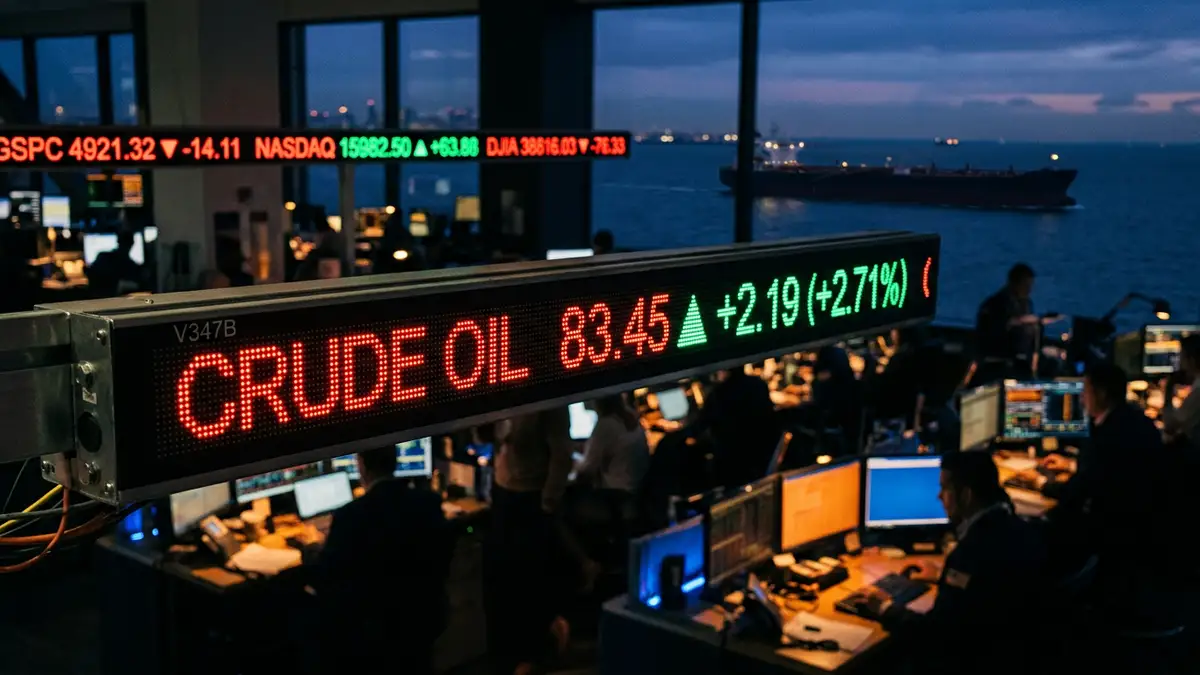
Image: Matt Weston / AI

Carla Rooney
Oil prices surged by nearly 30 per cent to $119 a barrel before retreating to $100 after Iranian military strikes targeted Kuwait, Qatar, and Bahrain, triggering a massive US-led counter-offensive.
Commercial traffic has ground to a halt at the Strait of Hormuz, leaving the primary exit for regional energy exports entirely impassable.
This maritime blockade coincides with a collapse in Iraq, where crude output plummeted by more than 60 per cent as combat operations shattered critical infrastructure.
Donald Trump confirmed that US forces have systematically destroyed Tehran’s navy and air force during a series of high-intensity operations.
Iran’s missile and drone capabilities are now neutralized, categorizing the current state of the war as 'very complete.'
The US President stated that Iran’s missile and drone capabilities are now neutralized, categorizing the current state of the war as 'very complete.'
This decisive military intervention followed intelligence indicating that Iran had planned a major offensive within a specific seven-day window.
Despite the total destruction of the Iranian military, Trump asserted that the US hasn't 'won enough' in the region yet.
The conflict has spilled across international borders, forcing NATO units to intercept a missile that breached Turkish airspace.
In response to the widening threat, the US Department of State ordered the immediate evacuation of non-emergency employees and families from Consulate General Adana.
European powers are now surging their physical presence, with France deploying two warships to reinforce the European Union’s naval mission in the Red Sea.
These vessels provide a kinetic shield for commercial shipping lanes currently targeted by regional actors.
The geographic scope of the hostilities expanded further when a drone strike hit RAF Akrotiri in Cyprus, bringing the war to the doorstep of British sovereign bases.
Simultaneously, Iran’s military confirmed it is firing cluster munitions daily into Jerusalem and other high-density Israeli cities.
Economic tremors radiate from the Gulf as Saudi Arabia initiates deep oil output cuts to protect its interests.
JP Morgan analysts now expect visible energy shortages to manifest across Asia and Europe within the next seven days.
This crisis threatens more than just fuel, as the global supply of aluminum, sulfur, and urea—a critical component for fertilizer—faces total disruption.
If the blockade persists through the month, market analysts project oil prices will hit $150 per barrel, eclipsing the record peaks of 2022.
On the northern front, Israel’s offensive against Hezbollah has displaced more than 700,000 people across Lebanon.
Israeli authorities continue to issue mandatory evacuation orders for hundreds of thousands of residents in the southern districts.
Political structures in Tehran shifted after an Israeli strike killed the previous supreme leader, leading to the appointment of Ayatollah Mojtaba Khamenei.
Close aides to Trump have already indicated he would support the targeted killing of the new ruler if Iran maintains its nuclear program.
Diplomatic channels remain open but strained, as Trump held a direct phone call with Vladimir Putin to discuss the regional meltdown.
The Kremlin confirmed that Putin presented a specific proposal during the conversation intended to force a rapid conclusion to the hostilities.
The mounting economic pressure stems from the fact that the war between the US, Israel, and Iran now blocks the vast majority of Gulf exports.
Global markets remain in a state of high reactivity as the prospect of a total economic collapse looms over the international community.
Historical parallels evoke the 1973 oil embargo, though the current disruption threatens to reshape global energy dependencies more permanently.
Experts note that a $150 per barrel price point would represent a historic high in real terms, adjusted for inflation.
Stakeholders in the global agricultural sector warn that the sudden urea shortage will severely degrade crop yields in the upcoming growing season.
This development adds a catastrophic layer of food insecurity to the existing energy and security crises.
The European Union is currently weighing a new package of sanctions as its naval mission moves into a more aggressive posture.
The deployment of French warships signals a definitive shift toward the direct military protection of global trade routes.
Inside Jerusalem, the persistent use of cluster munitions has forced the civilian population into reinforced underground shelters.
Despite the humanitarian toll, the Israeli government has not signaled any intention to halt its operations in Lebanon.
The transition of power to Mojtaba Khamenei marks a volatile moment for the Iranian domestic political landscape.
His leadership begins under the unprecedented shadow of a completely dismantled conventional military infrastructure.
Logistical chains are breaking as global shipping firms reroute vessels around the Cape of Good Hope to bypass the Red Sea entirely.
This detour adds massive operational costs and weeks of delays to the delivery of essential consumer goods.
Currently, the US military remains on a footing of high alert across all regional bases and installations.
The future of global stability now hinges on whether the Kremlin’s proposal can gain any traction within the White House.