Iran Strikes Bahrain Airport and Tankers as Global Oil Prices Surge Past $100
The Pentagon reports $11.3 billion in weekly costs as Iraqi oil ports shut down and regional death tolls climb past 1,300.
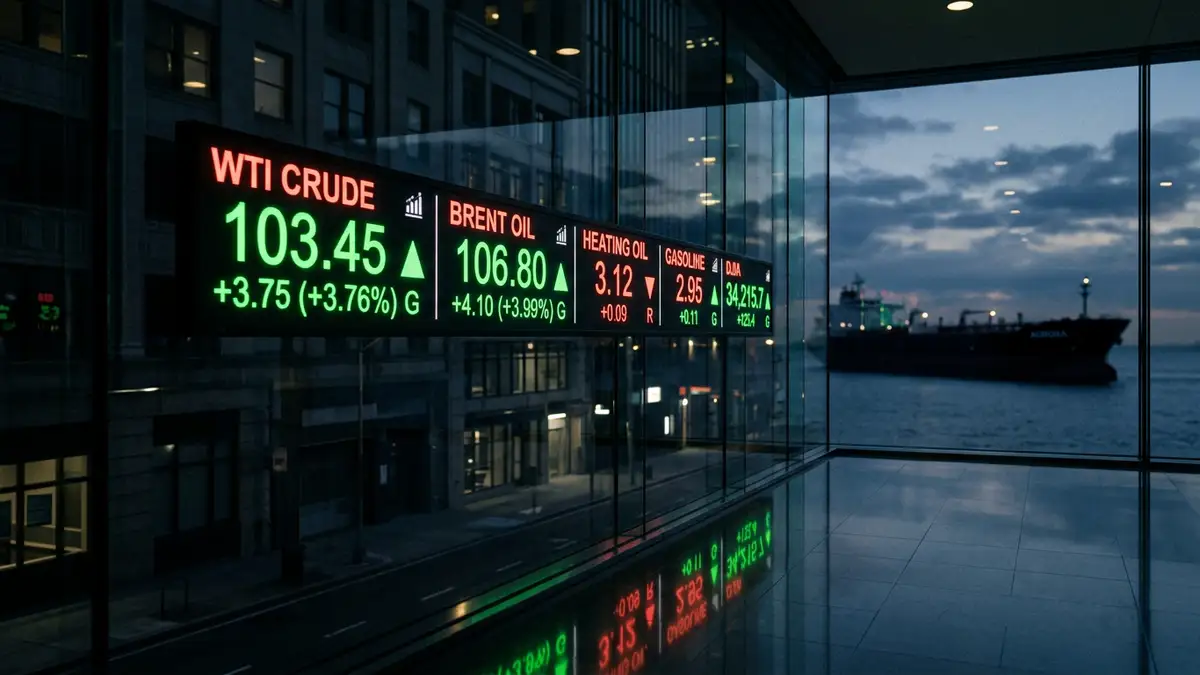
Image: Matt Weston / AI

Carla Rooney
Global energy markets have been thrown into chaos after Iranian forces struck oil tankers and Bahrain’s primary international airport, driving oil prices above $100 a barrel.
The strike on Muharraq Island international airport halted civilian flight patterns immediately. Thick smoke rose from the facility as international carriers diverted long-haul routes away from the combat zone.
This disruption at a vital transit hub severed the primary artery for travelers moving between Europe and Southeast Asia. Airlines now restructure global flight paths to bypass the Middle East entirely.
At sea, the Iranian campaign targeted merchant ships to exert direct pressure on opposing military forces. The Strait of Hormuz remains the focal point of this maritime offensive.
Iran increased its naval presence in these waters to monitor and intercept all commercial traffic. This tactical positioning mirrors the 'Tanker War' of the 1980s.
The speed of the current price surge exceeds all historical precedents. The Pentagon confirmed that the first seven days of conflict with Iran cost the United States $11.3 billion in operational expenditures.
The first seven days of conflict with Iran cost the United States $11.3 billion in operational expenditures.
These figures reflect the massive scale of the military response required to secure shipping lanes. Such a high spending rate suggests a budgetary impact reaching hundreds of billions if the conflict persists.
Economic shockwaves forced immediate shifts in international shipping routes. Logistics firms now re-route vessels around the Cape of Good Hope to avoid the Persian Gulf.
This shift triggered a sharp spike in maritime insurance premiums for any vessel remaining in the region. In Iraq, state media confirmed that all oil ports stopped operations following the strikes.
This total cessation removes a massive volume of crude oil from the daily global supply chain. Refineries in Europe and Asia face immediate supply shortfalls.
The removal of Iraqi and Iranian barrels from the market drove the price surge. The $100 price point fell as kinetic action replaced market speculation.
Within Iran, authorities reported more than 1,300 deaths inside their borders as retaliatory strikes hit various territories. The scale of internal casualties marks a significant escalation in the domestic impact of the hostilities.
These engagements transformed the landscape into a complex multi-front battlefield involving both state and non-state actors. Israel reported 12 people dead as a result of the current wave of violence.
In Lebanon, the Israeli military actively targets Hezbollah militants linked to the Iranian regime. The Israeli military press office stated it was not aware of a strike at one particular location when questioned about recent engagements.
Not aware of a strike at one particular location.
Hezbollah positions remain under consistent fire as Israel pursues the neutralization of proxy forces. The conflict enters its second week with no signs of de-escalation from any involved party.
The Iranian strategy targets economic infrastructure to increase the cost of intervention. By hitting both tankers and airports, the campaign strikes the dual pillars of modern global commerce.
Stakeholders in the global energy sector brace for prolonged instability as Iraqi port closures continue. The international community monitors the widening geographic scope of the strikes.
The focus remains on the potential for a complete blockade of the Strait of Hormuz. Such a move would likely push oil prices toward the $200 mark predicted by Tehran.