U.S. Forces Destroy Iranian Minelaying Vessels in Strait of Hormuz
Crude futures plummet 19 percent as military action follows reports of waterway mining
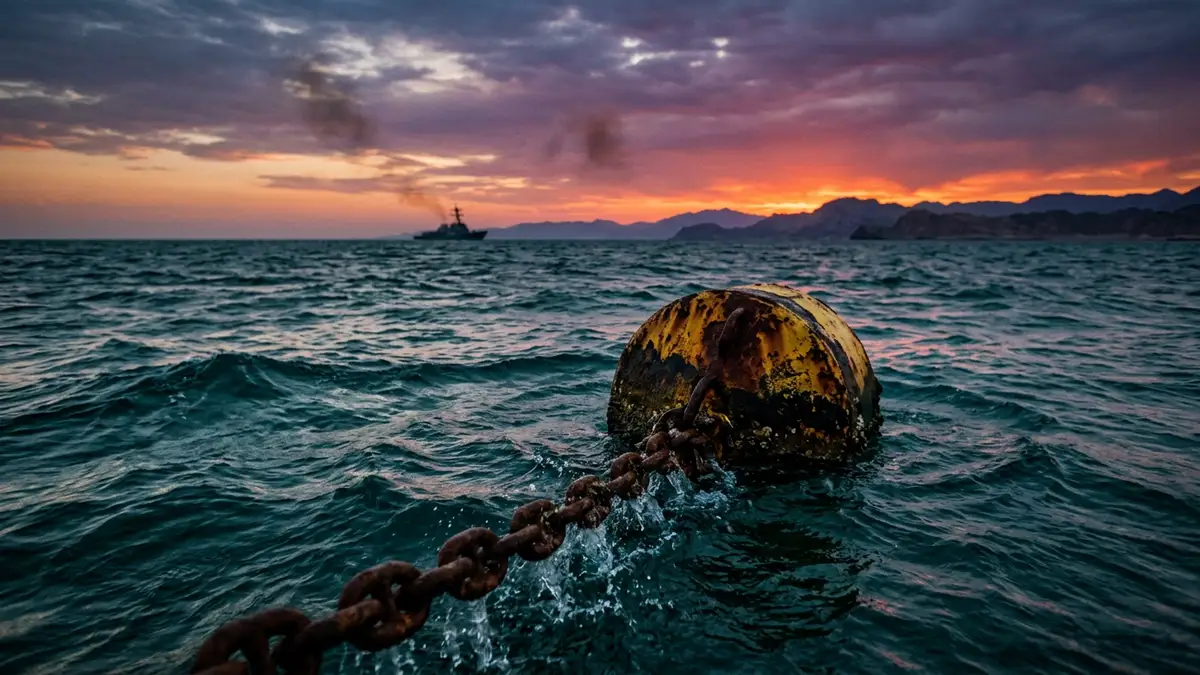
Image: Matt Weston / AI

Callum Smith
United States military forces destroyed 16 Iranian minelaying vessels near the Strait of Hormuz after reports of maritime sabotage in the world’s most critical energy chokepoint.
The Islamic Revolutionary Guard Corps (IRGC) issued a direct ultimatum, vowing to strike any vessel attempting to navigate the passage. This blockade chokes a waterway that carries approximately one-fifth of the global oil supply.
Donald Trump declared that the military consequences will reach an unprecedented level if Iranian mines are not cleared immediately. The Trump administration maintains that Tehran orchestrated a preemptive strike against U.S. military assets in the region.
The military consequences will reach an unprecedented level if Iranian mines are not cleared immediately.
Economic shockwaves hammered the trading floor as U.S. crude futures plummeted by 19 percent in a single day. This volatility accelerated as conflicting signals emerged from the White House regarding the safety of the shipping lanes.
Financial damage hit a specific exchange-traded fund linked to oil futures, which shed $84 million of its market capitalization. This loss occurred while a social media post by Energy Secretary Chris Wright remained visible to the public.
Wright’s deleted post claimed the U.S. Navy successfully escorted a tanker through the Strait. White House Press Secretary Karoline Leavitt countered this, stating the Navy has not escorted any vessels through the passage.
This correction arrived as global markets recoiled from the uncertainty of the energy flow. Historically, the Strait of Hormuz functions as the world's premier energy chokepoint, with 21 million barrels of oil transiting the 21-mile-wide gap daily.
Iran has now shuttered this waterway to all commercial traffic. In response to the regional instability, Israel pivots to expand its defense budget by nearly $13 billion.
This massive fiscal shift follows Israeli raids on Qana that resulted in five deaths and five injuries. Meanwhile, the Iranian police chief warned that domestic protesters will be treated as enemies of the state.
Domestic protesters will be treated as enemies of the state.
Current figures indicate at least 1,230 people have died within Iran during the current cycle of internal and external conflict. Donald Trump and Benjamin Netanyahu called on the Iranian public to take to the streets and topple the regime.
This rhetoric signals a fundamental shift in the diplomatic posture toward Tehran. On the ground, the Mehr news agency reported that Iranian forces targeted U.S. soldiers at bases in Abu Dhabi and Bahrain.
Seven American service members perished in the conflict to date. The White House asserts that Iran will face unprecedented kinetic strikes if the mining of the Strait persists.
Heavy military assets remain positioned to intercept any further Iranian movement in the maritime corridor. Energy Secretary Chris Wright argued that President Trump is preserving global energy stability through these targeted operations.
The effective closure of the Strait continues to exert crushing pressure on international markets. The destruction of 16 vessels serves as a direct physical response to the reported mining activity.
U.S. commanders monitor the remaining Iranian naval assets scattered throughout the Persian Gulf. Regional stakeholders brace for the long-term economic fallout of a prolonged blockade.
The sudden disappearance of $84 million from a single ETF underscores the financial sensitivity surrounding the conflict. Inside Tehran, the domestic situation remains a powder keg as the death toll climbs past 1,200.
Security forces flooded the streets of the capital in anticipation of further civil unrest. Simultaneously, military analysts track the IRGC's movements following the loss of their minelaying capabilities.
The persistent threat to global shipping remains the primary operational focus of the U.S. Fifth Fleet. Every movement in the 21-mile passage faces scrutiny as the world awaits the next escalation.