Iran Launches Retaliatory Strikes Across Middle East Following Death of Supreme Leader
British forces in Bahrain and Cyprus remain on high alert as Tehran initiates widespread missile and drone operations.
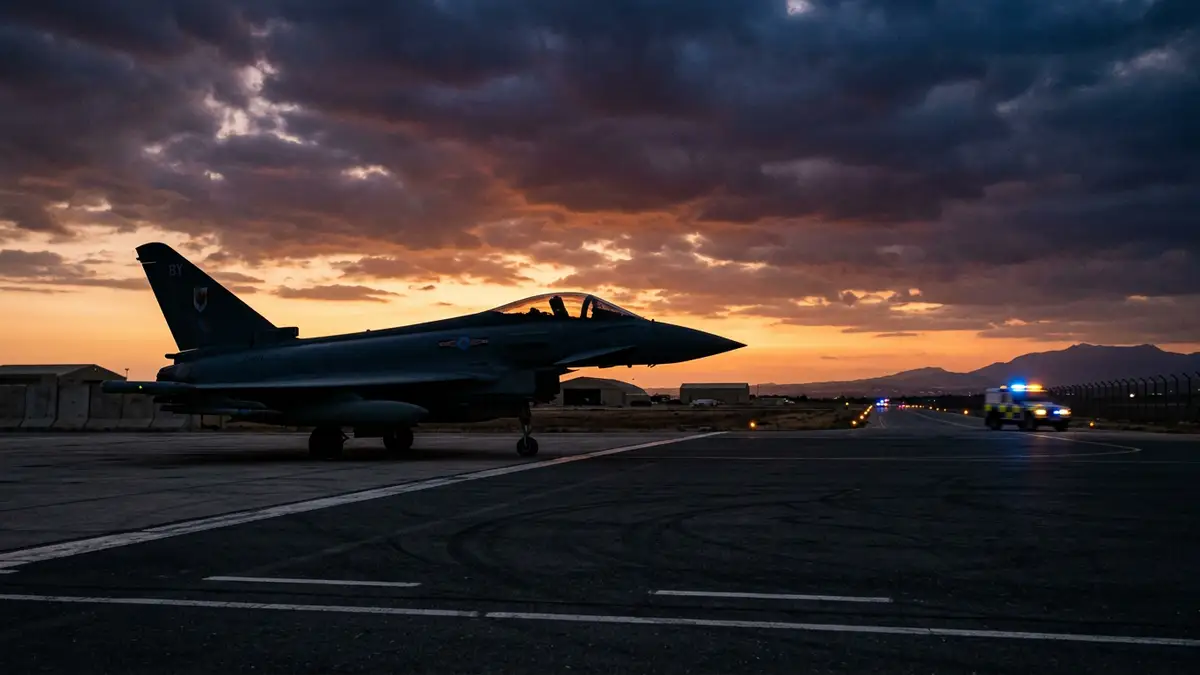
Image: Matt Weston / AI

Sarah Connor
Iranian state television confirmed the death of Supreme Leader Ayatollah Ali Khamenei following a massive wave of air strikes targeting military installations, nuclear facilities, and government buildings.
The Islamic Revolutionary Guard Corps characterized this counter-strike as its most intense offensive operation in history. During the barrage, two Iranian missiles flew toward Cyprus, forcing the President of Cyprus into emergency talks with the UK Prime Minister.
Explosions echoed near the Akrotiri Air Force base in Limassol as the missiles approached. UK officials stated they do not believe the island was a deliberate target, despite the proximity of the blasts.
Konstantinos Letymbiotis, a spokesperson for the Cyprus government, clarified there is no indication of a direct threat to the country. Meanwhile, the conflict spilled into Iraq, where a counter-drone unit intercepted and destroyed an Iranian drone as it approached a Coalition base.
This base houses British troops who remained on high alert throughout the interception. Simultaneously, Iranian missiles and drones landed within a few hundred yards of approximately 300 British military personnel stationed at a base in Bahrain.
Lashing out in an increasingly indiscriminate and widespread manner.
Defence Secretary John Healey stated that Iranian military leaders are increasingly picking their own targets as the regime loses command and control. He described the current Iranian leadership as lashing out in an increasingly indiscriminate and widespread manner.
The United Kingdom has surged defensive assets to the region to counter this volatility. Warplanes, advanced radar systems, and weapon systems have been deployed to Qatar and Cyprus.
British military personnel at these locations were ordered to take cover and remain indoors as air sirens sounded. Prime Minister Keir Starmer expressed solidarity with Middle Eastern leaders following the US-Israeli strikes.
Starmer confirmed the UK played no direct role in the operations. The UK government has declined to comment on the legal status of the strikes conducted by its allies.
US President Donald Trump stated the objective of the strikes was to eliminate imminent threats. He urged the Iranian people to seize the opportunity to take back their country.
Trump warned that any further retaliation from Tehran would be met with a force that has never been seen before. In response, Iran's Foreign Minister, Abbas Araghchi, labeled the US-Israeli actions as a war that was wholly unprovoked and illegal.
Tehran would deliver devastating blows in response to the escalation.
Mohammad Bagher Qalibaf, a high-ranking Iranian official, vowed that Tehran would deliver devastating blows in response to the escalation. British intelligence is currently analyzing the potential for Iranian-sponsored terror attacks on UK soil.
John Healey revealed that the Iranian regime has already orchestrated 20 thwarted terror plots within the United Kingdom in recent years. The UK terror threat level is currently under review as officials monitor the fluid security situation.
Shadow Foreign Secretary Dame Priti Patel criticized the government's response to the crisis. She suggested that ministers should have been more proactive in supporting the allied strikes.
In the Strait of Hormuz, two vessels were struck by unknown projectiles as maritime tensions escalated alongside the aerial campaign. The Israeli military confirmed it is conducting further strikes in Tehran to establish aerial superiority.
These operations aim to clear a path to the capital by dismantling remaining air defenses. Zack Polanski criticized the UK's diplomatic stance, noting the contradiction in seeking a long runway for diplomacy while failing to condemn the assassination of a national leader.
Kemi Badenoch added that the current administration is failing to govern effectively during the crisis. Despite the political friction, Keir Starmer reinforced the assessment that Cyprus was not an intended target of the Iranian barrage.
John Healey emphasized that the primary aim of the UK and its allies remains ensuring Iran never develops a nuclear weapon. He called for Tehran to end its weapons programs and return to negotiations to secure long-term regional stability.
The Israeli military continues to operate within Iranian airspace to maintain pressure on the remaining command structures. This sustained presence ensures the regime remains unable to coordinate a unified military response.