Iran Launches Coordinated Missile and Drone Strikes Across Middle East and Gulf Regions
Casualties reported in Israel and Iraq as Western intelligence monitors IRGC sleeper cell activity across Europe
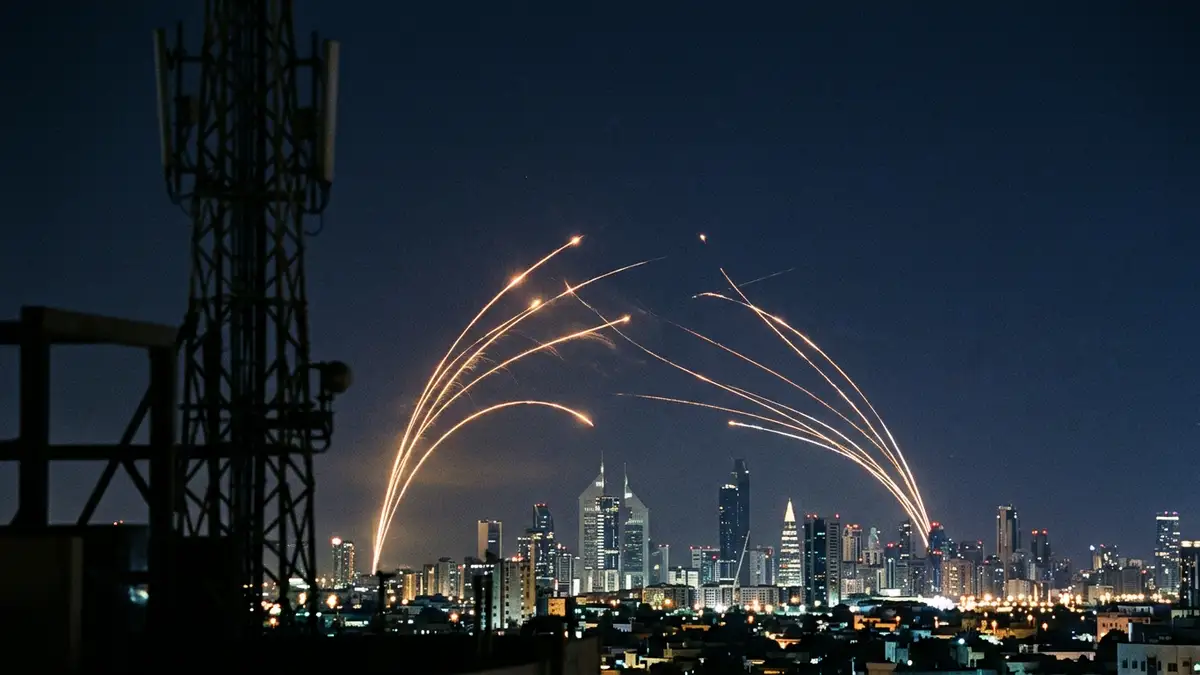
Image: Matt Weston / AI

Carla Rooney
Iran executed a massive, coordinated barrage of missiles and drones against targets in Israel and several Arab Gulf nations, marking a significant escalation in regional hostilities.
An Iraqi Shiite militia launched a drone attack against U.S. troops stationed at the Baghdad airport on Monday. This group operates as a regional proxy aligned with Tehran's strategic interests.
The Islamic Revolutionary Guard Corps (IRGC) utilised missiles with an operational range of 1,240 miles. This reach allows Tehran to strike deep into regional territories and reach targets within Europe.
Increasing Iranian indiscriminate retaliatory attacks.
Defence Secretary John Healey cited a risk of 'increasing Iranian indiscriminate retaliatory attacks.' He ordered an immediate review of the current threat level following the strikes.
British officials estimate 300,000 Britons currently reside in the countries targeted by the Iranian strikes. This demographic includes a significant number of residents from Northern Ireland.
Stormont’s deputy First Minister, Emma Little-Pengelly, stated that 'many, many thousands of people' from Northern Ireland are among those in the targeted zones. UK authorities are currently tracking the safety of these citizens.
Security officials identified a blueprint for terror attacks involving sleeper cells and proxy groups in Britain and Europe. These plans trigger upon the assassination of Iranian leadership.
MI5 documented 20 lethal plots orchestrated by Iran on UK soil within a single 12-month period last year. The IRGC directs these operations to silence dissidents and pressure the British government.
The National Cyber Security Centre warned that IRGC operatives are targeting the personal accounts of government officials and journalists. Activists and think-tank experts also appear on digital espionage target lists.
Intelligence sources indicate that American and Israeli assets in Europe remain the most likely targets for future strikes. These assets include diplomatic buildings and military bases in major European hubs.
Attempted assassinations, terror attacks, cyberattacks, kidnappings, or sabotage.
Tressa Guenov of the Scowcroft Centre for Strategy and Security stated Iran could conduct 'attempted assassinations, terror attacks, cyberattacks, kidnappings, or sabotage.' These actions target both civilian and military infrastructure.
Western intelligence assessments show that Hezbollah maintains its foreign networks despite regional pressure. The IRGC coordinates future actions with this Lebanese militia group.
Hezbollah maintains a support network of sleeper agents across the European continent. One senior U.S. official stated that government analysts observe 'a lot' of terrorist cell activity.
The IRGC utilises these proxy networks to extend its operational reach beyond the Middle East. Security services remain on high alert for sabotage against critical infrastructure and civilian populations.
The current landscape involves cyberattacks and proxy strikes supplementing conventional missile capabilities. This multi-front strategy forces Western defence agencies to monitor both physical borders and digital networks.
Iranian retaliatory cycles involve long-term planning and the use of third-party actors to maintain plausible deniability. The current escalation follows a pattern of IRGC responses to threats against its regional hegemony.
Economic stakeholders monitor the stability of the Gulf regions as strikes occurred near vital shipping lanes and energy infrastructure. Disruption impacts global markets and insurance premiums for maritime transit.
The IRGC's ability to strike targets 1,240 miles away places several NATO allies within the direct line of fire. This technological advancement changes the defensive calculus for European nations previously out of range.
Government analysts track the movement of known proxy operatives as the threat level remains elevated. The coordination between Tehran and its regional affiliates suggests a unified command structure prepared for sustained engagement.