Starmer Rejects Offensive Action Against Iran Following Cyprus Drone Strike
The Prime Minister maintains a defensive posture as domestic critics and Washington allies challenge Britain's refusal to join active combat operations.
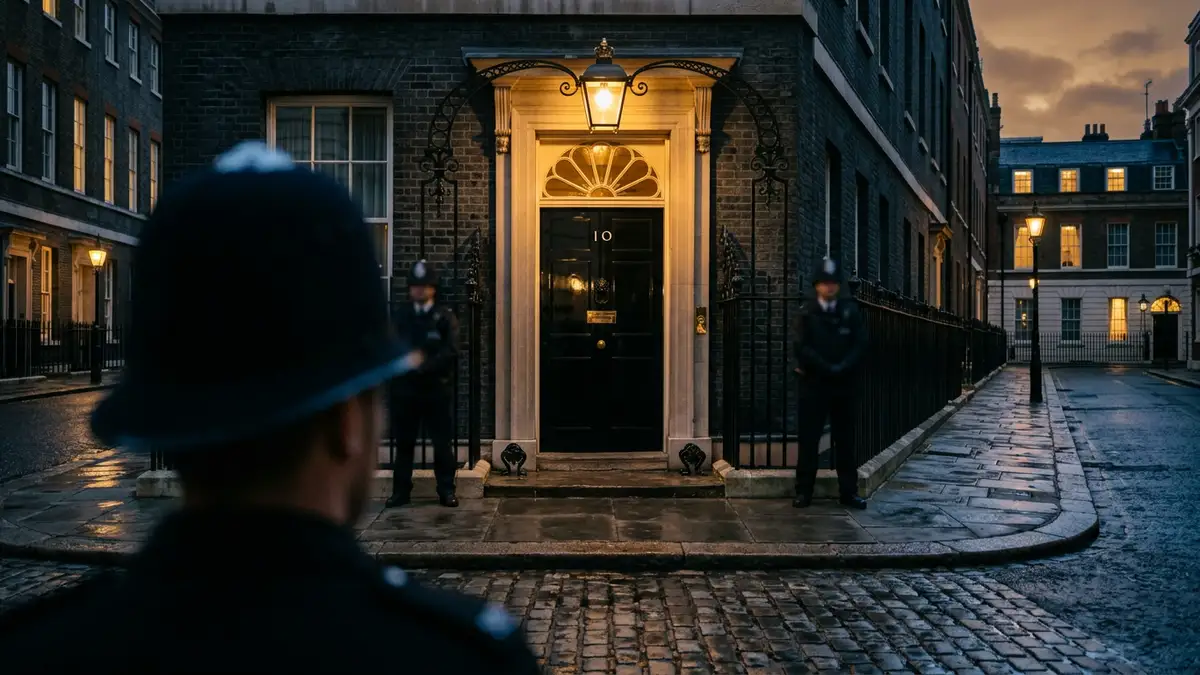
Image: Matt Weston / AI

Sarah Connor
Prime Minister Keir Starmer has formally rejected British participation in offensive military strikes against Iran following a drone attack on a UK military installation in Cyprus.
Conservative MP James Cartlidge challenged the government's position, stating that his party supports United States and Israeli military operations against the Iranian regime.
Cartlidge claimed the Prime Minister performed a U-turn by granting permission for specific operations under altered circumstances.
British officials engaged in high-level discussions regarding U.S. strikes against Iran as recently as June 2025.
These talks followed long-term catastrophe planning established years ago to counter the ongoing deployment of Iranian missiles.
Despite these established protocols, the UK government refuses to proscribe the Islamic Revolutionary Guard Corps (IRGC).
This refusal to designate the group as a terrorist organization persists despite pressure from domestic opposition and international partners.
The diplomatic fallout reached Washington, where Ezra Cohen stated the UK-US special relationship has eroded under Starmer’s shifting position.
The United States may never be able to gain the trust of the United Kingdom again.
Cohen stated the United States may never be able to gain the trust of the United Kingdom again.
Former President Donald Trump also expressed disappointment in the Prime Minister's approach to the Iran issue.
These tensions coincide with a reshuffling of the British diplomatic corps and cabinet.
Starmer replaced Dame Karen Pierce, the incumbent UK ambassador to Washington, with Peter Mandelson.
The Prime Minister simultaneously demoted Foreign Secretary David Lammy as part of a realignment of the government's external strategy.
Critics in the House of Commons describe these moves as a retreat from the global stage.
Stephen Glover stated that Britain has never looked so irrelevant, while Richard Littlejohn claimed Republicans in the United States view the nation as a pariah.
Britain has never looked so irrelevant.
Littlejohn alleged that Starmer’s policy prioritizes specific domestic voting blocs over the strategic removal of the Iranian regime.
Internal political pressure mounts as the government maintains its refusal to join active combat missions.
Historically, the UK functioned as a mediator between global powers, but that role now faces increasing scrutiny.
The current refusal to engage in offensive action represents a departure from the interventionist leanings of previous administrations.
The Mediterranean corridor has become a focal point for drone and missile technology.
Military analysts note that the Cyprus strike demonstrates the reach of Iranian-aligned proxies into sovereign British territory.
The Ministry of Defence monitors the situation, though no retaliatory sorties have launched from RAF Akrotiri.
This restraint functions as a de-escalation tactic for the cabinet while critics describe it as a failure of deterrence.
The White House has not issued a formal rebuke, but rhetoric from Republican figures suggests a widening rift in security cooperation.
The lack of IRGC proscription remains a primary point of contention in these bilateral security dialogues.
As the government holds its line, the geopolitical landscape of the Middle East shifts toward open confrontation.
Starmer faces the challenge of balancing a cautious domestic mandate against the requirements of a long-standing military alliance.
The decision to avoid offensive strikes remains firm for the immediate future.
This policy sets the stage for a period of isolation as Israel and the United States weigh their next moves against Tehran.