Trump Accuses Starmer of Pandering as UK Withholds Support for Iran Strikes
A diplomatic rift deepens over military bases and legal thresholds as Middle Eastern hostilities escalate and markets tumble
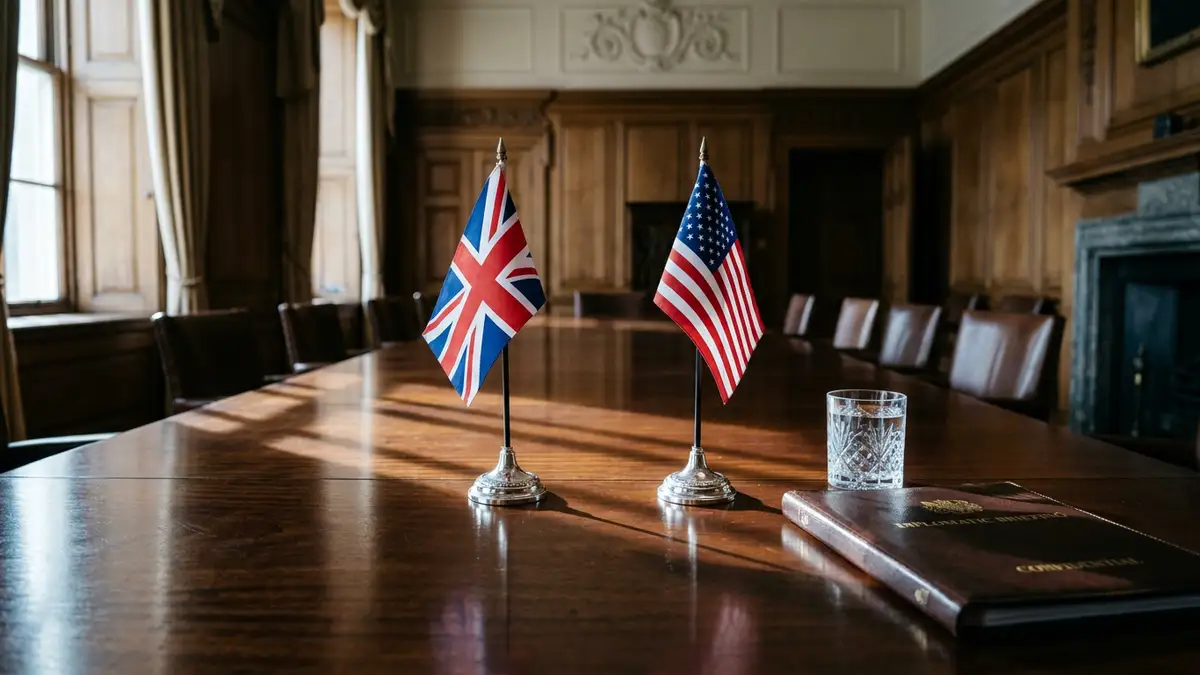
Image: Matt Weston / AI

Sarah Connor
President Donald Trump has accused Sir Keir Starmer of prioritizing domestic demographics over the special relationship after the Prime Minister withheld permission for the United States to launch offensive strikes against Iran from British bases.
Trump described the historic alliance as previously the most solid in the world before the current rift. He stated that Keir Starmer’s decisions stem from a desire to pander to Muslim voters within Labour Party constituencies.
This geopolitical friction coincides with U.S. airstrikes on Iranian targets and intensified Israeli operations against Hezbollah in Lebanon. The FTSE 100 dropped over 200 points as trading floors processed the diplomatic standoff.
We don’t want to go back into war in the Middle East where there is no clear plan.
The market slide follows the disruption of global energy markets and critical trade routes. This economic tremor matches the scale of previous regional instabilities where energy security drove global inflation.
Prime Minister Keir Starmer rejected the concept of regime change from the skies. He stated the government will only deploy military assets where a clear legal basis exists under international law.
Starmer confirmed that U.S. forces may use British bases for defensive purposes despite the block on offensive strikes. This authorization includes targeting Iranian missile sites following Tehran’s attacks on UK interests.
Treasury Minister Darren Jones noted the initial military wave failed the specific legal and strategic tests set by the Prime Minister. 'We don’t want to go back into war in the Middle East where there is no clear plan,' Jones stated.
The U.S. military confirmed six service personnel dead and 18 seriously wounded following attacks on American installations. Iranian kamikaze drones recently struck the U.S. embassy in Riyadh, Saudi Arabia.
Iranian state media claimed the destruction of a command building at a U.S. air base in Bahrain. Tehran issued threats to carpet bomb RAF bases on Cyprus in response to the limited British cooperation.
Conservative and Reform UK leaders demanded explicit support for the United States and Israel during sessions at Downing Street. Kemi Badenoch stated that Starmer uses international law as a pretext for inaction.
International law always seems to be at odds with our national interest.
'International law always seems to be at odds with our national interest,' Badenoch said. She cited the influence of Labour MPs with large Muslim constituencies on the government's strategic decisions.
Robert Jenrick branded the Prime Minister unfit for office and claimed the failure to act placed the special relationship under severe strain. He and Chris Philp called for the immediate proscription of the Iranian Revolutionary Guard Corps (IRGC) as a terrorist organization.
Philp stated that Tehran backed Hamas in attacks resulting in 1,200 Israeli deaths. He noted the Iranian regime killed approximately 30,000 of its own citizens within recent weeks.
Israeli President Isaac Herzog stated the Prime Minister’s stance sends a clear message regarding Britain's future role in the coalition. Trump warned that a larger wave of airstrikes on Iran remains imminent.
Trump criticized the Biden administration for depleting high-end munition stocks through transfers to Ukraine. He argued this leaves the United States compromised as it prepares for broader conflict with Tehran.
The standoff marks a departure from historical alignments seen during previous Middle Eastern interventions. The requirement for a 'clear legal basis' creates a friction point between Pentagon operational urgency and Westminster judicial caution.
The UK now weighs traditional security partnerships against domestic social cohesion as the conflict expands. The outcome of this rift defines the operational limits of the Atlantic alliance for the coming decade.