Supreme Court Strikes Down Trump Trade Tariffs in Landmark Ruling
Judicial intervention dismantles emergency trade powers as British officials scramble to protect privileged market access

Sarah Connor
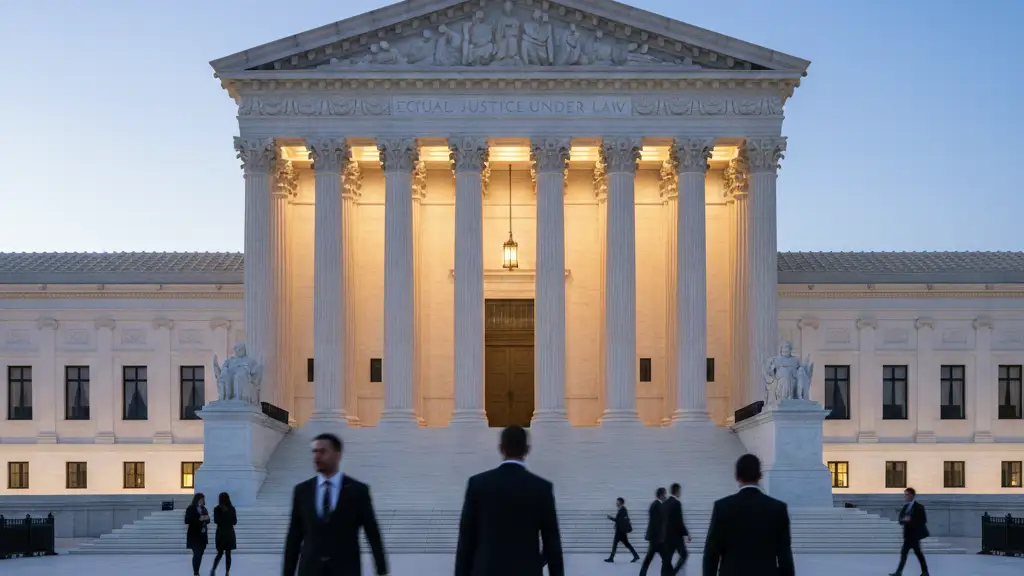
The United States Supreme Court has struck down President Donald Trump’s global tariffs, ruling that the levies were unlawfully imposed under the International Emergency Economic Powers Act of 1977.
Donald Trump reacted with characteristic fire, branding the Supreme Court's decision a 'disgrace' and signaling that his administration is already mobilizing a counter-offensive. The former president informed reporters that a robust back-up plan is currently being finalized to address the legal void left by this judicial blockade.
While the ruling triggers a domestic legal crisis in Washington, the United Kingdom finds itself in a unique position after previously securing the lowest tariff rate of 10% under the now-voided policy. British officials maintain a stoic outlook, suggesting the court's decision will not significantly disrupt the majority of the UK’s trade volume with America.
The decision fails to clear the murky waters for business regarding future US trade relations.
The UK Government confirmed it anticipates its 'privileged trading position' with the United States will remain intact regardless of the shifting legal landscape. Despite this official optimism, the ruling potentially jeopardizes a vast network of trade agreements, including those currently held with the European Union.
William Bain, head of trade policy at the British Chambers of Commerce, warned that the decision fails to 'clear the murky waters for business' regarding future US trade relations. He noted that the administration might still pivot toward alternative legislation to re-impose heavy tariffs on foreign goods.
Kemi Badenoch highlighted the immense economic stakes of this legal tug-of-war, asserting that tariffs remain an expensive burden for businesses on both sides of the Atlantic. Meanwhile, the advocacy group Best for Britain argued that the court's intervention underscores the inherent instability of forging deals with Trump’s America.
This group further suggested that the ruling serves as a catalyst for the UK to pursue deeper, more reliable trade ties with its European neighbours. In response, the UK Government pledged to provide comprehensive support for British businesses as the full extent of the legal fallout emerges from Washington.
Donald Trump claimed that the logistics of calculating potential refunds or adjustments would take many years to resolve, specifically regarding who is owed and when they should be paid. He further asserted that reversing the entire tariff structure would be a 'complete mess' and almost impossible for the national treasury to facilitate.
Reversing the entire tariff structure would be a complete mess and almost impossible for the national treasury to facilitate.
The 1977 Act was originally designed to grant presidents the power to regulate commerce during genuine national emergencies, yet the court found its application in this instance far exceeded statutory limits. This creates a powerful historical precedent that may severely restrict future executive overreach in matters of international taxation.
Market analysts suggest the abrupt removal of these tariffs could trigger a volatile period for global supply chains that had already recalibrated to the 10% levy. Importers who have funnelled billions into the US Treasury now face a labyrinthine legal path toward reclaiming those substantial funds.
The ruling has ignited an immediate and fierce debate in Washington over the constitutional separation of powers between the executive branch and the legislature. Constitutional scholars observed that the decision effectively restores the legislative branch's primary authority over the nation's trade purse strings.
For British exporters, the most pressing concern is whether the US Department of Commerce will attempt a workaround via Section 232 of the Trade Expansion Act. Such a strategic shift would likely trigger a fresh round of aggressive legal challenges from international trade partners across the globe.
The UK’s Department for Business and Trade is currently conducting an exhaustive review of the judgment to ensure British steel and aluminium sectors remain shielded from the fallout. Officials are working around the clock to ensure the removal of the Trump-era framework does not inadvertently raise new barriers for UK goods.
Industry leaders in the UK have called for a formalised bilateral agreement to replace the ad-hoc arrangements that have defined the last several years of transatlantic commerce. They argue that the Supreme Court's intervention proves executive orders are far too fragile a foundation for long-term industrial investment.
The legal aftermath is expected to clog federal courts for years as corporations prepare to file massive class-action lawsuits to recover their tariff payments. Trump insisted that the administrative burden of processing these potential refunds would be nothing short of catastrophic for the national budget.
As the administration prepares its legislative counter-offensive, the global trade community remains on high alert for the next sudden shift in American policy. This ruling serves as a stark reminder of the volatility inherent in trade strategies built upon the shifting sands of emergency executive decrees.