US and Israeli Warplanes Strike Iran as Khamenei Death Confirmed
Trump calls for Iranian regime change and offers immunity to security forces following massive aerial offensive
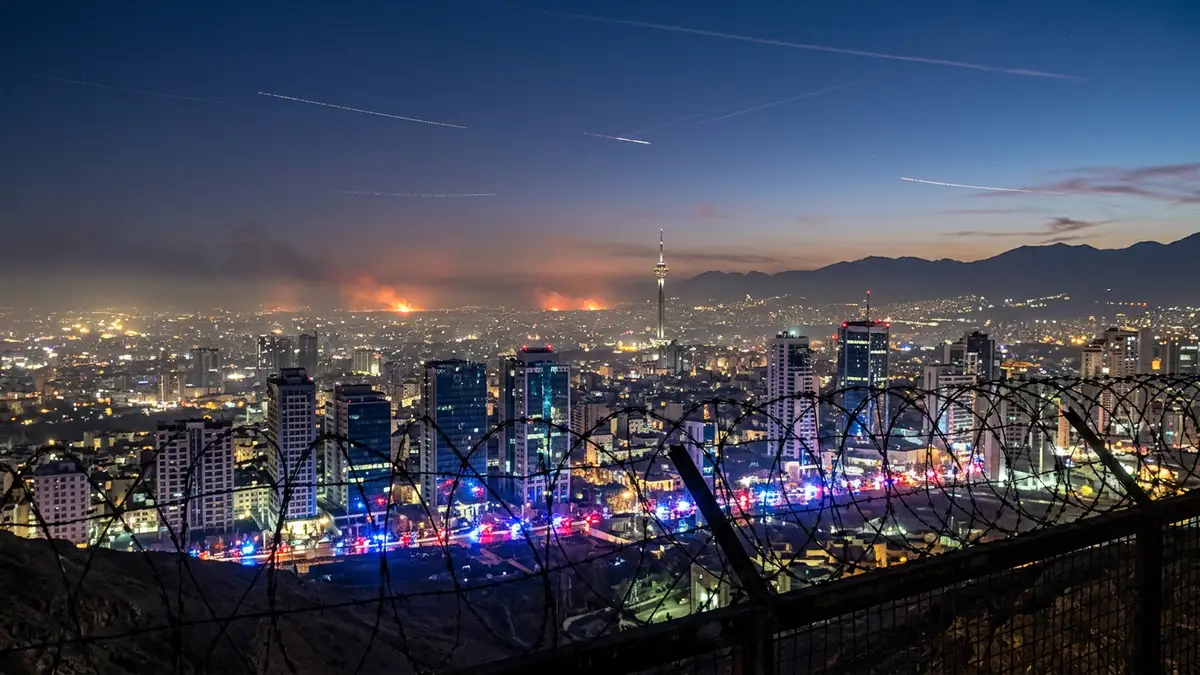
Image: Matt Weston / AI

Callum Smith
Israeli and United States warplanes launched a coordinated aerial offensive across Iran on Saturday, resulting in the death of Supreme Leader Ayatollah Ali Khamenei.
Social media footage captured crowds in Mashhad and Shiraz celebrating the news of the Supreme Leader's death. Security forces in Tehran have yet to announce a successor or confirm a chain of command.
The United Kingdom unlocked the expanded reach of the campaign by reversing its refusal to allow the United States to use British sovereign base areas. This logistical pivot at RAF Akrotiri allowed for a 40 percent increase in sortie rates during the first twenty-four hours.
The use of these Mediterranean assets signals a total alignment of Western strike capabilities in the Middle Eastern theater. Military planners now utilize these runways to sustain a bombardment that forecasts suggest will continue for several weeks.
In a significant friendly fire incident, Kuwaiti air defenses intercepted and shot down three U.S. F-15E Strike Eagles. The Pentagon has not released the status of the six aircrew members involved in the downing of the American jets.
President Donald Trump urged the Iranian people to seize their national institutions, declaring that help has arrived. He called on citizens to occupy government buildings once the kinetic phase of the operation concludes.
Help has arrived.
Trump described the current window as a singular opportunity for the Iranian public. He warned that the population must not squander the leverage created by the ongoing missile strikes.
Israeli Prime Minister Benjamin Netanyahu issued parallel appeals to the Iranian public via televised address. Both leaders explicitly demand regime change through internal revolt following the elimination of the clerical elite.
Trump issued a direct ultimatum to the Islamic Revolutionary Guard Corps and the Iranian police to abandon their posts. He offered these security forces total immunity in exchange for immediate cooperation with a transitional authority.
The window for this legal immunity remains open only during the active bombardment phase of the offensive. Trump reiterated his demand for the Iranian military to desert their barracks to avoid further destruction.
The President asserted that Iran would soon possess a ballistic missile capable of reaching the American mainland. This claim contradicts current U.S. intelligence assessments regarding the range of Iranian liquid-fueled rockets.
Trump further stated that Iran stood on the precipice of developing a functional nuclear device. This stands in contrast to his assertions last summer that the U.S. had already neutralized Iranian enrichment sites.
Steven Cash, a former CIA operations officer, noted that the timing of the escalation aligns with the domestic political calendar. Cash suggested the administration is prioritizing conditions that influence the forthcoming U.S. midterm elections.
The timing of the escalation aligns with the domestic political calendar.
Defense Secretary Pete Hegseth and the President both confirmed that casualty counts will rise as the war progresses. Military planners are currently preparing for sustained urban engagements as the offensive enters its second phase.
Ground reports from Isfahan and Tabriz indicate catastrophic damage to command-and-control infrastructure following the initial waves. Iranian military responses remain fragmented and uncoordinated without a central command from the Supreme Leader.
Trump confirmed that the next significant wave of strikes is currently airborne and impending. The offensive maintains constant pressure to ensure the existing political structure collapses under its own weight.
The economic impact of the strikes hit global markets instantly, with Brent crude spiking by 12 percent in early trading. Traders in London and New York are bracing for further volatility as the Strait of Hormuz remains a primary flashpoint.
The logistical footprint of the operation now spans from the Mediterranean to the Persian Gulf. This coordination represents the largest mobilization of Western air power in the region since the 2003 invasion of Iraq.
Protests continue to flare in the streets of Tehran as the Basij militia struggles to maintain order without clear instructions. The silence from the Guardian Council suggests a deepening paralysis within the remaining government ranks.
U.S. carrier strike groups in the Arabian Sea have moved into launch positions for the next phase of the air campaign. The velocity of the operation continues to outpace the ability of regional actors to mediate a ceasefire.