Starmer Reverses Ban on US Use of British Bases for Iran Operations
Prime Minister authorises American military access to UK sovereign territory as Middle East tensions escalate and domestic political pressure mounts.
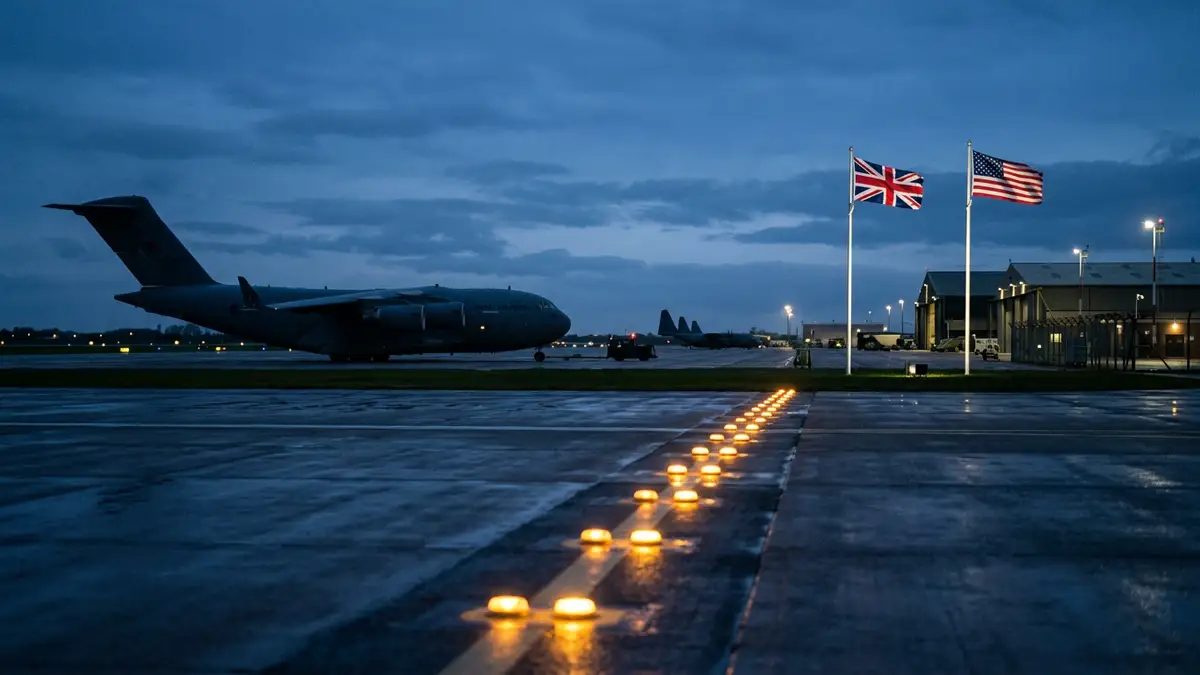
Image: Matt Weston / AI

Sarah Connor
Prime Minister Sir Keir Starmer has authorised the United States to utilise British military bases for defensive actions against Iran, reversing an initial block on such operations from UK-controlled territory.
Starmer addresses Parliament at 3:30 p.m. today to provide a full account of the escalating Middle East crisis. This appearance follows weeks of restricted military cooperation between London and Washington.
Foreign Secretary Yvette Cooper previously stated that supporting a U.S. attack on Iran did not align with the United Kingdom’s interests. Middle East Minister Hamish Falconer confirmed the United Kingdom is not currently at war with Iran despite the heightened military posture.
The delay in granting base access drew sharp criticism from across the Atlantic. Donald Trump expressed disappointment in the timeline, stating that Starmer took far too long to change his mind regarding the use of British facilities.
Starmer took far too long to change his mind regarding the use of British facilities.
The U.S. President further noted that the time elapsed before the Prime Minister reversed the decision was excessive. This friction occurs against a backdrop of historical cooperation between the two nations on regional security.
Nigel Farage characterised the initial refusal as pathetic and claimed the move threatened both the integrity of NATO and the special relationship. He argued that the hesitation undermined the foundational security agreements that have defined the post-war era.
Conservative Leader Kemi Badenoch alleged the Labour government is scared to upset large blocs of voters whose loyalties are swayed by Middle East conflicts. She claimed the decision-making process relied on partisan political calculations rather than international law.
Former Attorney General Sir Michael Ellis stated that Britain ought to be standing alongside the United States and Israel. Ellis attributed the government's stance to a combination of ideological conviction and electoral calculation.
The security landscape within the UK remains volatile as officials have thwarted 20 Iran-sponsored terror attacks on British soil over the last 12 months. These domestic threats coincide with direct military risks to British assets abroad.
Two Iranian missiles accidentally veered in the direction of Cyprus during recent hostilities. British bases in Cyprus currently sit within the potential line of fire as regional tensions increase and missile trajectories become less predictable.
Internal legal guidance has complicated the government's response. Lord Hermer provided advice suggesting that further involvement in the conflict would be illegal under current frameworks.
Ben Habib, Leader of Advance UK, questioned the sanity of those not wishing to take out the mullahs in Iran. His comments reflect a growing hawkish sentiment among certain political factions demanding more decisive military action.
Questioned the sanity of those not wishing to take out the mullahs in Iran.
The economic impact of the instability surges through global energy sectors. Market data shows oil prices are skyrocketing as the conflict destabilises supply chains and increases maritime insurance costs.
Domestic polling suggests the government's handling of the crisis is impacting its standing. A new Opinium poll places Reform UK 12 points ahead, while separate data suggests nearly half of Labour voters could switch to the Green Party.
The Prime Minister faces intense internal pressure as he maintains a position that critics describe as sitting on the fence regarding the war. This stance has become a focal point for both the left and right wings of the political spectrum.
Historically, the use of British bases by U.S. forces has been a cornerstone of Western power projection. The temporary suspension of this access marked a departure from established geopolitical norms.
The reversal signals a return to closer military alignment with Washington as the threat of a wider regional war grows. Military planners are now coordinating the logistics of defensive operations from the Mediterranean to the Persian Gulf.
As the 3:30 p.m. parliamentary session approaches, MPs are expected to demand clarity on the specific rules of engagement for U.S. forces. The debate will likely centre on the balance between sovereign control and collective defence obligations.
The escalating hostilities continue to reshape the political and economic landscape of the United Kingdom. With oil prices rising and terror threats persisting, the government's next steps will determine the stability of the special relationship.