UK and US Withdraw Personnel as Middle East Tensions Escalate
Diplomatic staff exit Tehran and Tel Aviv while military assets move into the region following failed nuclear negotiations
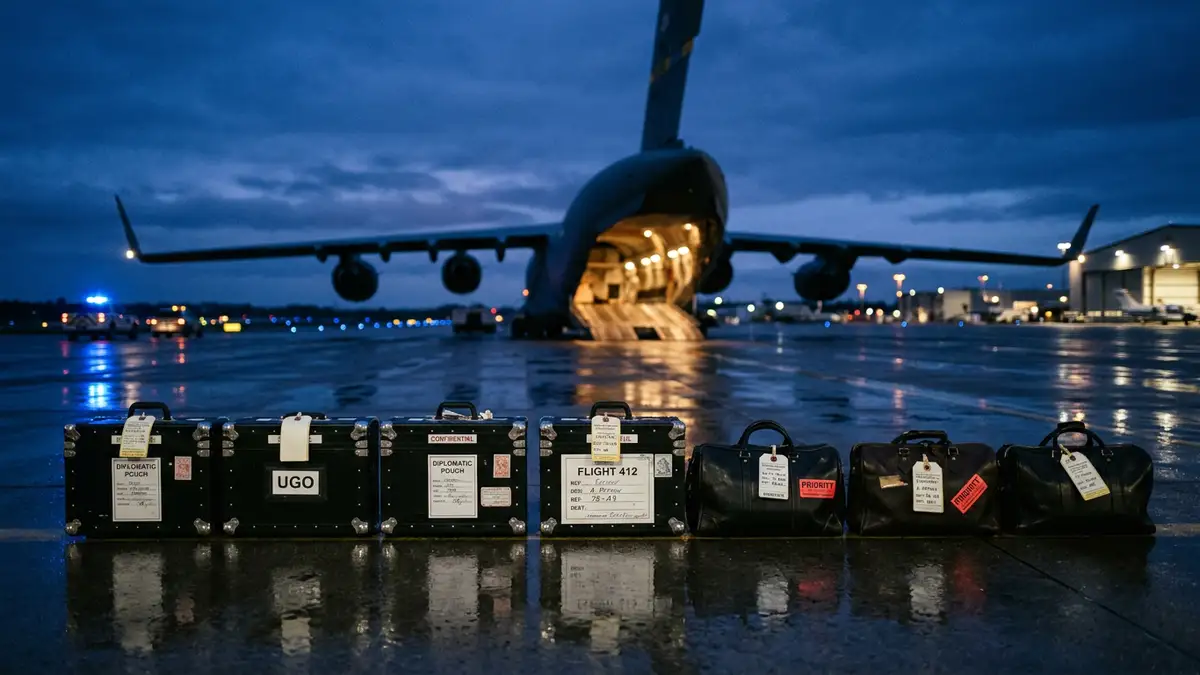
Image: Matt Weston / AI

Callum Smith
The United Kingdom and the United States have initiated a rapid withdrawal of diplomatic personnel from Iran and Israel as military posturing replaces stalled nuclear negotiations.
British citizens now face official advisories from Whitehall to avoid all but essential travel to Israel. These movements occur as the United States and Iran fail to reach a definitive nuclear deal.
The diplomatic infrastructure in the region has remained fractured since the 1979 Islamic Revolution. Historical precedents of embassy seizures and long-term sanctions dictate the current lack of direct communication channels between the powers.
President Donald Trump utilized his State of the Union speech to outline a case for a potential attack on Iran. He stated that while he prefers a diplomatic solution, he will not allow Tehran to obtain a nuclear weapon.
While he prefers a diplomatic solution, he will not allow Tehran to obtain a nuclear weapon.
The American President issued a strict deadline of 10 to 15 days for Iran to make a meaningful deal. This proposed agreement must include the total cessation of all nuclear technology development.
Tehran maintains that the United States must drop what it describes as excessive demands to reach any accord. Iranian officials have threatened to attack Israel, an action that would trigger a regional war.
Mediators from Oman reported significant progress in negotiations yesterday. However, they confirmed that no major breakthroughs have occurred to avert a direct military conflict.
John Bolton, the former US National Security Adviser, stated that President Trump will use military force in Iran to maintain his own credibility. The US continues to amass military power across the Middle East to support this stance.
President Trump will use military force in Iran to maintain his own credibility.
Downing Street officials stated that strikes against Iran would breach international law. Number 10 has blocked a request from the Trump administration to use the Diego Garcia base in the Chagos Islands.
The White House is refusing to change its stance on the Chagos deal until the base is made available for military use. This standoff impacts the strategic logistics of the US military presence in the Indian Ocean.
The global oil market remains sensitive to the Strait of Hormuz, where 20 percent of the world's petroleum passes daily. Economic stakeholders are monitoring the potential for a 30 percent spike in crude prices if the corridor closes.
The refusal to grant base access has created a rift in the UK-US security partnership. The Diego Garcia facility remains a central node for long-range bomber operations.
The current landscape shifts toward kinetic engagement as diplomatic avenues narrow. Military analysts point to the deployment of refueling tankers as a prerequisite for sustained air operations over Iranian territory.
The US military buildup includes the positioning of heavy assets capable of reaching deep into the Persian Gulf. These logistical movements mirror the preparations seen in previous regional conflicts.
Energy analysts warn that a disruption in the Strait of Hormuz would immediately impact global supply chains. A 30 percent increase in oil prices would place immense pressure on Western economies already facing volatility.
The United Kingdom continues to distance itself from unilateral American military action. This divergence in policy marks a significant tension point in the historic 'Special Relationship' between London and Washington.
Tehran has not rescinded its threats against Tel Aviv despite the presence of US tankers. The 15-day window provided by the White House continues to shrink as both sides reinforce their borders.
The arrival of the KC-135 and KC-46 tankers at Ben Gurion provides the necessary fuel bridge for long-range sorties. This hardware deployment removes the logistical barriers to a sustained aerial campaign.
The 1979 precedent of total isolation continues to define the lack of a back-channel between the White House and the Iranian leadership. Without a direct line, the 15-day clock operates in a vacuum of escalating military readiness.
Global markets have already begun pricing in the risk of a Strait of Hormuz closure. Crude futures climbed as the first tankers landed in Tel Aviv, reflecting the 20 percent global supply vulnerability.