Starmer Authorizes UK Base Access for US Strikes on Iran Amid Rising Diplomatic Friction
The Prime Minister faces internal cabinet resistance and international criticism as military assets deploy to the Middle East crisis.
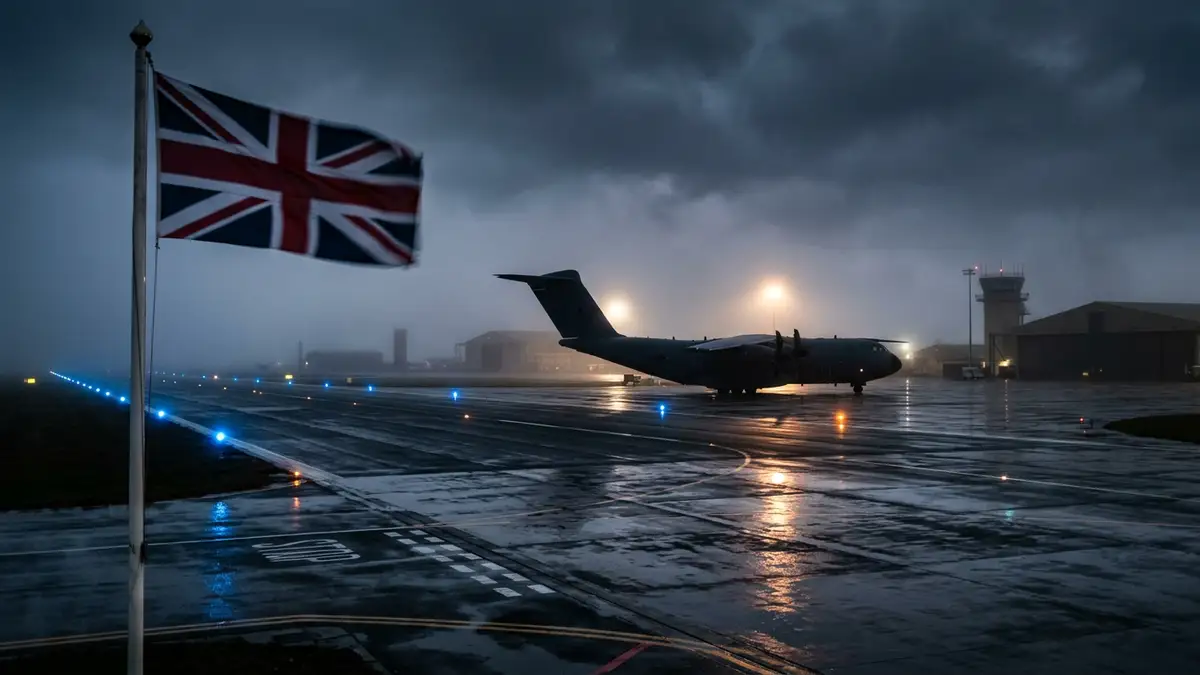
Image: Matt Weston / AI

Callum Smith
Prime Minister Keir Starmer is preparing a national address regarding the escalating Middle East crisis following the decision to permit United States military operations from British-controlled territories.
Sir Keir Starmer rejected assertions that his government failed to protect regional military assets after missiles struck RAF Akrotiri. The Prime Minister maintains he will not commit to kinetic warfare without a verified lawful basis and a viable operational plan.
Internal government friction dictated the timing of base access for allied forces. Starmer initially favored granting earlier US access but hit a wall of opposition from a powerful cabinet alliance.
Foreign Secretary Yvette Cooper, Energy Secretary Ed Miliband, Chancellor Rachel Reeves, and Attorney General Lord Hermer formed the bloc that overruled the proposal. This internal veto disrupted the traditional flow of the Special Relationship.
Historically, the Diego Garcia installation has functioned as the bedrock of trans-Atlantic military cooperation. It served as the primary launchpad for every major Middle Eastern operation over the last four decades.
The current friction marks a sharp departure from the rapid military alignment seen in previous regional conflicts. Nigel Farage, leader of Reform UK, stated that a massive retaliatory strike on Iran remains imminent.
The delay in response timing has humiliated Britain on the global stage.
Farage claimed the delay in response timing has humiliated Britain on the global stage. He argued the nation should have integrated with United States and Israeli strike packages from the first hour of the operation.
Former Defence Secretary Sir Grant Shapps characterized the Downing Street response as dangerously sluggish. He noted that the Ministry of Defence only dispatched a primary naval vessel five days into the escalating crisis.
Shapps asserted that the current government fails to grasp British strategic interests by restricting American use of sovereign installations. He described the move as a refusal to participate in essential allied efforts.
Logistical pressure is surging as approximately 300,000 British nationals remain trapped within the conflict zone. The Foreign Office aborted its first chartered evacuation flight from Oman on Wednesday.
Officials cited technical failures for the grounded aircraft. Meanwhile, economic stakeholders are tracking the security of trade routes as the violence threatens to destabilize global energy markets.
The delay in naval positioning has forced maritime insurers to reassess the safety of the Suez Canal approaches. Donald Trump has described Sir Keir Starmer as a 'loser' in private briefings with his associates.
Trump reportedly told confidants that Starmer lacks a political future and expressed shock at the Prime Minister’s performance. The former president specifically targeted Starmer’s resistance to Pentagon operational requirements.
Trump further claimed the UK committed a strategic blunder by transferring sovereignty of the Chagos Islands to Mauritius. This territory includes the high-value Diego Garcia air and naval base.
The Chagos transfer represents a tectonic shift in the geopolitical architecture of the Indian Ocean. Critics argue the move strips the facility of its long-term security during high-intensity regional warfare.
The Prime Minister is currently managing the diplomatic fallout as US aircraft utilize granted flight paths for ongoing sorties. These missions strike specific infrastructure to degrade Iran’s long-range missile capabilities.
Public pressure is mounting on Downing Street to define the UK's role in the kinetic phase of the campaign. The Cabinet remains deadlocked on whether to authorize direct combat support or restrict the UK to logistical aid.
Security officials in Whitehall identified future UK-US intelligence sharing as a primary casualty of the current friction. Any perceived hesitation could fundamentally alter the terms of the AUKUS and Five Eyes intelligence pacts.
Military analysts suggest the strike on RAF Akrotiri necessitates an immediate overhaul of British defensive postures in the Mediterranean. The vulnerability of fixed bases to modern missile salvos has become the central focus of the Ministry of Defence.
The current government fails to grasp British strategic interests by restricting American use of sovereign installations. He described the move as a refusal to participate in essential allied efforts.
The United States continues to demand unrestricted access to RAF facilities to maintain the current tempo of air operations. Starmer must now balance these urgent military requests against the legal barriers erected by Lord Hermer.
As sorties continue, the Foreign Office struggles to clear the technical hurdles preventing civilian evacuations from Oman. The window for safe departure is closing as regional airspaces face tightening restrictions.
The Prime Minister’s upcoming address will define the legal boundaries of Britain's military engagement. This moment will test a government attempting to reconcile internal ideological dissent with its international defense obligations.