Britain to Host Hormuz Discussions Amid US-Iran Stalemate
Global powers convene as US-Iran peace talks collapse, leaving critical shipping lane in jeopardy.
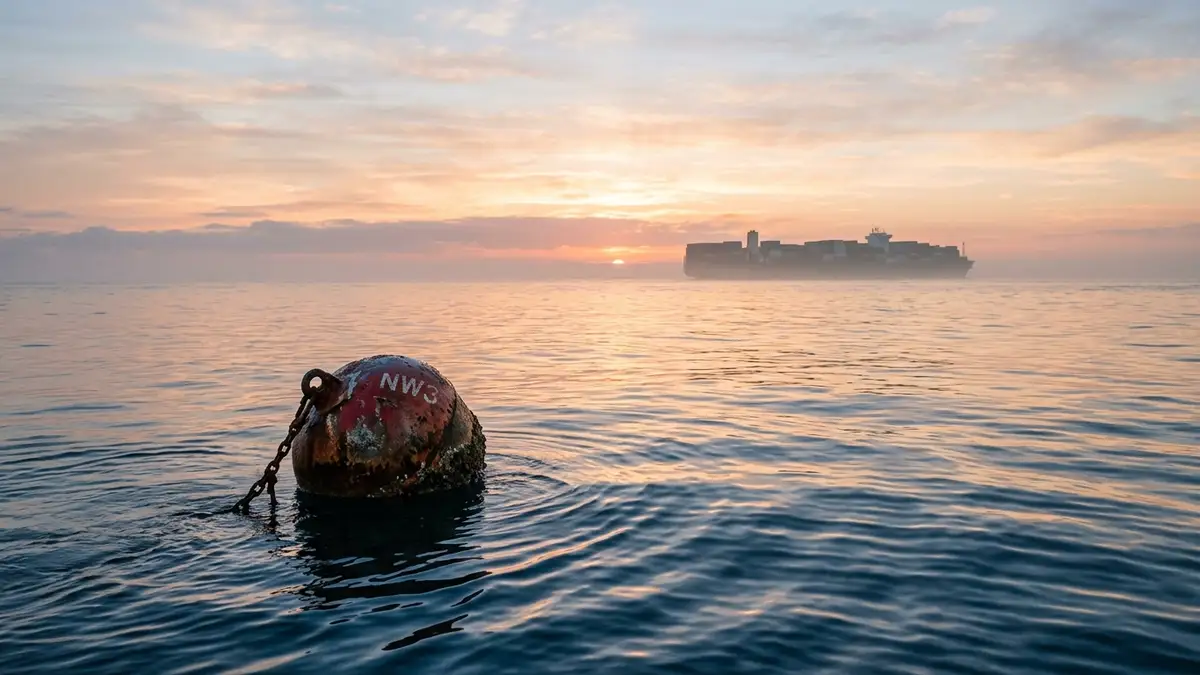
Image: Matt Weston / AI

Callum Smith
Britain will host crucial discussions aimed at reopening the Strait of Hormuz shipping lane, a vital artery for global trade, following the collapse of peace negotiations between the United States and Iran.
Iran's refusal injects significant instability into the precarious ceasefire, which Donald Trump had explicitly conditioned on the 'COMPLETE, IMMEDIATE, and SAFE OPENING of the Strait of Hormuz.'
Iran had previously confirmed its agreement to a ceasefire, contingent on 'if attacks against Iran are halted,' as stated by Abbas Araghchi.
The ongoing conflict involving Iran has already exerted considerable pressure on global energy and food prices, impacting economies worldwide.
Beyond the immediate diplomatic breakdown, the Strait of Hormuz, a narrow chokepoint, handles approximately one-fifth of the world's oil supply.
Its potential closure poses a severe threat to international commerce and energy security.
Historically, disruptions in this vital waterway have triggered sharp spikes in oil prices, recalling the tanker wars of the 1980s during the Iran-Iraq War.
During that period, naval escorts became necessary to protect shipping, underscoring the strait's enduring strategic importance.
The US-Iran ceasefire agreement is fragile.
Meanwhile, Sir Keir Starmer visited the Gulf region, engaging with various leaders ahead of these critical discussions.
His presence signaled the UK's proactive diplomatic stance amidst the escalating tensions.
Starmer described the US-Iran ceasefire agreement as 'fragile,' reflecting the precarious state of regional stability.
He confirmed the UK assembled a coalition of over 30 countries to develop a 'political and diplomatic plan, but also looking at military capabilities and actually the logistics of moving vessels through the Strait.'
This broad international effort highlights the collective concern over potential further escalation and economic disruption.
Adding another layer of complexity, Iran intends to levy charges on vessels for transit through the Strait of Hormuz, seeking payment for passage.
This move could further complicate maritime operations and increase shipping costs.
The Prime Minister has called for the maintenance of the fragile ceasefire in the broader Middle East war, emphasizing the need for de-escalation across the region.
Concurrently, Israel reported executing its 'biggest strikes' against Lebanon since its ground operation commenced, adding another layer of tension to the volatile landscape.
Domestically, the Liberal Democrats assert the UK can no longer 'trust a Trump-led America' and advocate for closer ties with the European Union.
We cannot rely on the US for security.
Zack Polanski echoed this sentiment, stating the UK could not 'rely on the US for security,' pushing for a re-evaluation of defense alliances.
The Conservatives indicated they would cut funding for green energy projects to bolster defense spending, reflecting a shift in national priorities.
The party also urged the government to lift a ban on new licenses for oil and gas drilling in the North Sea, seeking to enhance domestic energy security amidst global instability.