Trump Demands Allied Naval Support as Iran Blocks Strait of Hormuz
Global oil prices surge following the largest supply disruption in history and threats of immediate destruction for tankers
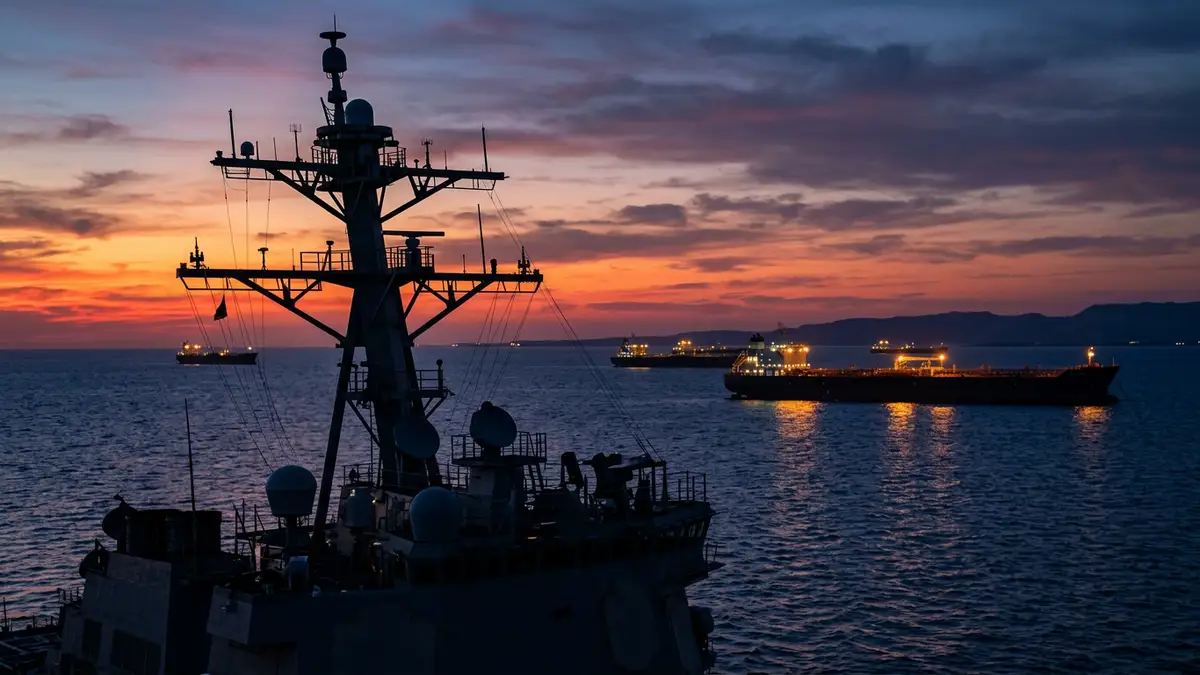
Image: Matt Weston / AI

Callum Smith
President Donald Trump called on the United Kingdom and international allies to deploy military assets to the Strait of Hormuz to secure the world's busiest oil shipping channel.
Mojtaba Khamenei, the 56-year-old Supreme Leader, vowed to maintain the closure as a primary lever of pressure against the United States. Iranian officials declared that any tanker bound for the U.S., Israel, or their allies constitutes a legitimate target for destruction.
The Strait of Hormuz functions as the world's most sensitive chokepoint, carrying 21 million barrels of oil per day. This current blockade echoes the 1980s Tanker War but exceeds it in both scale and immediate price volatility.
Donald Trump confirmed that a coalition of nations affected by the closure will deploy warships alongside the United States. He stated that these forces will move to keep the passage open and safe by any means necessary.
These forces will move to keep the passage open and safe by any means necessary.
Khamenei sustained injuries during the initial strike that ignited this conflict last month. Despite these injuries, the Iranian command structure insists the Supreme Leader remains in active control of the nation’s strategic maneuvers.
The closure serves as a direct retaliatory strike following overnight bombing campaigns conducted by Israeli and American forces. Israel launched these strikes on Saturday, targeting Iranian infrastructure in response to escalating regional aggression.
British officials mobilize Royal Navy assets and advanced drone technology to the Middle East. The objective remains the protection of national interests and the restoration of maritime transit rights.
The Royal Navy’s Mine and Threat Exploitation Group stands ready for immediate deployment from its current Middle Eastern stations. These units utilize specialized minehunting drones to clear the narrow passage of Iranian explosives.
Energy Secretary Ed Miliband pledged that the Government will stand by the British people throughout the duration of this energy crisis. The administration now weighs a freeze on planned fuel duty increases to buffer the domestic economy.
Public pressure mounts as recent data shows one in ten citizens are already canceling medical journeys due to fuel costs. This economic strain forced a rapid shift in the UK’s domestic policy priorities.
Shadow Energy Secretary Claire Coutinho demanded the UK take decisive action to protect military assets and national interests abroad. She argued that the Conservative party would have granted U.S. allies access to British bases with greater speed.
Liberal Democrat leader Ed Davey challenged this alignment, warning that Britain must not follow an American president blindly. He questioned the strategic clarity of the current U.S. administration’s approach to the escalating naval standoff.
Britain must not follow an American president blindly.
Trump noted that while Tehran appears interested in negotiating a ceasefire, the current terms fail to meet American requirements. He dismissed late-arriving allies, stating the U.S. does not need partners who join conflicts after the victory is secured.
The UK Government finalized drafts to increase the volume of military hardware and personnel sent to the Persian Gulf. This move follows a series of successful Iranian attacks on commercial vessels attempting to navigate the strait.
The global shipping industry halted all traffic through the region as insurance premiums for tankers reach unsustainable levels. Every hour the strait remains blocked adds millions to the projected cost of global recovery.
Military analysts point to the 1988 Operation Praying Mantis as the only historical precedent for this level of naval engagement in the Gulf. The introduction of modern drone swarms and ballistic anti-ship missiles has fundamentally altered the tactical landscape.
The standoff now moves to the water, where the U.S. Fifth Fleet positions carriers to challenge the Iranian blockade. The world waits for the first shot in what has become a total war for the control of global energy.