UK Launches Emergency Charter Flights as 300,000 Britons Face Middle East Stranding
Foreign Office updates travel guidance for 13 nations as airspace closures and counter-attacks disrupt global aviation hubs
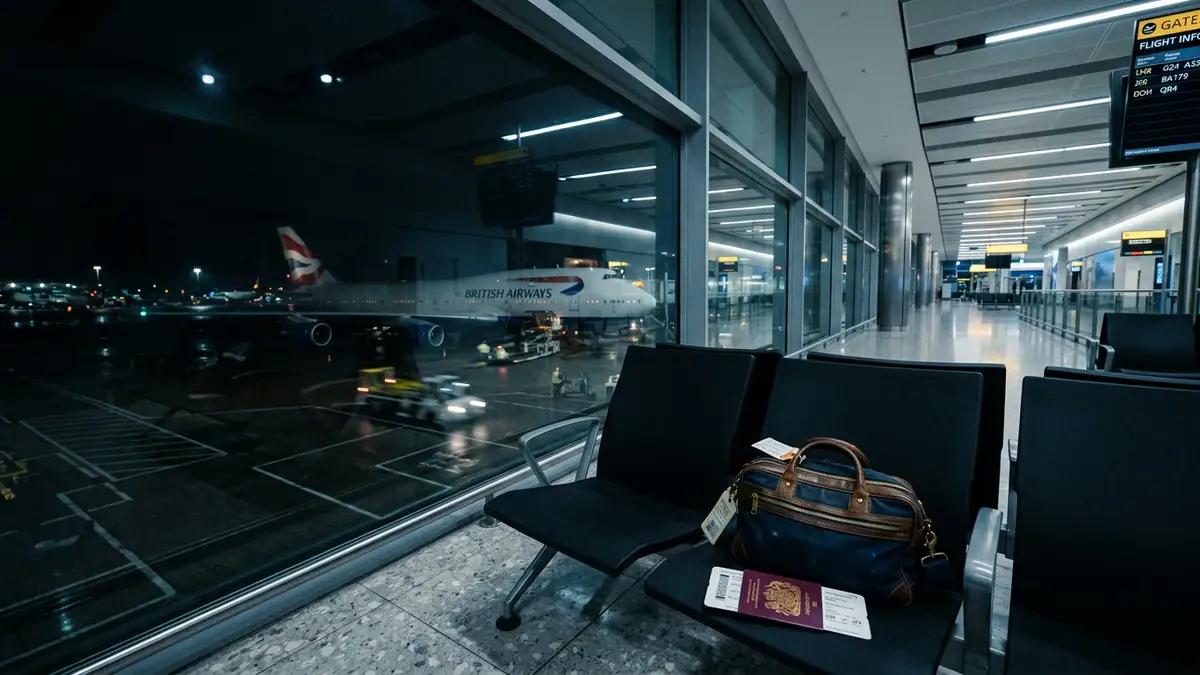
Image: Matt Weston / AI

Carla Rooney
The Foreign, Commonwealth and Development Office has initiated an emergency repatriation operation as 300,000 British nationals remain caught in the crossfire of an intensifying conflict between US-Israeli forces and Iran.
FCDO officials confirmed that 4,000 people touched down in the United Kingdom yesterday. This movement follows the mass registration of British nationals seeking immediate extraction.
Major aviation hubs across the Middle East are buckling under sustained duress. The sheer volume of the remaining population exceeds current transport capacity.
Official warnings now radiate across 13 nations. These include Thailand, Egypt, Uzbekistan, Jordan, Qatar, Saudi Arabia, and the United Arab Emirates.
High-level advisories remain in force for Palestine, Israel, Bahrain, and Kuwait. The military situation shifts by the hour.
The current crisis has dismantled a decade of aviation stability within the Gulf region. It has replaced routine transit with emergency logistics.
The evacuation effort mirrors the largest repatriation events in British diplomatic history. It pivots the landscape of Middle Eastern travel toward relief operations.
Recent counter-attacks launched by Iran triggered widespread disruptions. These strikes forced the immediate shuttering of critical transit points.
Airports in Qatar, Abu Dhabi, and Dubai suspended all operations. This occurred as the intensity of the kinetic hostilities spiked.
The FCDO stated that this escalation forced total flight cancellations. Aircraft carrying British nationals remain grounded across the Gulf.
Disruptions have necessitated a total reliance on emergency corridors. Commercial options vanished from the radar as the conflict expanded.
Economic pressure has shifted with violent speed toward the private sector. Private firms now fill the vacuum left by grounded flag carriers.
One UK private jet firm reported a 300 percent explosion in demand during the first week of the crisis. Wealthy travelers are bypassing standard hubs to secure exit.
Emirates and Etihad Airways have resumed a strictly limited number of services from Dubai and Abu Dhabi. These flights operate under heavy security constraints.
Carriers are currently battling to clear a massive passenger backlog. This queue formed during the initial wave of airport shutdowns.
Qatar Airways operations remain temporarily suspended. The total closure of Qatari airspace has halted all standard traffic.
The airline announced it will begin operating a limited number of relief flights starting 05 March. These flights target those still stranded in the capital.
Political stakeholders face mounting scrutiny over the speed of the evacuation. The window for safe exit narrows as ground conditions deteriorate.
The FCDO updates its guidance in real-time. Shifting safety parameters on the ground dictate the availability of exit routes.
Mohammad Ali Iskandari stated that Iran is not fighting the United States or Israel. He claimed the nation is fighting a specific mindset.
Iran is not fighting the United States or Israel. He claimed the nation is fighting a specific mindset.
Iskandari asserted that Iran did not initiate this war. He noted the conflict ignited while diplomatic negotiations were still active.
The Iranian official alleged that the United States has assisted Israel for forty years. He claimed this support prepared the region for this specific theatre of war.
Iskandari described the current aggression as occurring in the middle of delicate diplomatic efforts. He characterized the timing as a deliberate disruption.
He claimed the military actions were intended solely to satisfy the ambitions of Benjamin Netanyahu. Netanyahu has been condemned as an international criminal by various global bodies.
Iskandari warned that remaining silent in the face of such actions increases the scale of future crimes. He stated these events will affect the fate of global generations.
Remaining silent in the face of such actions increases the scale of future crimes. These events will affect the fate of global generations.
Ongoing attacks between the US, Iran, and their respective allies continue to dictate the viability of regional travel. The Gulf remains a high-risk zone.
The FCDO maintains that its primary task is to keep British nationals informed. They broadcast viable exit routes as they appear.
Future flight schedules remain entirely contingent on the status of regional airspace. Iranian counter-attacks determine the safety of every corridor.
Commercial hubs currently prioritise military and repatriation traffic over standard civilian transit. This hierarchy manages the existing bottleneck.
The logistical strain remains severe as 300,000 citizens weigh their options. They face a shrinking window of physical safety.
Government officials continue to monitor the airspace with absolute focus. The conflict now enters its second week of high-intensity engagement.