UK Launches Emergency Evacuation Operation as Iranian Missile Strikes Paralyze Middle East Airspace
Foreign Office Urges Registration of British Nationals Following Death of Supreme Leader and Regional Escalation
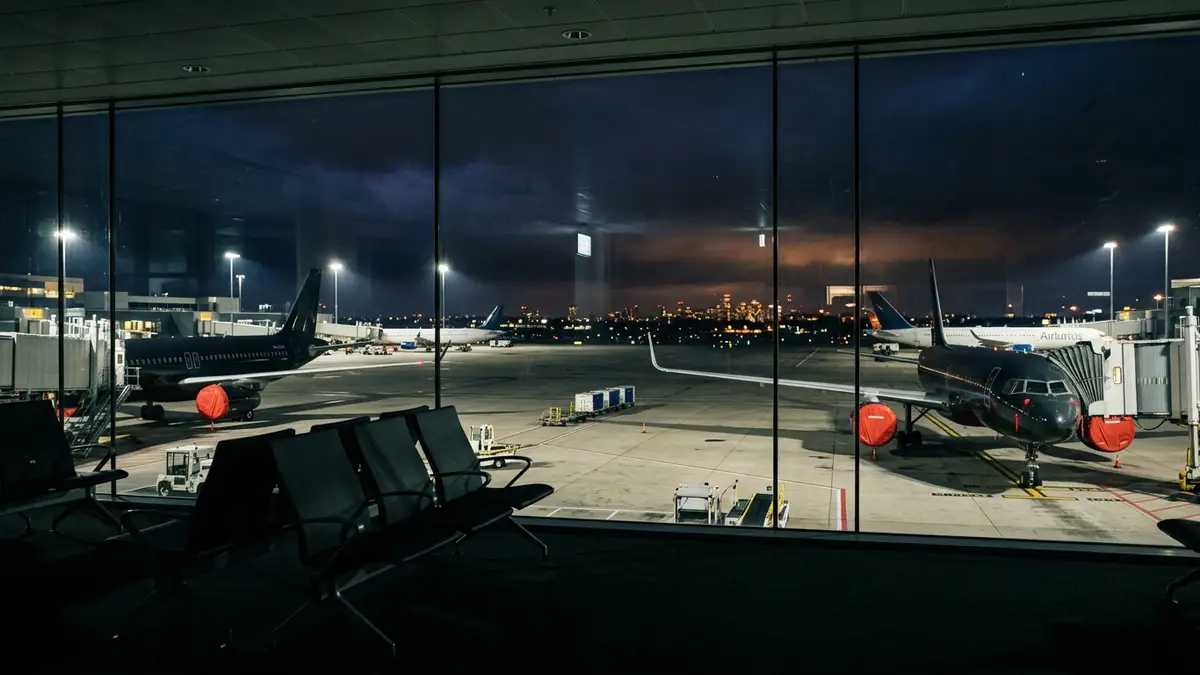
Image: Matt Weston / AI

Carla Rooney
Thousands of British nationals remain stranded across the Gulf and Middle East as widespread airspace closures halt commercial aviation following a massive Iranian missile offensive.
Iran launched these missile strikes across the region in direct retaliation for US-Israeli airstrikes. Tehran vowed to deliver strikes against neighboring countries and US military targets.
The Israeli military confirmed it hit sites in central Tehran following the death of Supreme Leader Ayatollah Ali Khamenei on Saturday morning. Iran pledged the most intense military operation in the nation's history in response to the killing.
The most intense military operation in the nation's history.
Data from the UAE Ministry of Defence indicates the scale of the assault, reporting 165 ballistic missiles, two cruise missiles, and 541 drones launched from Iran. Defense analysts confirm that approximately 400 missiles from Iran have been intercepted across the Middle East so far.
Tehran launched more than 25 waves of ballistic missiles and drones since Saturday morning. These strikes targeted specific locations in Israel, Bahrain, Qatar, the UAE, Kuwait, and Iraq.
The human cost of the barrage mounts as Israeli authorities report Iranian missiles killed nine civilians in Beit Shemesh, near Jerusalem. The US military's Central Command confirmed three American service members died and five others sustained severe wounds on Sunday.
Central Command rejected Iranian claims that ballistic missiles hit the aircraft carrier USS Abraham Lincoln. No British nationals have been reported killed or injured in the conflict at this time.
The UK Government identified two missiles launched toward Cyprus, where thousands of British personnel remain stationed. Officials do not believe these missiles were intentionally aimed at the British bases on the island.
All British personnel serving in the region are currently safe and accounted for. The Foreign Office urged all British nationals in the area to register their presence immediately to facilitate emergency communication.
Political pressure mounts in Westminster, where Dame Priti Patel argued that the Government should have been more proactive in supporting the strikes. She criticized the current pace of the administration's response to the escalating violence.
Zack Polanski noted the contradiction in the Defence Secretary's call for diplomacy while refusing to condemn the assassination of a national leader. He questioned the long runway of diplomacy cited by the ministry.
The long runway of diplomacy.
Mossad utilized the platform X to call for an uprising following the strikes on the Iranian capital. Explosions continue to be heard across multiple Gulf states as the Iranian military maintains its offensive.
The Foreign Office coordinates with international partners to secure safe passage for those trapped by the sudden closure of transit hubs. Officials emphasized that the registration of presence is the primary step for those seeking government assistance.
This regional escalation follows decades of shadow warfare between Tehran and its adversaries, now erupting into direct kinetic confrontation. The scale of the drone and missile salvos exceeds previous historical precedents for state-on-state strikes in the Gulf.
Economic stakeholders monitor the closure of major transit hubs in Dubai and Doha, which serve as the primary arteries for global east-west travel. The grounding of fleets represents a significant disruption to international commerce and diplomatic mobility.
Future stability in the region hinges on the potential for further retaliation following the death of Khamenei. Analysts suggest the current vacuum in Iranian leadership may lead to unpredictable military maneuvers in the coming days.
The UK's logistical framework moves to ensure no citizen is left behind as the security landscape shifts. Military planners remain on high alert at RAF Akrotiri to facilitate the movement of civilians if the situation deteriorates further.