British Citizens Evacuate Middle East as Conflict Disrupts Global Air Travel
Etihad Airways operates flights from Abu Dhabi while 11,000 commercial routes face cancellation amid regional strikes
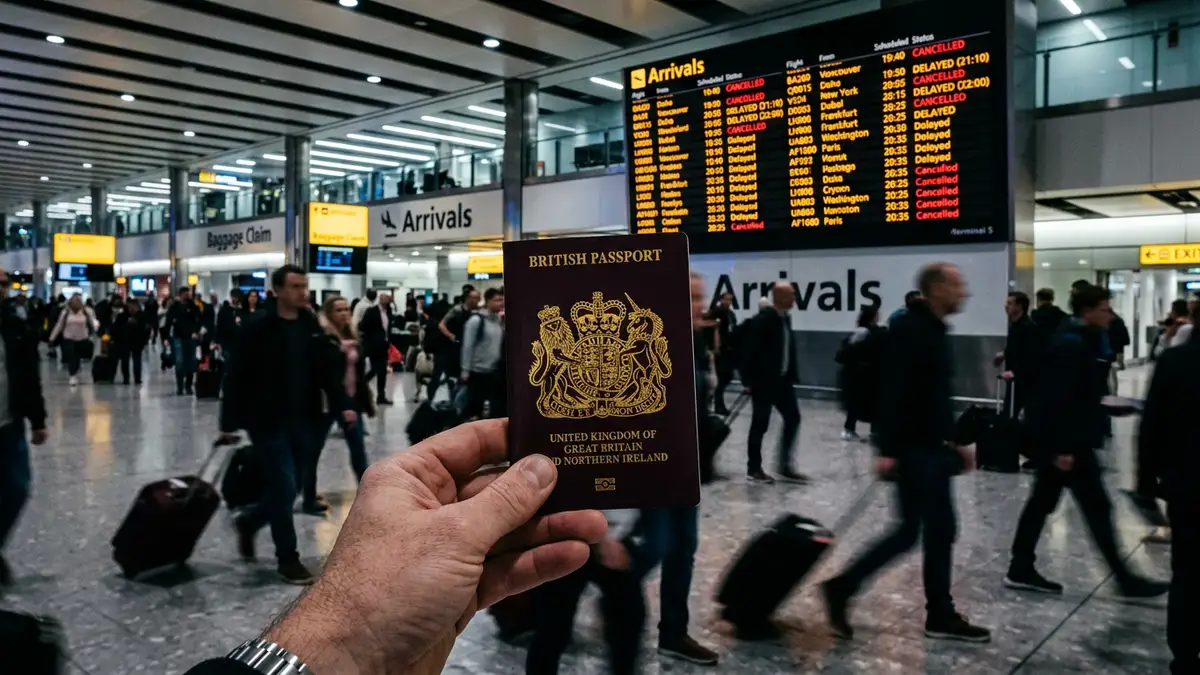
Image: Matt Weston / AI

Sarah Connor
British citizens arrived at Heathrow Terminal 4 on Monday evening following emergency evacuation flights from the United Arab Emirates as regional hostilities intensified.
Foreign Secretary Yvette Cooper confirmed that 102,000 British nationals have already registered their presence in the region with the Foreign Office. Cooper stated that approximately 300,000 Britons reside in Gulf countries currently targeted by Iran.
Prime Minister Sir Keir Starmer announced that the Government mobilizes all available mechanisms for helping citizens return home. Starmer noted that ministers are currently evaluating every physical route to extract people from the conflict zone.
Beyond the immediate diplomatic efforts, government ministers are currently drawing up contingency plans to evacuate citizens over land. These routes move individuals from the UAE, Bahrain, Kuwait, and Qatar into the relative safety of Saudi Arabia.
While commercial terminals remain silent, private jet bookings surged by 55% as travelers seek alternatives to grounded airlines. Charles Robinson, owner of the booking platform EnterJet, identified shifting patterns in regional departures as the crisis deepens.
It appears there's activity starting in Dammam as well, which is useful for those in Bahrain and Qatar.
"It appears there's activity starting in Dammam as well, which is useful for those in Bahrain and Qatar," Robinson said. This shift follows the total closure of traditional hubs in the neighboring emirates.
On the ground, the reality for families is far from orderly. Fay McCaul, a British woman stuck with her seven-year-old son in Abu Dhabi, described the conditions at the airport as "pretty chaotic."
Multiple families reported similar struggles to secure passage back to the United Kingdom as available seats vanished. A traveler identified as Mr. Dunne stated that his insurance company refused to help his family navigate the collapse.
Pretty chaotic.
Mr. Dunne further claimed that both his airline and travel company refused to provide any assistance with emergency accommodation. This lack of corporate support leaves thousands of holidaymakers and residents to fend for themselves.
Joseph Hughes stated that over 90,000 British nationals in the region remain deeply concerned about their ability to return home. This demographic includes a prominent community of social media influencers based in Dubai.
Despite the proximity of the violence, some influencers have publicly refused to leave the city. They claim the emirate presents less danger than the streets of London, even as missiles and suicide drones target military installations and hotels.
The targeting of infrastructure has expanded to include oil facilities and airports across the emirate. These strikes continue as the UK government evaluates the necessity of further evacuation measures.
Historically, the closure of Gulf airspace mirrors the logistical paralysis seen during the 1990 invasion of Kuwait. Current disruptions to the 11,000 flights represent a significant fracture in the global aviation network that may take months to repair.
Economic stakeholders face mounting pressure as the 55% surge in private aviation highlights a growing divide in evacuation access. Commercial carriers remain grounded while high-net-worth individuals bypass the standard terminal chaos through private corridors.
The shift toward Dammam as a transit point signals a strategic realignment of regional transport hubs. Saudi Arabia's role as an evacuation corridor becomes central to the UK's land-based contingency planning.
Societal tensions are surfacing among the 300,000 Britons in the Gulf as infrastructure strikes hit residential and commercial zones. The refusal of some Dubai-based residents to leave contrasts with the 102,000 who have already registered for government assistance.
Future implications for the region's status as a global travel hub remain uncertain as missiles target airport infrastructure. The ongoing evaluation by the UK government suggests a prolonged period of instability for British expatriates across the Middle East.
Military assets continue to monitor the skies over the Strait of Hormuz as the flight ban enters its second week. Ground crews in Riyadh and Dammam prepare for an influx of land-based arrivals from the shuttered coastal cities.