Government Charters Evacuation Flight from Muscat as Regional Tensions Escalate
Foreign Office prioritizes vulnerable citizens among 130,000 registered nationals following Iranian military threats.
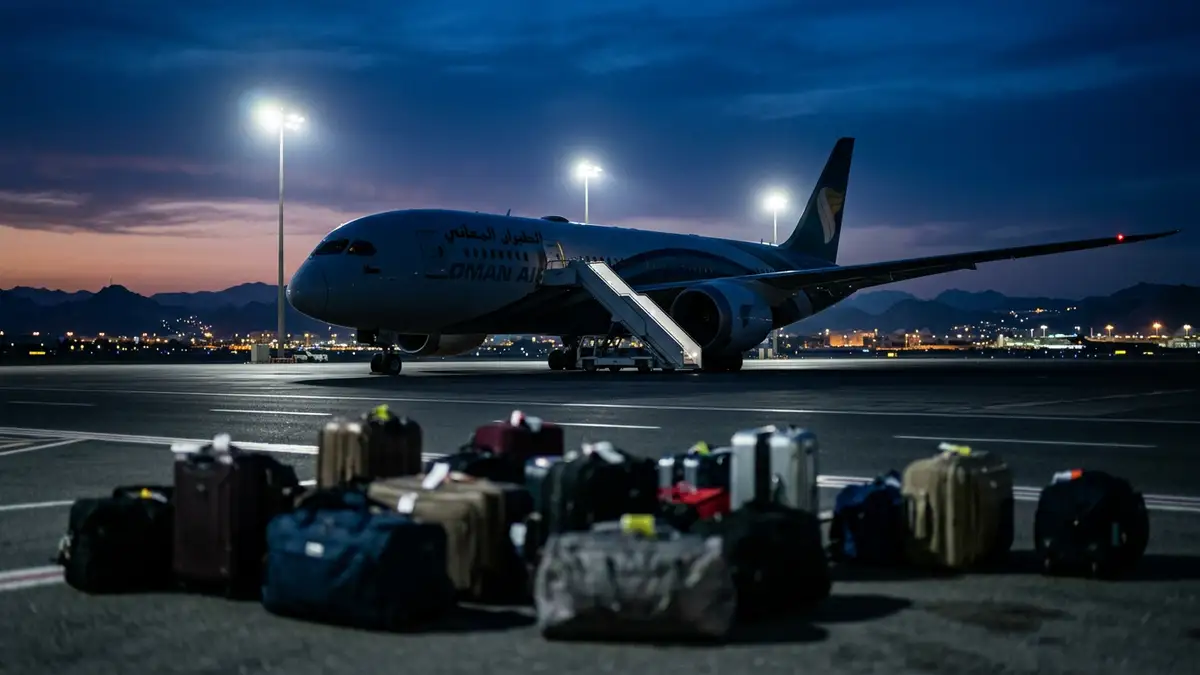
Image: Matt Weston / AI

Callum Smith
The British government has chartered an emergency evacuation flight to depart from Muscat, Oman, as military threats from Iran trigger a massive logistical withdrawal of UK nationals from the Middle East.
Officials work 24/7 to synchronize with commercial carriers and expand exit capacity out of Muscat. This database of 130,000 individuals tests the absolute limits of the UK response infrastructure.
Priority for the incoming charter flight remains strictly reserved for vulnerable British nationals. Home Secretary Yvette Cooper confirmed the government is negotiating with airlines to seize more seats on existing commercial routes.
This crisis mirrors the 2006 Lebanon evacuation and the 2021 Kabul airlift, where civilian transit corridors vanished without warning. Historical precedents for mass evacuations dictate complex, high-stakes coordination with neutral hubs like Cyprus and Qatar.
The situation moves with extreme velocity.
Beyond the immediate logistical hurdles, regional airspace serves as the primary tactical obstacle. Several neighboring countries maintain a total lockdown on their skies, barring all civilian traffic.
This closure forces a total reliance on specific corridors carved out through high-level diplomatic channels. Cooper confirmed she is in direct contact with counterparts in the United Arab Emirates to secure these narrow departure routes.
The UAE currently bolsters the operation, ensuring departures remain viable under strict security protocols. Cooper stated that in many of these territories, the airspace remains locked tight.
This diplomatic friction dictates the speed at which the 130,000 registered individuals move toward safety. Economic and political stakeholders monitor the situation as the shuttering of air corridors halts commercial transit.
The cost of these disruptions climbs as airlines reroute or scrap flights to avoid active combat zones. British nationals in Oman hold for direct contact from the Foreign Office via encrypted messaging and emergency alerts.
Uncoordinated movements toward the airport threaten to collapse the manifest process for the chartered aircraft. The mission follows explicit warnings from Tehran regarding potential strikes against regional military bases.
These threats transformed the regional landscape into a high-risk environment for all foreign nationals. Cooper stated during a briefing that the situation moves with extreme velocity.
In many of these territories, the airspace remains locked tight.
The speed of the escalation forced the Foreign Office to activate emergency protocols typically reserved for active war zones. Future stability hinges on whether additional air corridors open to accommodate the massive volume of registered nationals.
If the current closures persist, the reliance on government-chartered heavy lift aircraft will increase. The Foreign Office pushes updates as the situation evolves, maintaining a constant digital link with those on the registry.
This communication stream manages the expectations of thousands currently waiting for viable exit routes. Cooper added that the government is hammering out deals with airlines to increase capacity out of Muscat.
This dual-track approach attempts to clear the citizen backlog before further military action commences. The logistical scale of tracking 130,000 people across multiple borders requires a massive administrative surge.
Success depends on the continued cooperation of regional partners like Oman and the United Arab Emirates. As the flight from Muscat prepares for departure, the manifest focuses exclusively on the most at-risk individuals.
The government has not yet specified the total number of flights required to meet the current surge in demand. The Middle Eastern landscape remains volatile, with the status of regional airspace serving as the primary barometer for safety.
Any further closures will trigger more aggressive evacuation measures from the Foreign Office. Officials remain on high alert as the window for civilian transit narrows by the hour.