Thousands Stranded as Middle East Conflict Disrupts Global Aviation
Commercial corridors remain shuttered as government-chartered rescue flights face technical delays and regional hubs lose billions in revenue.
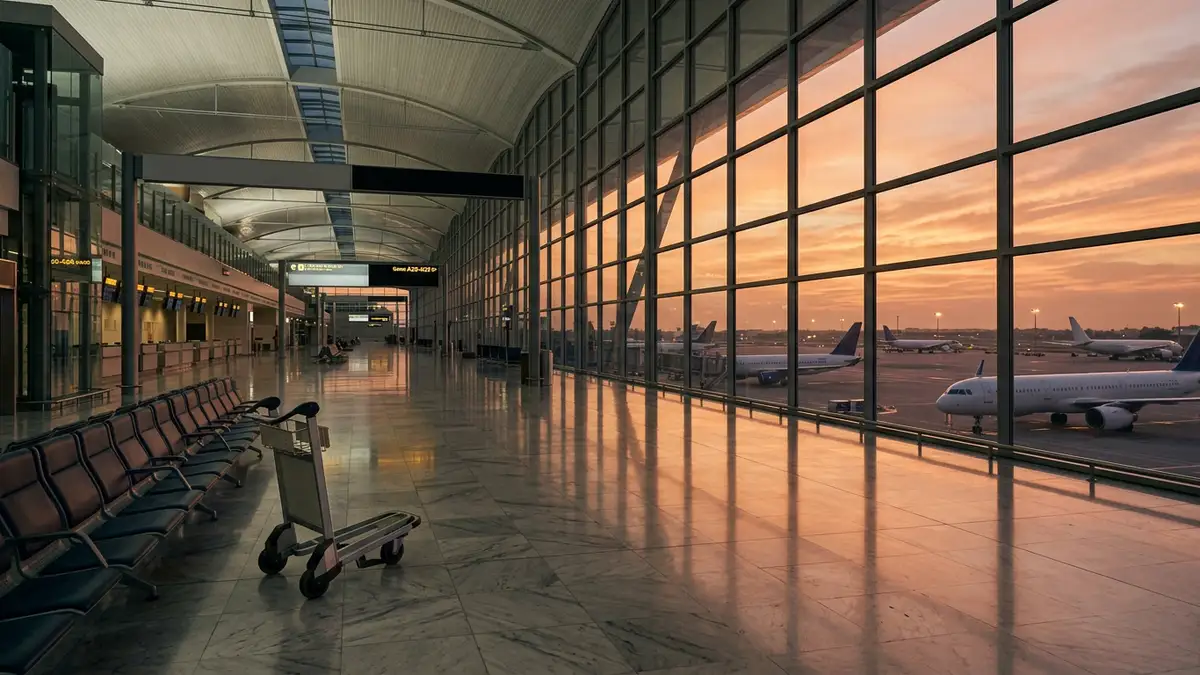
Image: Matt Weston / AI

Sarah Connor
A sixth day of military conflict involving the United States, Israel, and Iran has grounded air traffic across the Middle East, leaving 138,000 British nationals stranded.
The General Civil Aviation Authority activated an exceptional flight schedule to manage the crisis. This plan permits limited commercial operations from Dubai, Abu Dhabi, and Sharjah airports.
Etihad Airways, Emirates, flydubai, and Air Arabia began a gradual reintroduction of flights. Emirates is currently processing refunds and rebookings for passengers caught in the grounding.
Qatar Airways launched specific relief flights to move passengers out of the conflict zone. A small number of freighter and repatriation flights operate under strict military oversight.
The first government-chartered rescue flight from Muscat failed to depart as scheduled on Thursday. Mechanical failures forced the delay of the operation intended to extract civilians from the area.
Foreign Office officials confirmed that no mass evacuation for British travellers is currently imminent. This stance follows days of diplomatic gridlock as officials attempt to secure exit routes.
The government is prioritizing the safety of British citizens.
Prime Minister Sir Keir Starmer stated the government is prioritizing the safety of British citizens. He confirmed that numerous flights are expected to repatriate those remaining in the Gulf area.
Aviation history shows that regional conflicts of this scale force long-term shifts in global flight paths. During the 1990 Gulf War, air traffic through the region dropped by 25 percent within the first week.
Economic stakeholders face immediate losses as major hubs like Dubai International handle over 80 million passengers annually. The current six-day stoppage threatens billions in transit revenue and tourism spending.
The landscape of Middle Eastern aviation is shifting toward emergency protocols as carriers pivot to humanitarian logistics. The reliance on Gulf hubs for East-West travel makes the global network vulnerable to localized kinetic warfare.
British nationals in the region are registering their presence with the embassy. Many continue to wait for updates on the anticipated repatriation flights from the Gulf region.
The General Civil Aviation Authority monitors the airspace as military operations persist. Security protocols at Abu Dhabi and Sharjah remain at heightened levels to protect the limited passenger traffic allowed to depart.
The closure of these hubs severs the primary artery connecting Europe to Asia and Australasia. Carriers are rerouting aircraft around the conflict zone, adding hours to flight times and increasing fuel consumption.
Logistics firms report backlogs in air freight, stalling global supply chains for electronics and medical supplies. The Red Sea and Persian Gulf corridors remain under intense surveillance by military assets.
Diplomatic efforts in London and Washington focus on establishing humanitarian corridors for civilian aircraft. Active anti-aircraft systems and missile batteries complicate these negotiations.
Families of those stranded report dwindling supplies and rising accommodation costs in cities like Dubai. The Foreign Office updates its travel advice as the security situation evolves hourly.
The long-term viability of the Gulf as a global transit point faces its most significant test since the inception of the 'super-connector' model. Investors are monitoring the resilience of Emirates and Qatar Airways during this prolonged grounding.
Ground crews at Sharjah and Abu Dhabi remain on standby to facilitate any sudden increase in departure windows. The majority of the 300,000 expatriates remain confined to the ground as the conflict enters its second week.