UK Government Launches Emergency Evacuation Protocols Amid Middle East Escalation
Foreign Office coordinates charter flights as regional airspace closures and missile barrages disrupt Gulf travel networks
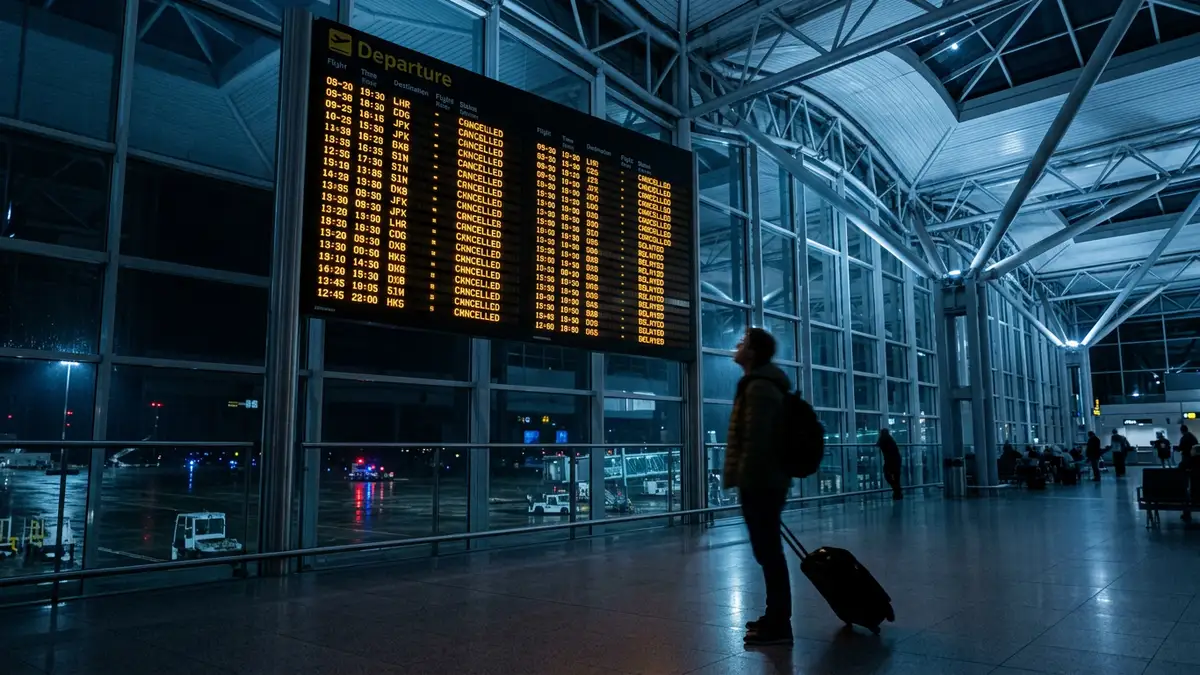
Image: Matt Weston / AI

Sarah Connor
The sky over the Gulf has closed.
The Foreign, Commonwealth and Development Office (FCDO) activated emergency protocols on Sunday, ordering British nationals to register for government-chartered evacuation flights from the United Arab Emirates. This mobilization follows a violent escalation in regional hostilities that forced major international carriers to ground fleets and scrap existing flight schedules.
Emirates, Qatar Airways, and Etihad issued urgent travel advisories as security risks intensified across the Gulf corridor. The UK government confirmed that this regional escalation poses lethal physical threats and has triggered widespread travel disruption for thousands of citizens currently in the region.
Beyond the immediate danger, the scale of the repatriation effort has reached historic levels. More than 37,000 British nationals have successfully returned to the UK since March 1.
On Sunday alone, 30 flights departed from the affected zones carrying over 7,000 passengers. This surge marks the highest single-day total since the onset of the crisis.
Military activity in the skies over the UAE turned kinetic on Sunday as the UAE Defense Ministry confirmed it intercepted 16 missiles. A 17th projectile evaded interception and fell into the sea, according to official defense statements.
The impact of the aerial bombardment reached civilian sectors in Dubai, where residents reported that suspected debris from an intercepted Iranian missile struck the Fairmont The Palm on Palm Jumeirah. The United Arab Emirates stated that Iran launched a combined force of 16 ballistic missiles and over 117 drones in these new Sunday barrages.
Regional instability intensified as Iran-aligned militia groups threatened to target United States interests across the territory. These groups have already claimed responsibility for specific kinetic strikes in Jordan and Iraq.
RAF jets could legally strike Iranian missile sites if they are being used to attack British interests in the Middle East.
Foreign Secretary David Lammy stated that RAF jets could legally strike Iranian missile sites if they are being used to attack British interests in the Middle East. Prime Minister Keir Starmer confirmed the government is working around the clock to maintain the safety of British citizens in the line of fire.
The FCDO currently maintains a strict advisory against all travel to Iran, Israel, and the Occupied Palestinian Territories. Officials warned that most standard travel insurance policies will be rendered invalid for those who ignore these formal government warnings.
British nationals currently located in Yemen received direct instructions from the Foreign Office to leave the country immediately. The FCDO noted that even nations not directly involved in the combat are experiencing severe travel disruptions due to the extreme volatility of the airspace.
Operational bottlenecks remain high as Emirates representatives stated that customers transiting in Dubai will only be accepted if their connecting flight is confirmed as operating. Etihad Airways confirmed that all other scheduled commercial services to and from Abu Dhabi remain suspended until further notice.
Qatar Airways has temporarily suspended all scheduled flight operations following the total closure of Qatari airspace. Air France officials announced that their operations will only restart following a fresh safety assessment of the regional corridors.
The conflict expanded geographically on Sunday as Bahrain and Kuwait reported additional Iranian missiles launched toward their sovereign territories. These strikes reportedly hit new categories of civilian infrastructure, according to field reports from the region.
The economic and human toll is mounting, with an estimated 300,000 British nationals affected by flight cancellations across the Gulf. Industry analysts anticipate that clearing the massive backlog of stranded passengers will require several weeks of sustained effort.
In a slight easing of restrictions, the Ministry of Transport indicated that Ben Gurion Airport will begin operating outbound flights on a gradual basis. Meanwhile, commercial flights continue to operate from Muscat to the UK for those seeking alternative exit routes via Oman.
Evacuation efforts are already underway, with UK nationals having been extracted from Oman and the UAE on previous government charter flights. The FCDO continues to monitor the situation as more than 40 flights are scheduled to depart from the region today.
Internal policy debates have surfaced alongside the physical evacuation, with Nusaybah Sattar claiming that the evacuation process would have been different if those involved had English names. The UK government maintains it must take independent policy decisions rather than outsourcing strategy to foreign countries.
The UK needs to take decisions itself regarding regional policy to ensure national interests are met.
Security reports from the region indicate a suspected drone strike targeted a British base on Cyprus during the recent exchanges. Additionally, Mojtaba Khamenei was named as a successor on Sunday following reports regarding the current Iranian leadership structure.
Foreign Secretary Yvette Cooper stated the UK needs to take decisions itself regarding regional policy to ensure national interests are met. The government continues to urge all citizens in the UAE to register their presence immediately to ensure access to upcoming charter departures.