Trump Orders Bombing of Kharg Island as Iran Blockades Strait of Hormuz
United Kingdom evaluates deployment of minehunting drones to secure global oil passage following US-led strikes on Iranian military infrastructure
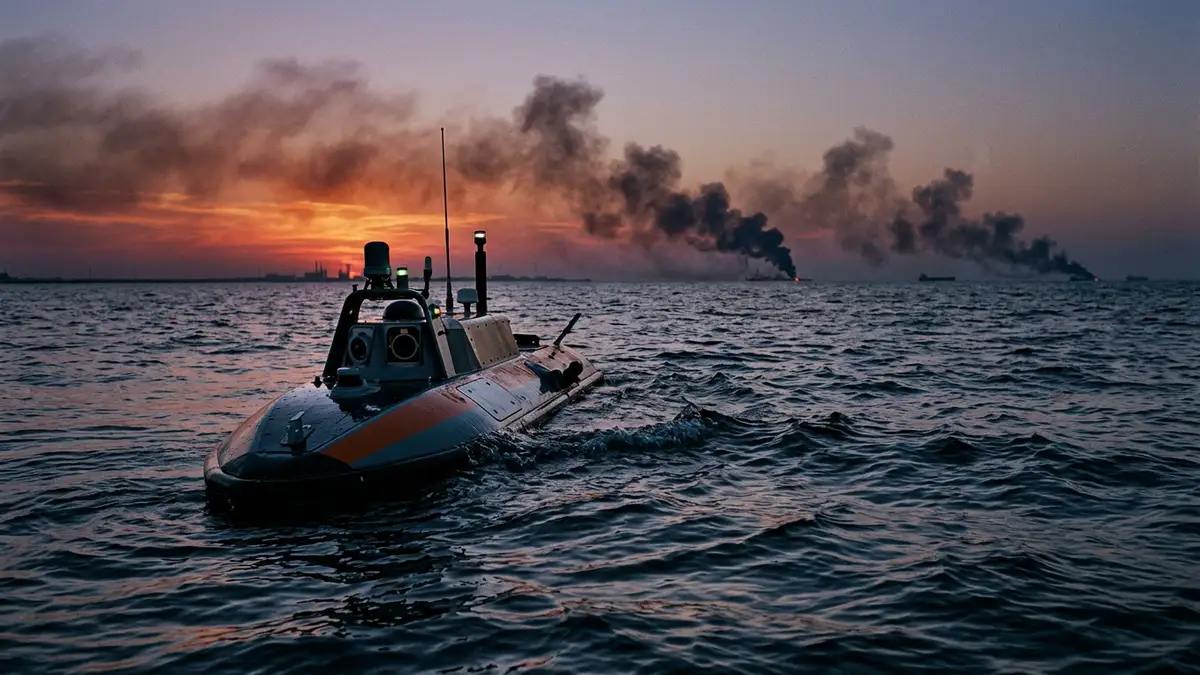
Image: Matt Weston / AI

Sarah Connor
President Donald Trump ordered a massive aerial bombardment of Kharg Island and the Iranian shoreline to forcibly dismantle a blockade of the Strait of Hormuz.
Tehran responded by seizing absolute control of the narrow sea passage out of the Persian Gulf. This maritime choke point serves as the transit route for approximately 20% of the world's liquid petroleum consumption.
The IRGC designated U.S. hideouts in the United Arab Emirates as targets for retaliation. Iranian state media issued urgent warnings for residents near the Jebel Ali, Khalifa, and Fujairah ports to evacuate their homes immediately.
A drone struck a major oil hub in Fujairah. Local officials reported a blaze sparked by debris from an intercepted craft in close proximity to critical energy infrastructure and storage tanks.
Mojtaba Khamenei, the new supreme leader of Iran, vowed to maintain the blockade as a primary mechanism to pressure the United States. In his first public statement this week, Khamenei committed to closing the strategic waterway despite the recent aerial bombardment.
The United Kingdom evaluates the deployment of autonomous minehunting drones to the Strait of Hormuz to counter Iranian sea mines. These interceptor drones, originally manufactured in the UK for Ukrainian use against Russia, are being repurposed to target Shahed drones.
The United States does not need partners who join wars after they have already been won.
The Royal Navy’s Mine and Threat Exploitation Group would oversee these autonomous systems to ensure the safety of commercial shipping. The HMS Dragon has deployed to the Mediterranean Sea as part of a broader shift in regional naval posture.
Donald Trump urged China, France, Japan, South Korea, and the UK to send warships to the region to address the maritime constraint. He stated that nations affected by this artificial constraint should send ships to the area.
The President later dismissed the necessity of late-arriving allies. He asserted that the United States does not need partners who join wars after they have already been won.
U.S. forces continue shooting Iranian boats and ships out of the water. These actions persist until the strait is open for international transit.
Historically, the Strait of Hormuz has served as the world's most sensitive energy artery. Previous 'Tanker Wars' in the 1980s saw over 500 ships attacked in these waters.
The current blockade triggered a sharp increase in global energy prices and insurance premiums for maritime freight. Markets reacted immediately to the closure of the passage.
Former Iranian foreign minister Manouchehr Mottaki threatened to capture U.S. forces if they attempt to seize oil infrastructure on Kharg Island. The Iranian military warned that any attack on its energy assets would prompt strikes on regional facilities owned by cooperating oil companies.
While the conventional military is defeated, it remains easy for them to drop mines or deliver close-range missiles.
Inside the UK, Liberal Democrat leader Sir Ed Davey stated that any decision regarding the deployment of British Armed Forces must be made in the national interest. He called for any such military move to be subject to a formal vote in Parliament.
The British government faces mounting domestic pressure regarding its response speed following recent drone strikes on RAF bases in Cyprus. This internal friction coincides with Trump’s public demands that nations provide their own naval security.
Trump described the strikes on Kharg Island as one of the most powerful bombing raids in the history of the Middle East. He claimed that while the conventional military is defeated, it remains easy for them to drop mines or deliver close-range missiles.
The U.S. President confirmed he will continue to bomb the shoreline to prevent the IRGC from re-establishing its maritime batteries. He asserted these actions are the only way to ensure the Hormuz Strait becomes safe and free for international commerce.