Israel Launches Pre-emptive Strikes on Tehran
Explosions rock the Iranian capital as military officials confirm coordinated operations to neutralize regional threats.
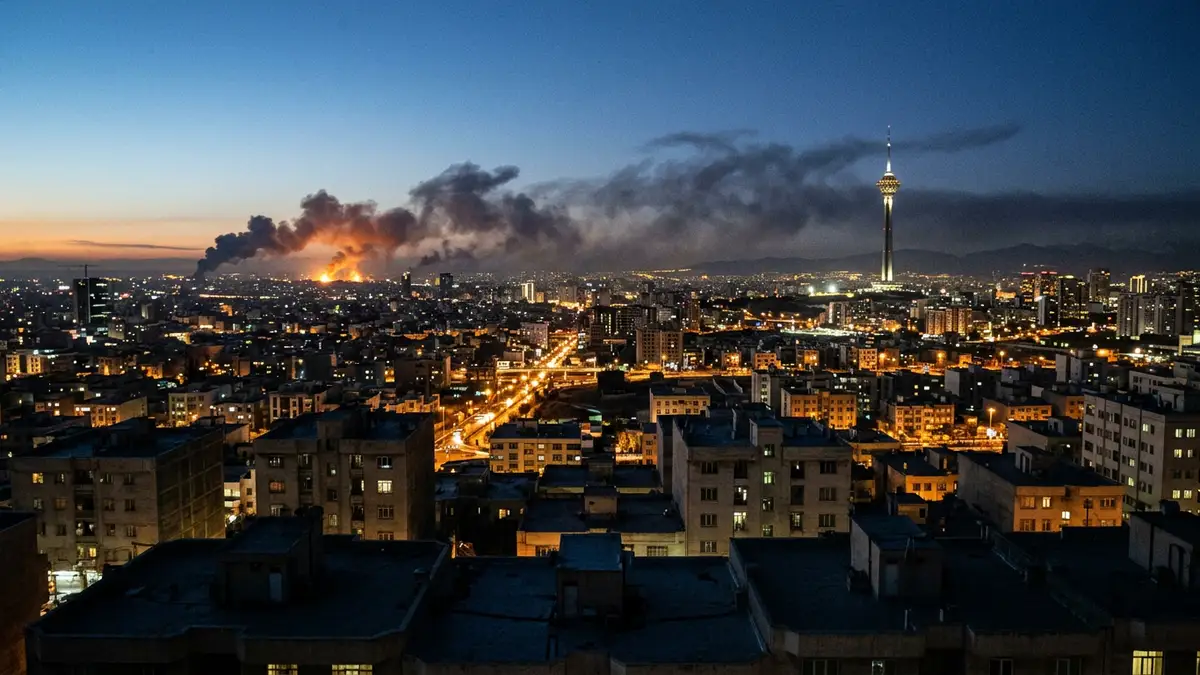
Image: Matt Weston / AI

Sarah Connor
Israeli military forces launched a series of pre-emptive strikes against Tehran early Saturday morning, targeting specific infrastructure to eliminate what officials described as immediate threats to the state.
Israeli Defense Minister Israel Katz confirmed the military action shortly after the initial blasts. He stated the preventative attack aimed to remove hardware capable of launching strikes against Israeli territory.
The minister reiterated that the primary driver for the strike remained the immediate safety of the state. This operation involved coordination with the United States to ensure tactical success.
Iran is working to build missiles that will soon reach the United States.
Officials familiar with the mission confirmed that U.S. forces provided shared intelligence and operational synchronization. These assets assisted in the precision strikes across the capital's downtown district.
Tehran’s air defense systems engaged incoming targets as the detonations continued through the morning. Plumes of smoke rose from several kilometres away as activity centered on the Republic district.
This escalation follows a history of ballistic exchanges. For years, the U.S. executive branch has asserted that Tehran is developing missiles capable of threatening Europe and overseas military bases.
U.S. President Donald Trump previously stated that Iran is working to build missiles that will soon reach the United States. These technological advancements in weaponry have remained a focal point of international security rhetoric for months.
Political stakeholders in Tehran have countered these assertions with sharp rhetoric. Iranian officials previously accused the United States of spreading misinformation regarding the nature of their domestic missile program.
Baqaei, an Iranian official, stated that allegations regarding Iran’s nuclear program and ballistic missiles are a repetition of big lies. He maintained that the claims serve as a pretext for external aggression.
Allegations regarding Iran’s nuclear program and ballistic missiles are a repetition of big lies.
The regional security architecture shifted as military assets moved into position hours before the first detonations were recorded. This maneuver follows a period of increasing tension over Tehran's perceived technological reach.
Economic and human costs within Iran provide the backdrop to this military engagement. Records show that at least 32,000 protesters were killed during recent internal unrest across the country.
Baqaei has disputed these figures directly, calling the data into question. He labeled the reported casualty counts from the unrest in January as fabrications designed to destabilize the government.
The strikes dismantled specific infrastructure before its utilization. Military spokesmen stated the tactical objective was the total elimination of immediate dangers posed by these sites.
The Republic area remained the focal point of the strikes throughout the early hours of Saturday. The precision of the hits indicates a high level of prior reconnaissance and target identification.
This operation marks a departure from shadow-war tactics toward direct kinetic engagement in the heart of the capital. The involvement of U.S. assets defines the strategic alliance in managing regional threats.
The long-term implications for the Middle East remain tied to the survival of Iran's ballistic infrastructure. Future stability depends on whether these strikes neutralized the hardware identified by Israeli intelligence.
As the sun rose over Tehran, the full extent of the damage to the downtown district emerged. Security forces cordoned off the impacted zones while air defense units remained on high alert.
Israel Katz maintained that the operation was a necessary step for national preservation. The coordination between Jerusalem and Washington signals a unified front against Tehran's military ambitions.