Iran Army Monitors Enemies Amid US Naval Buildup
Tehran vows immediate response to any aggression as US fleet heads to region.

Carla Rooney
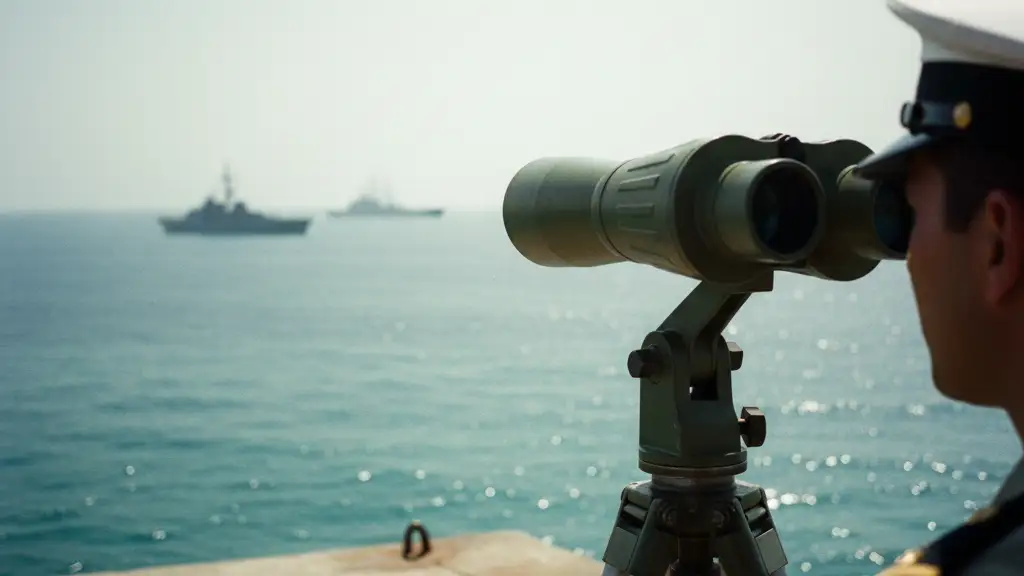
Iran's army is closely watching enemy movements as the United States dispatches a powerful naval fleet to the region.
This rhetoric signals a clear escalation in the standoff. Iran responded with a firm warning, vowing to react immediately and powerfully to any aggression by land or sea.
Saudi Arabia's Defence Minister Khalid bin Salman suggested that a lack of immediate US military action emboldens the Iranian regime. He argued this hesitation strengthens Iran's regional position.
Foreign Minister Abbas Araghchi accused Washington of attempting to dictate Iran's military exercises. He claimed the US seeks to control how Iran's 'Powerful Armed Forces' conduct target practice.
The Iranian regime confirms Supreme Leader Ayatollah Khamenei oversees the crackdown on domestic protests. This internal suppression adds complexity to the external military tensions.
Araghchi asserted Iran's military readiness, stating that armed forces keep their fingers on the trigger. This posture emphasizes a commitment to repelling aggression and defending national borders.
The deployment of the USS Abraham Lincoln projects American military power into the Persian Gulf. This massive show of force directly challenges Iranian naval dominance in the region.
The Strait of Hormuz remains a critical chokepoint for global oil shipments. Analysts at Citi suggest the geopolitical risk premium surrounding Iran could drive oil prices up by $3 to $4 per barrel.
This surge potentially pushes Brent crude prices to $72 per barrel within three months. Such a spike threatens global energy markets and triggers broader economic consequences through increased costs.
The ongoing tensions reflect a long-standing rivalry intensified after the 1979 Iranian Revolution and the 1980-1988 Iran-Iraq War. US sanctions in the 1990s further deepened the divide.
President George W. Bush labeled Iran part of the 'Axis of Evil' in 2002. Later, President Donald Trump abandoned the 2015 nuclear deal (JCPOA) in 2018.
This latest naval buildup adds a dangerous new chapter to a complex relationship. Iran's planned naval drills demonstrate capability and resolve against perceived threats.
The situation remains volatile as both sides issue strong warnings. The coming days will reveal the immediate impact of this high-stakes naval standoff.