Pakistan and Afghanistan Exchange Deadly Air and Ground Strikes in Border Escalation
Islamabad and Kabul trade heavy fire as military casualties mount and civilian camps face missile strikes across the frontier
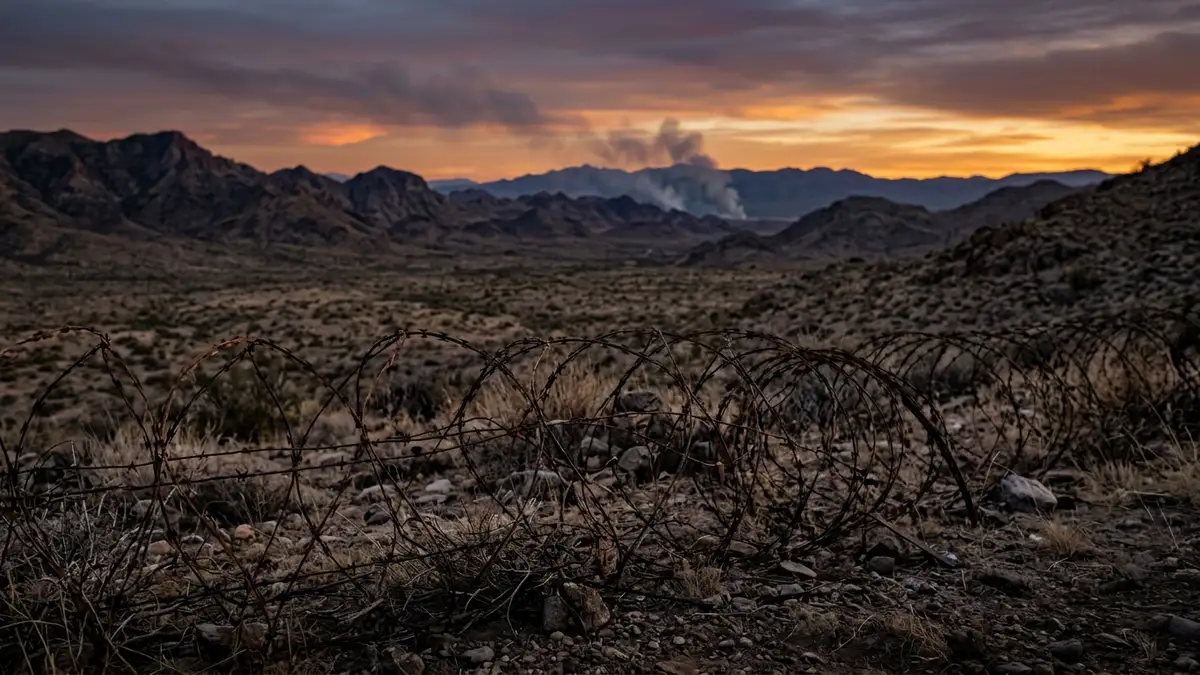
Image: Matt Weston / AI

Sarah Connor
Pakistan launched a series of air and ground strikes against multiple Afghan cities on Thursday, targeting what Islamabad identified as Islamist and ethnic insurgent bases.
Afghan forces detailed the destruction of 19 Pakistani army posts and two primary bases during the engagement. The assault lasted four hours and utilized heavy weaponry across multiple sectors of the disputed border.
Pakistan’s Information Minister Attaullah Tarar countered these figures, stating only two Pakistani soldiers died while three sustained wounds. Tarar asserted that Pakistani fire killed 36 Afghan fighters during the exchange.
Mosharraf Ali Zaidi, spokesperson for Prime Minister Shehbaz Sharif, denied the capture of any Pakistani personnel. Zaidi stated that 133 Afghan combatants died and over 200 sustained injuries while 27 Afghan posts fell to Pakistani strikes.
133 Afghan combatants died and over 200 sustained injuries while 27 Afghan posts fell to Pakistani strikes.
Pakistan Military Spokesman Ahmed Sharif Chaudhry provided higher estimates, confirming the military hit 22 Afghan targets. Chaudhry placed the Taliban death toll at more than 200 fighters.
The conflicting casualty counts emerge from a region where physical verification remains impossible for independent observers. Both sides continue to issue divergent data regarding the scale of the destruction.
Taliban spokesman Zabiullah Mujahid countered the Pakistani narrative, stating only 13 Taliban fighters died and 22 others were injured. Mujahid identified specific Pakistani strikes hitting targets in Kabul, Kandahar, and Paktia.
The kinetic activity extended to non-combatant zones, impacting civilians residing near the front lines. The Afghan Defense Ministry confirmed a missile strike on a camp wounded 13 civilians, including women and children.
Taliban officials also documented Pakistani rockets hitting a refugee camp in Nangarhar. These strikes injured at least nine people and triggered immediate diplomatic protests from Kabul.
Islamabad maintained the strikes functioned as a necessary neutralization of insurgents responsible for terror attacks inside Pakistan. The government specifically cited the presence of the Tehrik-i-Taliban Pakistan (TTP) as the primary target.
Pakistan also accused India of providing strategic backing to Baloch separatists and the Pakistani Taliban. Khawaja Mohammad Asif charged the Taliban administration with transforming Afghanistan into a colony of India.
Kabul denied these allegations, asserting that Afghan soil will not serve as a launchpad for external terrorist activities. India issued a formal denial regarding the allegations of backing insurgent groups in the region.
The conflict remains rooted in the 1893 Durand Line, a 2,640-kilometer border that Afghanistan refuses to recognize as a legal international boundary. This violence follows a decade of Pakistani efforts to fence the frontier and restrict militant movement.
Two senior security sources observed Afghan forces at specific border outposts hoisting white flags. These physical signals for a ceasefire occurred even as central leadership maintained a combative stance.
Information Minister Atta Tarar confirmed the Pakistani military intercepted Afghan drones targeting Swabi, Nowshera, and Abbottabad. The deployment of unmanned aerial vehicles marks a technological escalation in the border skirmishes.
Zabiullah Mujahid warned that Afghanistan possesses the capability to target Pakistan's key centers and major cities. This threat signals a potential shift from localized border fighting to deep-strike operations.
Afghanistan possesses the capability to target Pakistan's key centers and major cities.
The Torkham and Chaman border crossings, which handle millions of dollars in daily trade, remain vulnerable to the instability. Traders in the region report immediate halts to the transit of essential goods and fuel.
International observers are monitoring the involvement of multiple insurgent groups for signs of regional destabilization. The accusations involving India add a layer of geopolitical complexity to the bilateral friction.
The border remains a flashpoint of kinetic activity where narratives and artillery fire collide. The disparity in casualty reports reflects the isolation of the remote, mountainous terrain defining the frontier.