U.S. and Israel Launch Major Combat Operations Against Iran
Retaliatory strikes hit military bases across the Middle East as Tehran confirms casualties at a girls' school
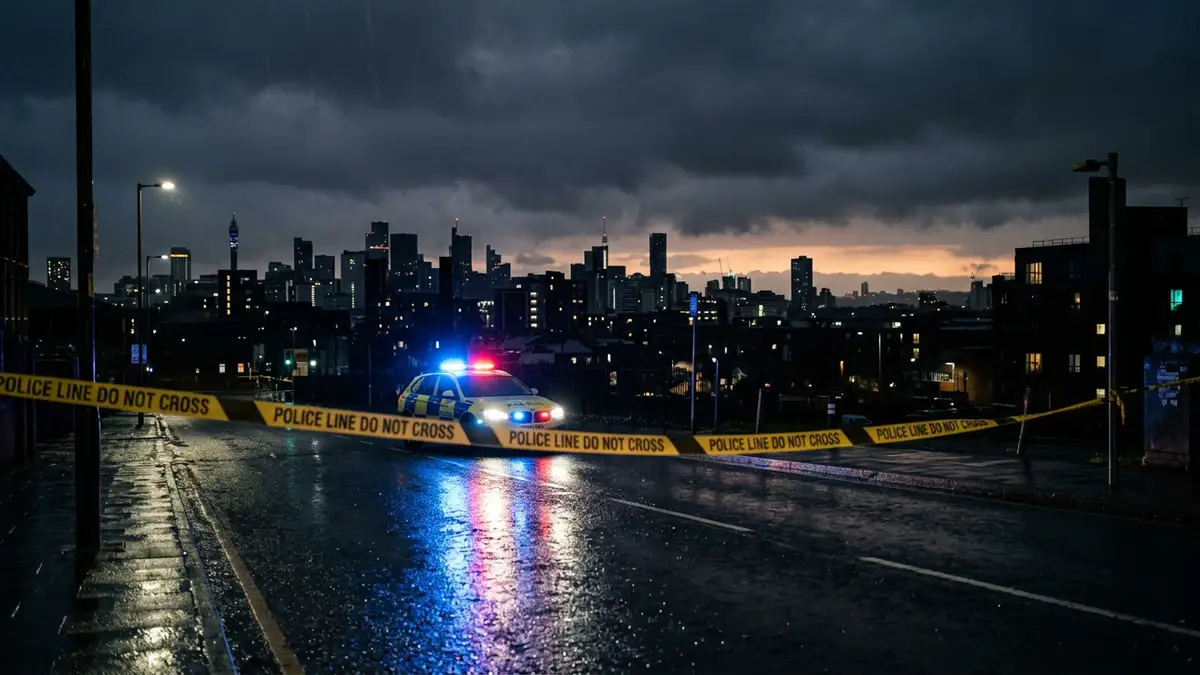
Image: Matt Weston / AI

Callum Smith
The United States and Israel initiated a coordinated military offensive against Iran on Saturday, striking high-value targets including the office of the Supreme Leader in Tehran.
Donald Trump described the mission as a major combat operation designed to eliminate imminent threats from the Iranian regime. This offensive, designated Operation Roaring Lion by Israel and Operation Epic Fury by the United States, targeted military infrastructure across the country.
Explosions rocked the presidential office in Tehran as the coalition struck the command-and-control centers of the Iranian state. This escalation shifts the conflict from shadow warfare into direct, overt kinetic engagement between the powers.
The path chosen by the U.S. and Israel is no longer under their control.
The Islamic Revolutionary Guard Corps (IRGC) responded by launching a retaliatory operation against American assets throughout the region. Iranian state-run IRNA news agency confirmed a strike at a girls' school in Minab, located in the Hormozgan province, which killed at least 40 people.
Beyond the initial strikes, the U.S. Navy’s 5th Fleet service center in Bahrain and strategic assets in Qatar served as primary targets for the Iranian counter-attack. Bahrain’s state news agency confirmed the strike on the American base, reporting that multiple facilities inside the kingdom sustained damage from external aggression.
The United Arab Emirates, Qatar, and Kuwait reported the interception of missiles within their sovereign airspace as the geography of the conflict expanded. The UAE Ministry of Defence identified the projectiles as Iranian ballistic missiles and noted that debris fell on a residential area in Abu Dhabi, killing one civilian.
Donald Trump stated the military action prevents Iran from obtaining a nuclear weapon or developing long-range missiles capable of reaching the American homeland. He vowed to raze the country's military industry to the ground and warned that terrorist proxies would be obliterated.
The IRGC declared it is targeting all Israeli and U.S. military bases in the Middle East with powerful missile blows. An Iranian military spokesperson warned that any base assisting America or Israel will remain a target for the Iranian armed forces.
Israeli Defense Minister Israel Katz characterized the strikes as a necessary measure to remove existential threats. Witnesses in Tel Aviv reported hearing explosions shortly after the initial strikes on Iran began, indicating a rapid exchange of fire.
British Prime Minister Sir Keir Starmer confirmed that Royal Air Force aircraft are currently in the sky over the Middle East. He stated these planes are participating in coordinated regional defensive operations to protect personnel, interests, and allies.
These planes are participating in coordinated regional defensive operations to protect personnel, interests, and allies.
The United States has deployed additional air defense systems to the region, including Terminal High Altitude Area Defense (THAAD) and Patriot batteries. These deployments follow reports of missile attacks reaching as far as Jordan, Iraq, and Saudi Arabia.
The Fairmont Hotel on The Palm in Dubai caught fire during the exchanges, with emergency services responding to an incident in the Palm Jumeirah area. UAE air defense systems intercepted a number of missiles with high efficiency despite the damage recorded in Abu Dhabi.
Iranian Foreign Minister Abbas Araghchi criticized the U.S. administration, claiming the current policy prioritizes Israeli interests over American ones. Iran’s Foreign Ministry maintained that the country will not hesitate to defend its homeland against further aggression.
Ebrahim Azizi, head of the Iranian parliament's national security commission, warned that the path chosen by the U.S. and Israel is no longer under their control. Iranian state media broadcast footage appearing to show a missile strike hitting the area of the U.S. base in Manama.
In Yemen, two senior Houthi officials vowed to resume attacks on Red Sea shipping routes and Israel in support of Tehran. This follows the IRGC's assertion that their operations will continue relentlessly until their enemies are decisively defeated.
Israeli authorities stated the operation is specifically designed to thoroughly degrade the Iranian regime's capabilities. Benjamin Netanyahu stated that joint action would create conditions for the Iranian people to take their destiny into their own hands.
Former Royal Navy Commander Tom Sharpe noted that Bahrain was targeted because it has historically possessed relatively limited air defenses. Meanwhile, Saudi Arabia reported that it successfully repelled an Iranian missile attack directed at Riyadh.
Qatar's Foreign Ministry stated it reserves the right to respond to the multiple waves of blasts heard in the capital city of Doha. The U.S. battle plan consists of escalating attacks with built-in off-ramps to manage the intensity of the conflict.
Ayatollah Khamenei stated that Iran's finger remains on the trigger as the military situation evolves. Donald Trump suggested that if a deal is not reached, the U.S. may utilize Diego Garcia and the RAF Airfield in Fairford to eradicate potential attacks.