England Cricketer Jonny Bairstow Stranded in Dubai Following Iranian Missile Strikes
The UK government evaluates extraction options as regional airspace closures ground commercial flights across the United Arab Emirates.
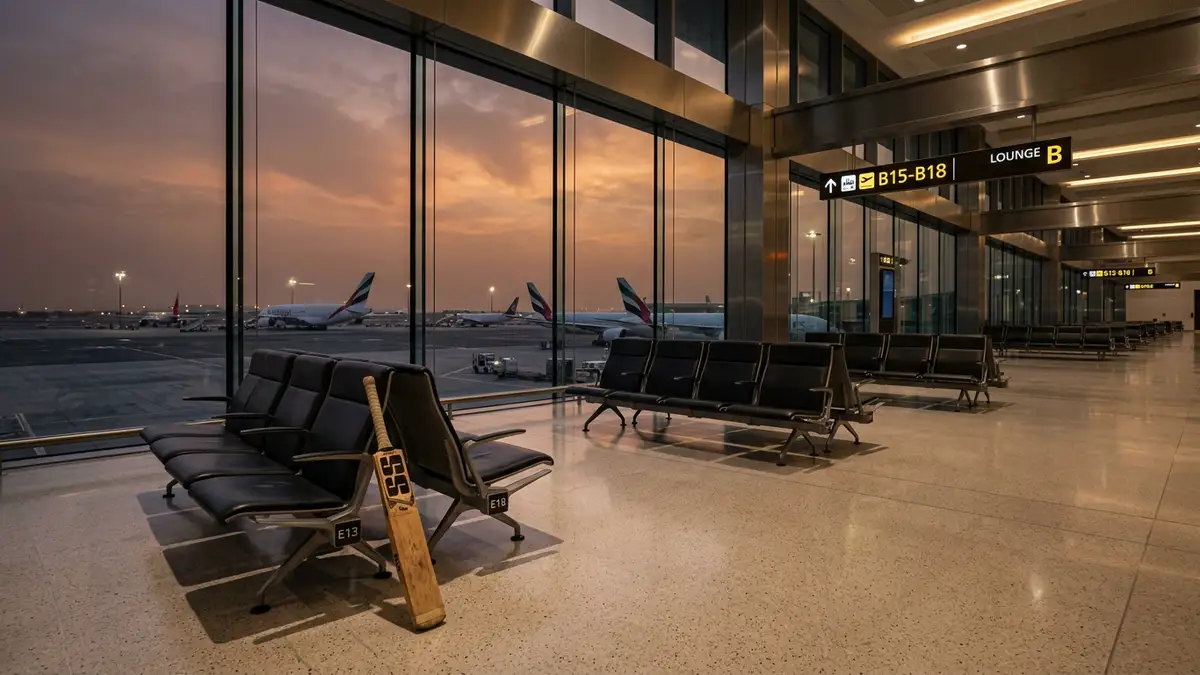
Image: Matt Weston / AI

Sarah Connor
A massive aerial bombardment has swept across Israel and multiple Middle Eastern territories, forcing an immediate and total shutdown of commercial aviation corridors. This sudden paralysis follows Saturday morning operations by United States and Israeli forces that resulted in the death of Supreme Leader Ayatollah Ali Khamenei.
Jonny Bairstow issued a direct appeal to Prime Minister Sir Keir Starmer and the airline Emirates to facilitate his return to the United Kingdom. The cricketer demanded immediate assistance as the suspension of flight schedules entered its second day of total gridlock.
"Can you get us home?" Bairstow asked in a public communication directed at the Prime Minister over the weekend. He repeated this demand while thousands of other travelers remained stranded across the region.
Can you get us home?
British Foreign Secretary Yvette Cooper confirmed the government is currently assessing logistics to ensure the safety of citizens in the impact zone. "The UK government is working on every possible option to get people home safely," Cooper stated regarding the ongoing crisis.
This grounding of the Bairstow family occurs during a broader regional paralysis where hundreds of travelers remain trapped in transit hubs. Dubai International Airport, which handled 87 million passengers last year, saw its departure boards turn red as carriers prioritized safety over schedules.
Historically, the current conflict mirrors the 1979 revolution's impact on regional mobility. Modern drone technology has now compressed the window for diplomatic intervention to mere minutes.
This historical echo resonates through the halls of Terminal 3. The silence of grounded fleets replaces the usual roar of engines across the tarmac.
Economic analysts note that prolonged closures in the UAE threaten the 13% of GDP generated by the aviation and tourism sectors. The financial weight of the shutdown presses heavily on Dubai, a city-state built on being a frictionless crossroads.
The Foreign Commonwealth and Development Office has not yet provided a specific timeline for the deployment of charter flights or military extraction. Bairstow’s presence in Dubai was intended as a family break before the next phase of the international cricket calendar.
The UK government is working on every possible option to get people home safely.
The Prime Minister’s office has acknowledged the request for assistance but has not issued a formal directive to the Royal Air Force. This lack of immediate military intervention leaves thousands of British nationals navigating shuttered ticket counters and uncertain timelines.
Airlines continue to monitor the status of Iranian missile batteries as the threat of secondary strikes persists. Radar technicians and security analysts remain on high alert, watching for any movement that could signal a second wave of projectiles.
Bairstow remains in contact with consular officials while waiting for a breakthrough in the diplomatic and aviation deadlock. The cricketer’s situation serves as a high-profile focal point for the thousands of anonymous families currently sleeping on airport floors.
The United Arab Emirates government has not yet indicated when it will permit the reopening of its sovereign skies. Until the ballistic threat recedes, the world’s busiest international hub remains a sprawling parking lot for the world's largest long-haul carriers.
Logistical experts suggest that even if the airspace reopens tomorrow, the backlog of passengers will take weeks to clear. The sheer volume of the 87 million annual travelers means that every hour of closure creates a cascading failure in global flight connections.
For the England cricket star, the transition from a family holiday to a geopolitical crisis was instantaneous. He continues to wait for a response from Downing Street that would provide a concrete path back to London.
Within the corridors of power, the Ministry of Defence maintains assets in the region, yet the political cost of a military extraction remains a subject of intense debate in Whitehall. Officials must weigh the safety of individual citizens against the risk of further escalating an already volatile military theater.
As night falls over the Persian Gulf, the lights of Dubai remain bright, but the runways stay dark. The standoff between regional powers continues to dictate the movements of athletes and civilians alike, holding the global travel industry in a state of suspended animation.