French Soldier Killed and US Refuelling Plane Crashes in Iraq Escalation
Drone strikes on Erbil base and mid-air collisions mark a sharp intensification of regional military operations
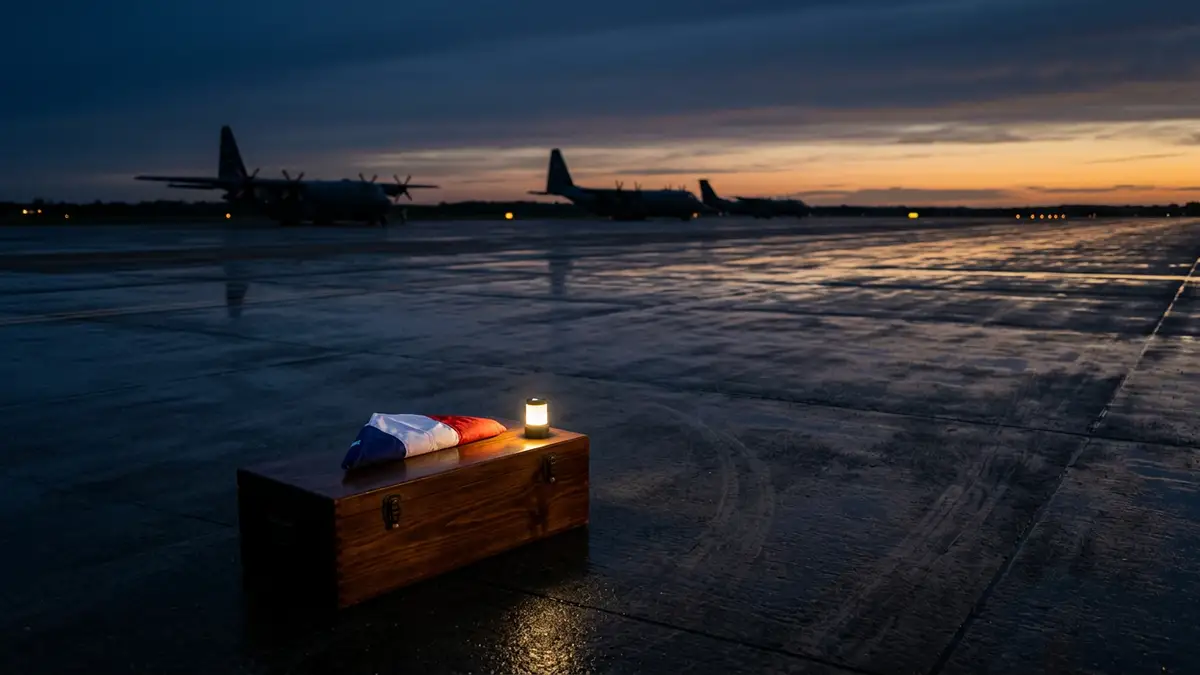
Image: Matt Weston / AI

Callum Smith
A drone strike on a joint military base in Iraqi Kurdistan has killed a French soldier, while a United States refuelling plane crashed following a suspected mid-air collision during ongoing operations against Iran.
Multiple unmanned aerial vehicles swarmed the Erbil facility, bypassing regional air defenses to strike the installation. British special forces engaged the incoming Iranian drones with live fire as the assault unfolded.
Defenders downed two drones overnight. Several others impacted the base, killing one French service member and wounding multiple personnel.
The facility received fresh missile deliveries last week. These shipments replenished stockpiles depleted by previous regional engagements.
The objective centers on preventing Iran from moving nuclear and ballistic projects underground.
A United States refueling plane crashed in Iraq following a mid-air collision. This loss marks the fourth aircraft the US military has forfeited during its current campaign against Iranian targets.
Rescue teams deployed to the crash site as aerial engagements intensified. Resupply flights now dictate the operational tempo of coalition forces.
Defence Secretary John Healey linked the coordination of these strikes to Vladimir Putin. Healey confirmed the weapons originated from launch sites in Lebanon and Iraq.
Lieutenant General Nick Perry identified a definitive nexus between Moscow and the operational effectiveness of the Iranian drone campaign. He cited a strategic alignment in directing these strikes against military headquarters.
The regional conflict widened as Israel launched kinetic strikes on Tehran and Beirut. Prime Minister Benjamin Netanyahu stated the objective centers on preventing Iran from moving nuclear and ballistic projects underground.
Netanyahu confirmed Israeli strikes killed top Iranian nuclear scientists. These actions target the foundational military infrastructure of the Islamic Republic.
Saudi Arabian defense forces intercepted a ballistic missile and three drones launched toward the country’s eastern region this week. Another drone targeting the Shaybah oil field fell to Saudi countermeasures.
Qatar’s defense ministry intercepted two ballistic missiles, one cruise missile, and a drone swarm launched from Iran. Tensions surged simultaneously in the Strait of Hormuz.
Deputy Foreign Minister Majid Takht-Ravanchi denied allegations that Iran is laying mines in the Strait of Hormuz. He stated Iran continues to cooperate with countries requesting passage through the waterway.
Scott Bessent indicated the US Navy may assemble an international coalition to escort commercial vessels through the strait. The waterway remains a critical chokepoint for 20 percent of global energy supplies.
Their presence is inappropriate for their own safety.
Donald Trump described the military situation with Iran as advancing rapidly. He characterized the current US military posture as unsurpassed in the region.
Trump addressed the Iranian national football team’s participation in the upcoming World Cup in North America. He stated their presence is inappropriate for their own safety.
The former president maintained that Iran pays a heavy price for its actions. He asserted that the US military response advances according to established strategic objectives.
Persistent drone deployments threaten maritime security and global shipping lanes. Undetected UAVs retain the capacity to halt traffic in vital waterways indefinitely.
Military analysts observe that the deployment of these systems allows for sustained interference with international commerce. Technical sophistication in the drone campaign continues to challenge regional air defenses.
The coordination between Moscow and Tehran shifts the tactical landscape of the Middle East. This alignment forces coalition commanders to recalibrate defensive postures against precise aerial threats.