US Warplanes Crash in Kuwait Leaving Three Dead
Five service members sustain serious injuries as crews undergo emergency hospital transfers following the desert wreckage.
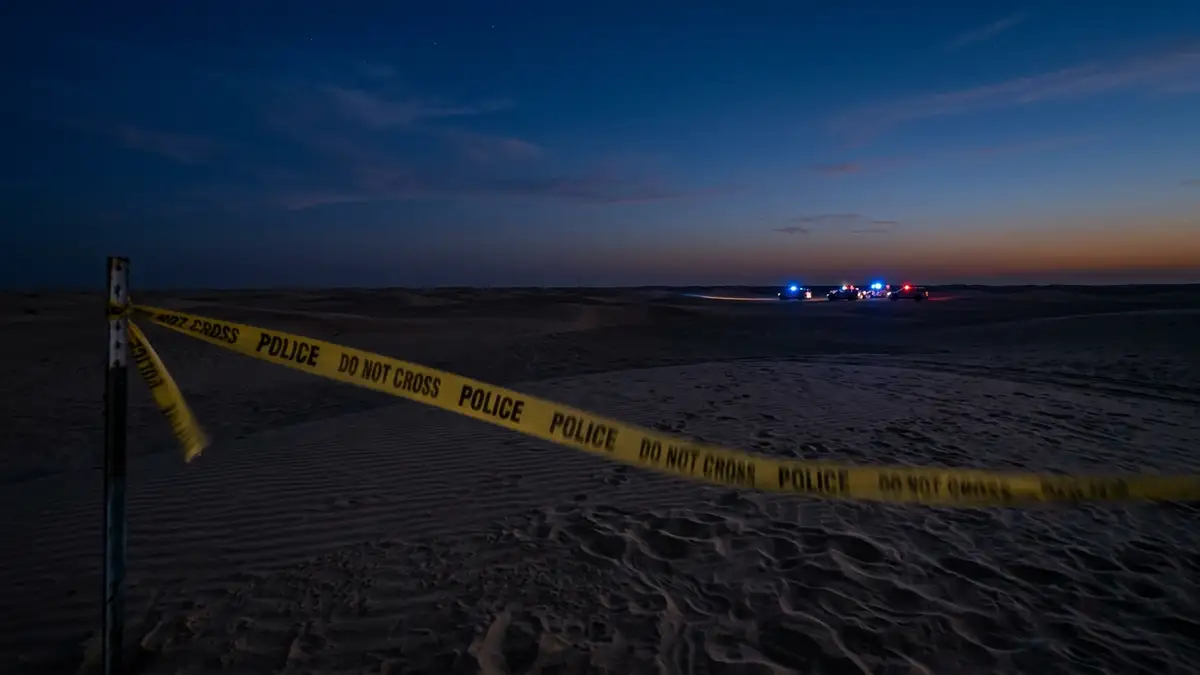
Image: Matt Weston / AI

Carla Rooney
Three American service members were killed and five others seriously injured when several United States warplanes crashed during operations in the Kuwaiti desert.
Investigators stripped flight data recorders from the desert wreckage this morning as technicians began a forensic audit of the debris. The team is hunting for a single mechanical failure point that could explain the simultaneous loss of multiple airframes.
Military officials have not yet identified the specific mechanical or environmental trigger for the crashes. The specific branch of the armed forces operating the aircraft remains classified at this hour.
Recovery teams are withholding the names of the deceased until the notification of next of kin is complete. This loss adds to the 4,500 American fatalities recorded in the Middle Eastern theater over the last two decades.
We will not negotiate with the United States.
The incident strikes a landscape defined by a US military presence in Kuwait that dates back to the 1991 Gulf War. This historical anchor has dictated the security architecture of the region for thirty-three years.
Kuwait currently houses approximately 13,500 US personnel across Camp Arifjan and Ali Al Salem Air Base. These facilities function as the primary engines for American power projection in the northern Persian Gulf.
The Department of Defense utilizes these assets to drive logistical support and rapid response capabilities across the Middle East. The density of these operations reflects the strategic requirement of a forward-deployed force.
Regional security remains locked as diplomatic channels between Washington and Tehran show no movement. This stalemate creates a high-stakes environment for every training mission and operational flight.
Ali Larijani, a top Iranian security official, addressed the geopolitical tension immediately following the event. 'We will not negotiate with the United States,' Larijani stated.
This stance follows decades of economic sanctions and military posturing that have defined the Persian Gulf since 1979. The rhetoric from Tehran confirms the absence of a diplomatic safety net for military accidents.
Economic analysts are tracking regional stability as the crash investigation unfolds. Kuwait pumps nearly 2.8 million barrels of oil per day, turning any local instability into a global energy risk.
The logistical footprint at Ali Al Salem Air Base remains the critical artery for the flow of personnel and equipment. Any disruption to flight operations there hits the broader US Central Command mission immediately.
Historical data confirms that desert environments degrade aviation hardware through unique maintenance challenges. Fine sand and extreme thermal cycles stress airframes beyond standard operating parameters.
Investigators are now determining if these environmental factors forced the simultaneous loss of the aircraft. The recovery of the 'black boxes' remains the Pentagon's immediate priority.
The US presence in Kuwait has transitioned from a 1991 liberation force to a permanent regional stabilizer. This evolution demands constant investment in infrastructure and safety protocols.
Stakeholders in Washington will face immediate questioning regarding the age and maintenance schedules of the downed aircraft. Congressional oversight committees are preparing to scrutinize whether budget allocations met safety needs.
The focus remains on the medical status of the five survivors currently under local care. Their debriefings will provide the first-hand accounts necessary to reconstruct the final moments of the flight.
The wreckage in the desert stands as a physical marker of the risks inherent in high-readiness postures. Operations continue across the region despite the localized pause at the crash site.