Iran Protests Intensify Amidst Government Crackdown and International Scrutiny
Demonstrations against clerical rule escalate with reports of increased violence and government claims of foreign interference.

Sarah Connor
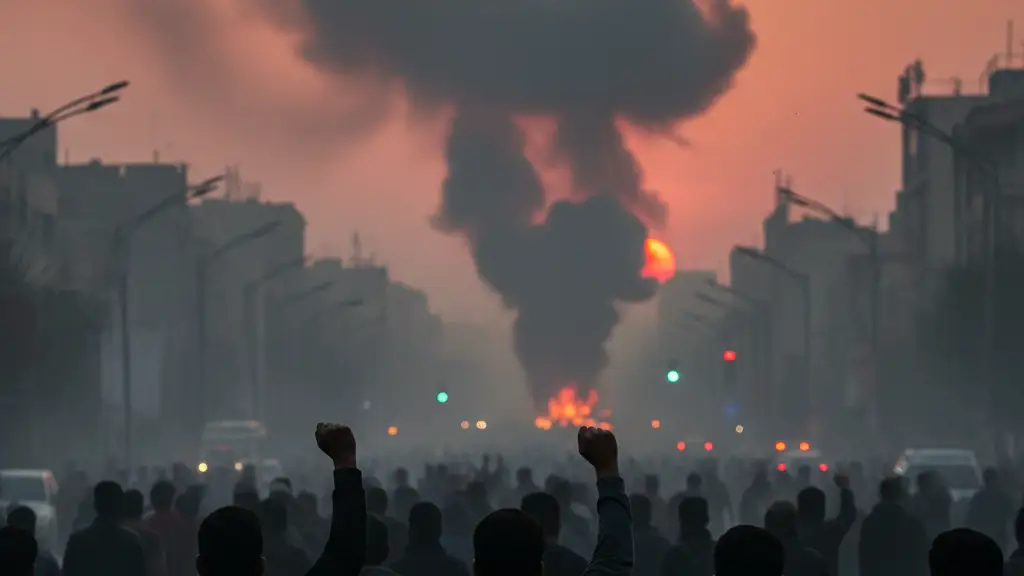
Protests in Iran have evolved into a significant challenge to the ruling clerical establishment.
The protests, which began on December 28, initially erupted in response to soaring inflation but quickly evolved into a political movement demanding an end to clerical rule.
Iran's data infrastructure remains under tight state control, with security authorities limiting internet access largely to a domestic intranet with restricted external links.
Verified videos and eyewitness accounts indicate the government is intensifying its response; reports describe public lighting being cut to plunge large crowds of protesters into darkness.
The demonstrations began December 28 over the collapse of the Iranian rial, which currently trades at over 1.4 million to $1.
Protesters have been seen marching by the thousands across the country, chanting 'death to the dictator.'
The Iranian government has not released official casualty figures, but the US-based Human Rights Activists News Agency (Hrana) has verified the killing of 192 people.
Activists claim the death toll has risen to more than 500, while one report suggests the figure may be as high as 2,000.
Iran's hardline regime warns that anyone joining the protests will be considered an 'enemy of God,' a charge punishable by death.
The Iranian military claims foreign 'enemies' are fueling the unrest, with officials accusing the US and Israel of inciting the violence.
Iranian state TV maintains the dead were victims of 'armed terrorists.'
Reza Pahlavi, the exiled son of Iran's last shah, claims the regime faces a 'severe shortage of mercenaries' and that 'many armed and security forces have left their workplaces or disobeyed orders to suppress the people.'
Michael Burleigh claims the regime is no longer able to control the protests.
Reports suggest Iran's Supreme Leader Ayatollah Ali Khamenei was making plans to leave, while other mullahs have already fled.
The regime faces mounting accusations of corruption and systemic economic mismanagement.
Demonstrations in support of the protesters have also taken place abroad, including in London.
US President Donald Trump stated, 'Iran is looking at FREEDOM, perhaps like never before.'
Iran's parliament speaker Qalibaf warned that Iran could become 'legitimate targets' if Donald Trump attacks, and that Iran is prepared to strike the US and Israel.
The US military confirmed it maintains forces across the Middle East.
Iran's Islamic Revolutionary Guard Corps said its intelligence wing arrested a foreign national suspected of spying for Israel.
US Secretary of State Marco Rubio spoke by phone on Saturday with Israeli Prime Minister Benjamin Netanyahu.
Related Keywords
Reza PahlaviAyatollah Ali KhameneiProtestsUnited StatesUnited KingdomIsraelPoliticsIranMiddle EastGovernmentHuman RightsDonald Trump