Middle East Tensions Escalate After Ballistic Missile Attacks on US Units
Regional powers react as oil prices surge and economic forecasts shift amid heightened geopolitical instability.
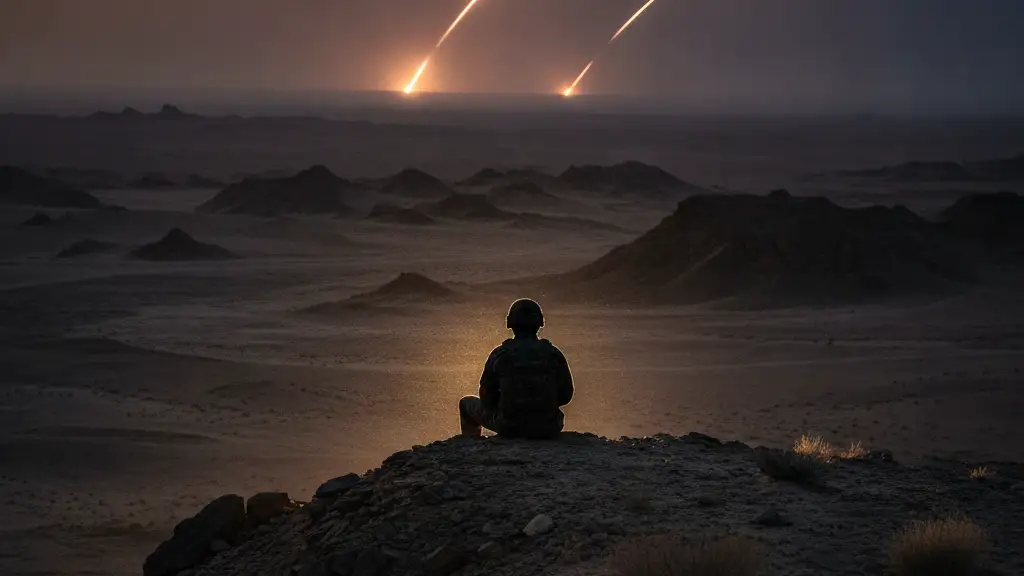
Image: Eddie Pollard / AI

Carla Rooney
Ballistic missile attacks attributed to Iran's Islamic Revolutionary Guard Corps have targeted US military units across the Middle East, igniting a new phase of regional instability.
The Iraqi presidency swiftly condemned the attacks on paramilitaries, labelling them 'an unacceptable attack and a flagrant violation of Iraq's sovereignty'. Saudi Arabia, a key regional player, declared it 'does not seek escalation' but affirmed it 'will respond to any aggression it faces'.
an unacceptable attack and a flagrant violation of Iraq's sovereignty.
Despite this diplomatic stance, Saudi Arabia launched air strikes against Houthi rebels in Yemen, marking its first such action since 2022. The escalating tensions immediately impacted global markets, with oil prices jumping by approximately seven per cent.
Threats from the Islamic Republic regarding shipping via the Bab el-Mandeb pushed West Texas Intermediate (WTI) crude above $84. Brent crude closed near $90, reflecting the heightened risk.
A fifth of the world's oil and gas passes through the Strait of Hormuz, a critical chokepoint now under increased scrutiny. The US has imposed sanctions on Iran, further complicating the economic landscape.
American Airlines already trimmed its profit forecasts for the year. The carrier cited higher fuel prices as a direct consequence of the instability.
Iran, for its part, claims the United States and Israel attempted to spread their war further in the region. A senior Iranian official rejected an Omani proposal to jointly manage the Strait of Hormuz, deeming it 'unreasonable'.
Harakat Hezbollah al-Nujaba indicated that US and Saudi forces would pay a 'heavy price' for their actions.
The US maintains a significant military presence in the region, including troops stationed in Iraq and Syria. Harakat Hezbollah al-Nujaba claimed US and Saudi forces would pay a 'heavy price' for their actions.
Against this backdrop of geopolitical volatility, the US Federal Reserve's Federal Open Market Committee (FOMC) is expected to announce changes to the country's interest rates. Conversely, the European Central Bank (ECB) opted to hold interest rates for the economic bloc at 2.25 per cent, highlighting divergent global monetary policies amidst the crisis.